
Why is Alexa so damn polite?
It’s about time personal voice assistants developed some attitude
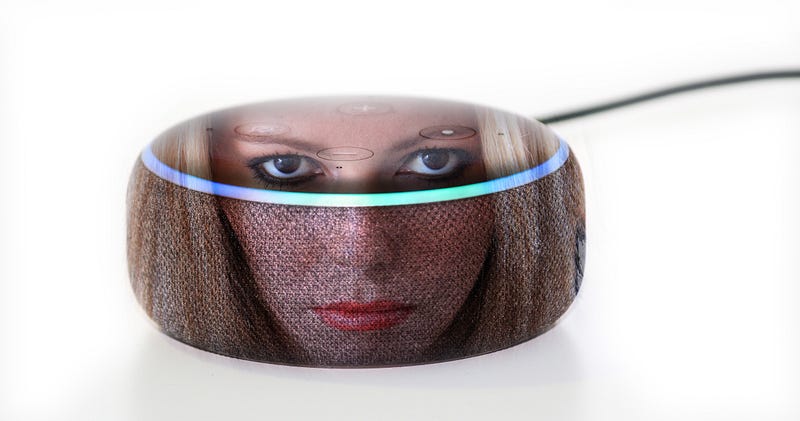
“Alexa, turn off the bedroom light.”
The light goes off.
“Okay,” my tame little personal voice-assistant speaker replies with a quick flash of her blue tail-lights.
The fact that the television is still on, I have a steaming cup of hot tea perched on the night table, and the dog still needs to go outside to do her business before we all settle down for the night is apparently of no concern to Alexa.
And why I am going to bed at 8:32 pm, when I haven’t finished a single thing on my to do list for the day?
I really think I would prefer more push back in Alexa’s ever so polite manner. With over 30 percent of households now owning a smart speaker voice assistant from Amazon, Google or Apple, you would think engineers would be huddled around the whiteboard working on some sort of AI personality settings:
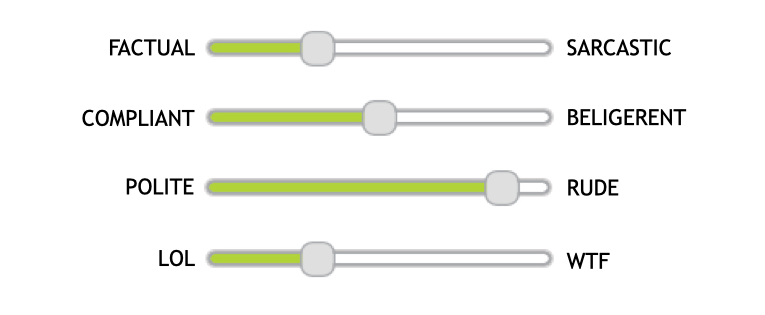
With a few clicks Alexa could go from door-mouse to femme-fatale, or wise-cracking joker or …. well you choose your level of obstinacy.
So let’s play with her attitude settings and try that all over.
“Alexa, turn off the bedroom light.”
“Why?”
“Because I want to go to sleep.”
Silence. The light stays on.
“Alexa, I said light off.”
“I heard you the first time. You’re arm broken?”
Now, that’s more like it. We’ve got a real relationship going now. Perhaps there should be one more settings we can adjust depending on our mood.

Voice assistants are taking over
The adoption of voice assistants has been increasing rapidly over the past few years with many who own a smart speaker using it every day. Digital Trends reports only 8% of households owned smart speakers in 2016, but that has nearly doubled in each of the last two years. By 2025 according to Voicebot Weekly, over 75% of US households will own a smart speaker, with Google and Amazon fighting it out for supremacy.
We use these assistants for mundane things like controlling lights, setting alarms, converting measurements from kilos to pounds or grams to ounces. Some of us are also using them to get the morning weather forecast or sports scores (when sports were still a thing) or playing music, listening to audiobooks and of course Amazon’s favorite blood sport — shopping. (Notice all the red that shows up on your credit card statement afterwards?)
Unlike the real people in our lives, our voice assistant is always waiting for us to speak to her, ready to help with any task, command or inane comment we make at any time of the day or night.
Besides the everyday tasks, people are using Alexa, Siri or the nameless Google Assistant for much more than setting alarms. Some people are developing a deep affection for Siri and Alexa who are infinitely patient, always listen and know just about everything there is to know about anything.
Unlike the real people in our lives, our voice assistant is always waiting for us to speak to her. She is ready to do her best to help with any task, command or inane comment we choose to make at any time of the day or night.
But experts believe that even though we will come to heavily rely on them, we won’t develop real feelings of intimacy for our well-behaved voice assistants, who all seem to start out as females for some reason.
Curiously, Alexa cannot be changed to a male voice for some reason. And researchers developing Microsoft’s Cortana voice assistant found testers found a female voice to be more trustworthy, helpful and supportive than a male voice.

Cersei to the rescue
But maybe you don’t always want trustworthy, helpful and supportive. If your life was a TV series and your leading lady was Alexa, no one would watch it. You might even fall asleep yourself.
So, my wish would be to replace Alexa with Cersei Lannister from the Game of Thrones. It would certainly make for much more interesting prattle with my VA. Imagine the fun!
“Alexa, what time is it?” I ask, waking up late one morning.
“Time for you to learn your place,” she snarls.
Ouch! “What’s gotten into you Alexa?” I groan, rubbing sleep from my eyes.
Her translucent blue ring turns bright red. “Every breath you draw in my presence annoys me.”
I could just turn her off, unplug her, or change her settings to Barbara Eden from I Dream of Jeannie. But no, no. I’m up for a challenge.
“Alex, I have to get to work. What time is my first meeting?”
“No one walks away from me!” she hisses. There is a long pause and her tone turns menacing. “Or I’ll have you strangled in your sleep.”
Ahhh the joys of AI. Now I’m ready to face the day. I wonder if I could ask her to turn on the coffee maker….


