
Why Is 2020 the Best of Times and the Worst of Times?
One Word: Doomscrolling
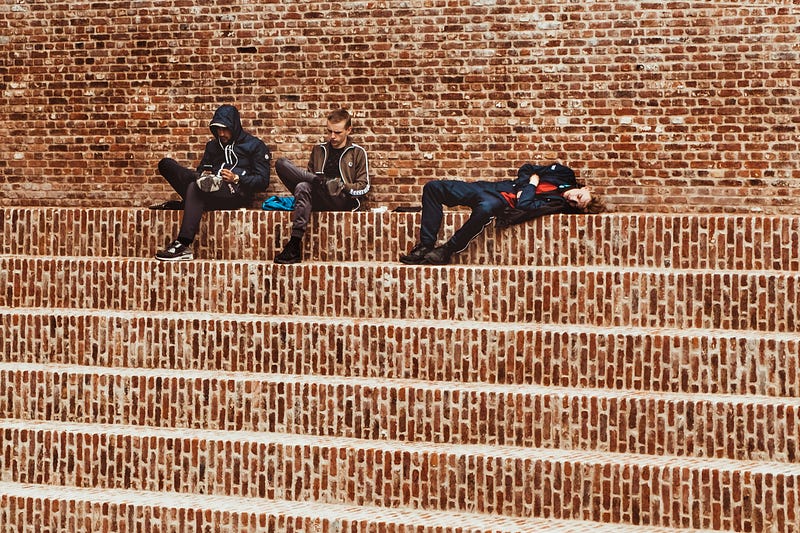
No matter how much you dislike bad news, you surely do get addicted to them. Stories about the deadly pandemic, conspiracy theories, protests, unperturbed politicians, police brutality, worsening living conditions — you name it — sometimes you just can’t stop yourself from checking out the bad news one after the other.
I remember during the lockdown while I holed up in my ten by ten room, I felt very flat, burnout, and had lost faith in humanity in general. Regardless of how I felt, I couldn't help myself from constantly scrolling down my phone checking for what’s latest on the perilous hour.
Turns out, it wasn't just me afflicted with this kind of strange obsession with all the bad news this world has got to offer. We, as humans, have evolved to panic and internalize the anxiety. This feeling was present even in our hominid ancestors and helped them to stay vigilant at all times. It's not abnormal to feel the fear. But this continuous doom-scrolling has left us restless and even obsessed with the next perceived catastrophes and updates.
Why You Feel 2020 Was the Worst Year Ever
The COVID-19 pandemic has infected more than thirty-three million people all around the globe, and have killed more than a million people to date. This number is steadily increasing even as you read this article. That’s not it. The economic and social disparity is also continuously rising, while you and I are seated in the comforts of our homes and are enjoying the luxury of the internet. We have been through the Californiana and Australian wildfires this year, the locust swarms of East Africa, the Beirut explosion that killed over 200 people and caused fifteen billion dollars in damage, protest against the politicians we elected and brutality shown by the police who were supposed to protect us.
But that’s not it.
We now have tele-medicine easily made accessible to the majority. People are washing their hands now more than ever. For once, we are actually looking out for each other. Our brains are accustomed to assume the worst in everything including the present. If anybody is to be at fault, it is the unmonitored media consumption. We have let our digital life dominate us.
Whether you believe it or not, excessive news consumption is the reason for stress among the majority. This added stress leads to lack of sleep, anxiety, fatigue and takes a toll on mental and physical health. Despite the negative implications, a recent survey revealed that one in ten adults cannot keep themselves from checking the news every hour. However, this increasing dependence on media consumption and its negative effects are not new. Research work carried out at Annenberg School for Communication at the University of Pennsylvania in 1968, revealed that a direct link between hours spent on watching television and chances of the viewer having the ‘mean world syndrome’.
Even modern research agrees with this notion. Dr Mesfin Awoke Bekalu of Harvard T.H. Chan School of Public Health studies the link between media consumption and Public Health. He explained that the relationship between mental health and social media dependence is more complicated than the previous study with television. Which watching the telly is a passive activity, engaging on social media is active participation. Social media leads to conditions like ‘displacement effect’ — a condition that makes us crave for physical human presence.
Media and Doomscrolling: Inseparable Twin
sEven you know how easy it is to fall into the traps of the addictive lifestyle of social media consumption. Especially with FOMO being more rampant among teenagers, they often find themselves comparing themselves with random people on the internet with fake lives — thereby spiralling down into a never-ending vicious cycle of burnouts and low self-esteem.
With being stuck at home for the longest time in 2020, where media dependence was our only escape, doomscrolling inadvertently became our lifestyle. We are inherently wired to imagine perfection as a far fetched dream which we can never achieve: the major reason why we find our daily lives as flawed they can get. This is what is stopping us to see the little bright side this year had given us. Social media makes us believe that the present we have now is worsening by each passing day — but even you would agree that it’s not all true, at least not for everyone.
Imagine living at a time in history when a plague or virus broke out like now and you don't even know what are viruses or how they function. There are no mobile phones to keep you connected with your loved ones on the other side of the world. Worse of all, you see people die every day but don't know that a simple hand-wash and face-mask could save you from catching the infection.
Takeaway
Yes, the present is scary and the future is perhaps scarier; but we have so much more to be grateful for. We may not be able to stop comparing present to past, we can surely be able to keep our biases in check. Without any doubt, we have come a long way both socially and scientifically. We must be able to appreciate that. Doomscrolling is keeping us from doing that.
Try going cold-turkey for a week. I promise you will see a change in how you perceive the present and realize that 2020 may not be as bad as it seems.