
Why Ireland Is The Most Anti-Israel Country In Europe
Is it motivated by love for Palestine, or hatred for Jews?
In a continent filled with millions of Muslims and Jews, Ireland is notable for its near-absence of either. Of the 7 million people who live on the island of Ireland, fewer than 100,000 are Muslim, and fewer than 5,000 are Jewish. You can live your entire life in Ireland without seeing or hearing a synagogue or mosque.
In spite of this, Ireland likes to place itself in the middle of the Arab-Israeli conflict. It was the first European Union member country to endorse the creation of a Palestinian state (in 1980), and one of the last to allow an Israeli embassy (1993), while allowing the Palestine Liberation Organization to open an office at the same time. It is one of the fiercest critics of Israel in the Western World, and there have been calls in recent weeks to expel the Israeli ambassador.
So how did these small, distant countries develop such a tense relationship?
The answer, as always, lies in history — both Irish and Middle Eastern.
Ireland’s tiny Jewish community has been around for centuries, but there was little recorded information on it until the early 20th Century. Attitudes were largely influenced by the extremely dominant position of the Irish Catholic Church. For example, several Jewish families were forced to flee Limerick in 1904 due to anti-Jewish riots incited by local priest Father John Creagh.
One of the most dominant figures of 20th Century Ireland, the Archbishop John Charles McQuaid (from 1940–1972), was noted for fiery anti-Jewish sermons:
“From the first persecutions till the present moment, you will find Jews engaged in practically every movement against Our Divine Lord and His Church. A Jew as a Jew is utterly opposed to Jesus Christ and all the Church mean […] by Satan we mean not only Lucifer and the fallen Angels, but also those men, Jews and others, who […] have chosen Satan for their head.”
Ireland was neutral during World War II, and in general did not accept Jewish refugees, preferring to accept only Christians, and particularly Catholics. Some prominent politicians, like George Noble Plunkett, were deeply suspicious of and outright hostile towards the Jews.
Yet in spite of bigoted attitudes perpetuated by Catholic clergy and politicians, and despite making little effort to help Jews, nor did Ireland actively persecute them to any significant extent. Jews in Ireland lived in safety compared to their counterparts in continental Europe, and Irish people certainly didn’t stand out for their anti-Jewish attitudes in a world where those attitudes were ubiquitous.
Even with the establishment of the Israeli state in 1948 and the subsequent invasion launched by its Arab neighbours, Ireland thought little about that part of the world — indeed, Ireland wasn’t even allowed to join the United Nations, with the Soviet Union blocking its entry until 1955. But in the late 1960s, many things changed.
In the Middle East, the Six-Day War took place in 1967. When several Arab nations blockaded and prepared to invade Israel, a stunningly successful pre-emptive attack by the Israelis totally changed the balance of power in the region. Israel, which had previously lived in constant fear of being overrun, was now the undisputed military heavyweight of the region.
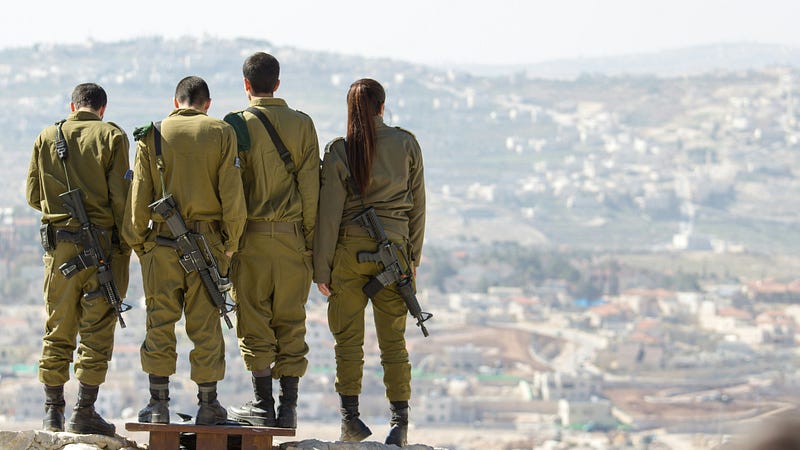
The Palestinian territories, which had expected their Arab neighbours to drive out the Jews, now found themselves living under Israeli occupation and being treated as second-class citizens. Vulnerable little Israel was now, in the eyes of much of the world, a colonial oppressor.
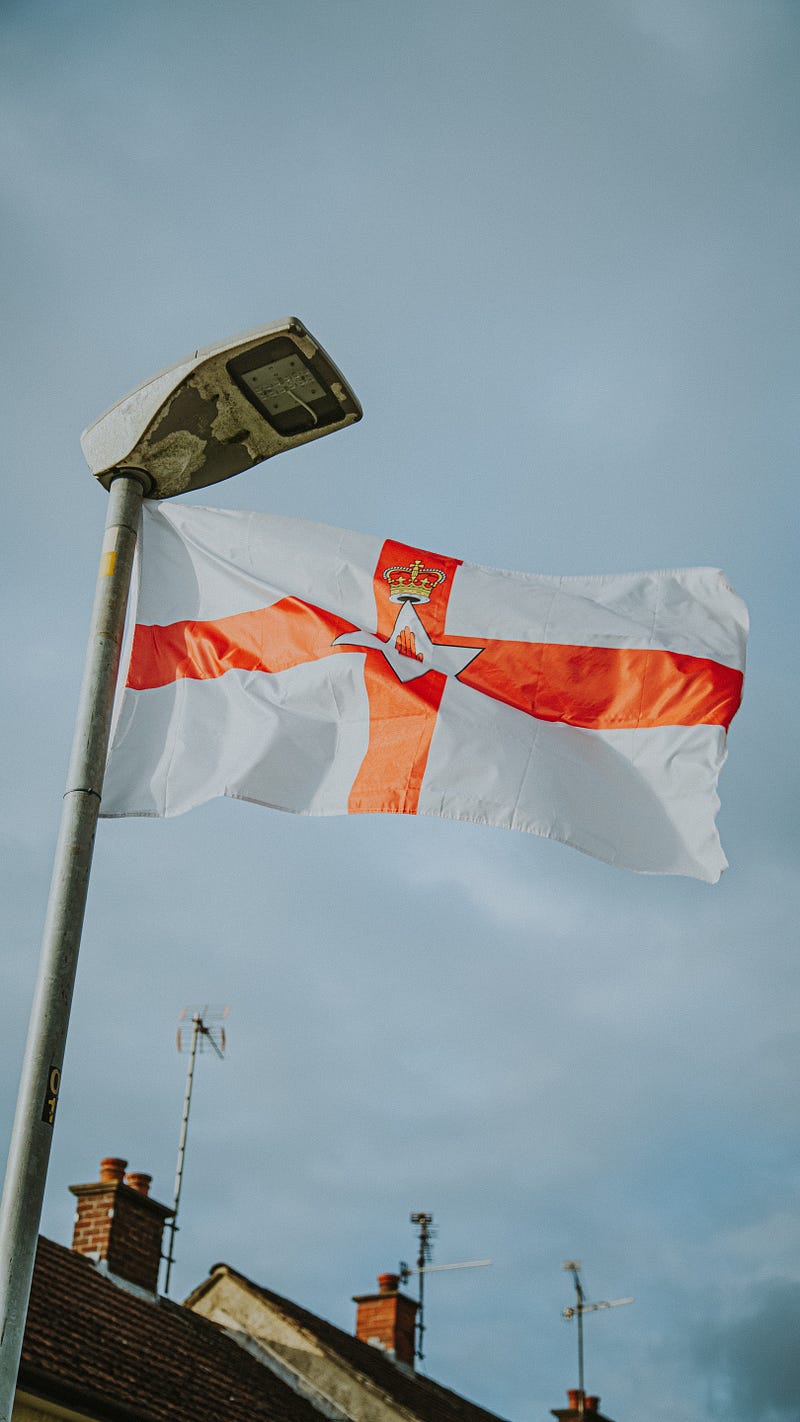
Back on the island of Ireland, 1968–1969 was the beginning of the Troubles, a 30-year sectarian conflict between Irish Catholics and British Protestants in Northern Ireland. While the vast majority of Southern Irish were Catholics, Catholics in Northern Ireland were a suppressed minority, treated as second-class citizens by the Protestant majority.
In 1967, Ireland’s foreign minister Frank Aiken took a pro-Arab stance at the United Nations over the Six-Day War.
In return, he was criticized by the majority of the Irish press, which saw the Arab states as the aggressors. There might have been little love for Jews or Israel in Ireland, but then there was little love for Muslims or Arabs either, and there was some understanding just as Ireland had been at serious risk of invasion by Britain as late as World War II, that Israel was also threatened by much bigger neighbours.
But over the course of the Troubles, Irish relations with Israel became increasingly strained.
Having joined the UN, Ireland became one of the largest per-capita donors of peacekeeping troops, sending over 40,000 troops to Lebanon between 1978–2000. Over the years, some of these Irish soldiers were killed by Israeli soldiers and Israeli-backed militias.
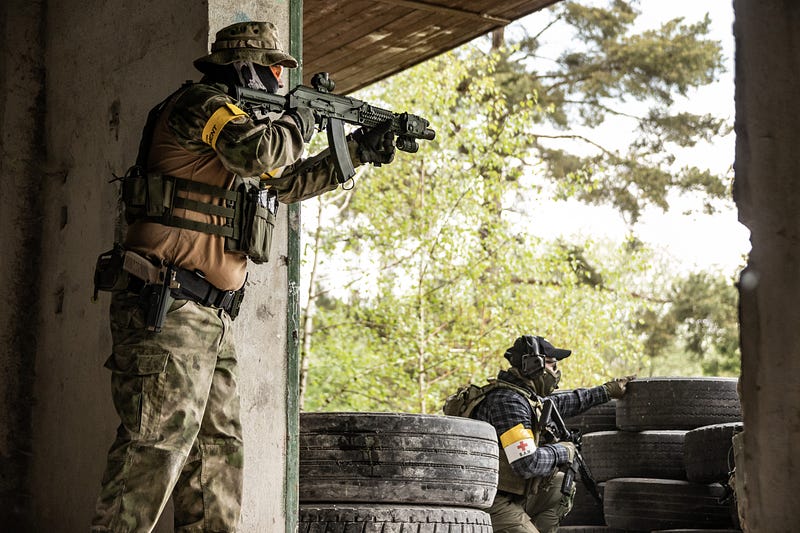
Back in Ireland, the Provisional IRA paramilitary group began collaborating with the Palestine Liberation Organization for training and weapon procurement purposes. Strong ties between Palestine and certain Irish republican factions emerged, and the IRA’s political branch (Sinn Féin) is now the largest political party in both Southern Ireland and Northern Ireland.
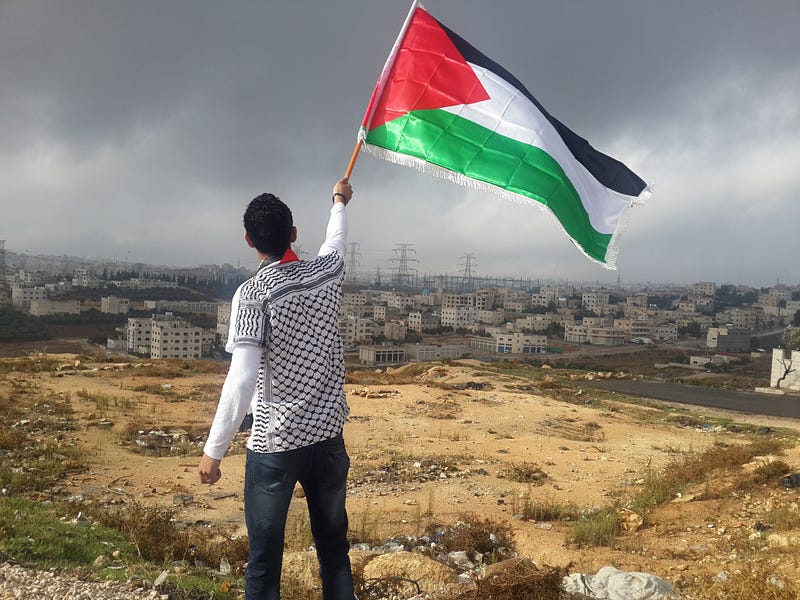
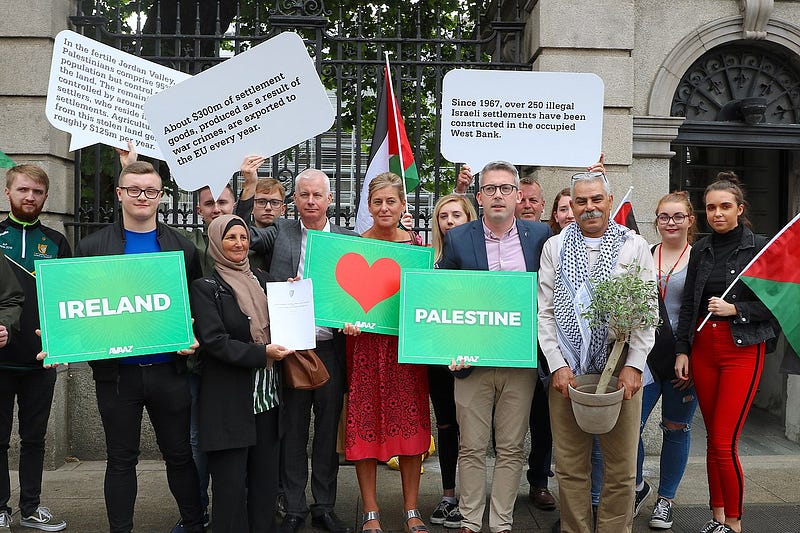
Today, Israel is deeply unpopular in Ireland. 71% of Irish disapprove of Israel’s response to the Hamas attacks in October, compared to only 15% who support Israel’s response. The Irish parliament voted unanimously in 2021 to condemn Israeli annexation of Palestinian land. Pro-Palestine marches attract thousands, while pro-Israel rallies attract tumbleweed. Palestinian flags can be found all across Ireland (and are very common in Catholic neighbourhoods in the North).
Israel, for its part, treats Ireland with apparent contempt. When Israeli civil servant Boaz Moda’i was accused of sexually harassing colleagues and recommended by the police for prosecution, he was instead appointed as Israel’s ambassador to Ireland in 2010. Later that year, a senior Hamas commander was assassinated by Israeli agents in Dubai using multiple forged and stolen Irish passports.
The bitter relations between the two countries today can’t be entirely separated from anti-Jewish bigotry. Some Sinn Féin politicians in particular (like Réada Cronin and Chris Andrews) had made comments suggesting that Hitler was controlled by the Jews, that the Jews were behind 9/11, and that Jews control the world media generally. An Anti-Defamation League survey in 2014 found that about 20% of Irish people held anti-Jewish attitudes.
However, that figure was only around average for a European country. It seems, then, that Ireland’s uniquely strained relationship with Israel reflects far more on the peculiarities of Irish history.