
Why I’m Turning My Lawn into a Wild Garden
And why you should, too
“See, I told you,” came a voice from outside my window. “Have you ever seen such an ugly yard?”
It was July 2019 and I was sitting on my couch one evening, working on my novel. Through the open window, I heard this, and immediately looked up, in shock. Who was calling my yard ugly?
I saw a couple standing just at the end of the walkway leading to my door. The woman was gesticulating wildly to the guy I presumed was her husband, who looked decidedly bored.
“She keeps ripping up the grass to put in these hideous plants, and then she lets them die. It makes the whole neighborhood look bad.”
She was pointing at my ninebark shrub when she mentioned the “hideous, dead plants.” Ninebark is reddish-brown all year round. Mine was very much alive and well, though I knew she assumed it was dead because it wasn’t green.
On my walk the next morning, I found myself extra observant as I walked by each house. I wondered which one she lived in. Not that it would matter — they all looked exactly the same. A square of lawn, unnaturally green in our unrelenting desert sun, a small tree, and a few grasses, lilies, or boxwoods in a border surrounded with bark chips.
You know what? I find that ugly. I don’t see any beauty in these overly-fed lawns and cookie-cutter landscaping. They’re boring. And unnaturally quiet.
That’s not the kind of yard I want.
Lawns suck
I love a little grass in the right places. A nice park, for instance, where kids can play soccer and dogs can fetch their toys. If you have kids and/or dogs, I can understand that a lawn might be important.
But I have neither.
As a single woman who lives alone, guess the chore that I hate more than anything. Did you guess mowing the lawn? If so, you’re right.
The last thing I want to do with my time is mow lawn. Where’s the payoff?
I’d rather spend that time weeding in the garden because in the end, I’ll get so much food back, I’ll have to give some of it away.
I don’t want to spend money on lawns, either. My first year in this house, which came with not one, not two, but three separate (and huge) lawns, I spent $75 a month watering them just to keep them barely alive. I would rather invest that money in beautiful plants or gardening equipment.
Worst of all, lawns are an environmental blight. Do you know that American lawns use up about 3 trillion gallons of water each year, 200 million gallons of gas (for lawn mowers), and 70 million pounds of pesticides?
I am deeply distressed by these numbers and don’t understand why lawns persist in popularity in this country. When I see sprinklers running for hours on my block, I cringe. I live in a desert where we are always struggling with droughts. What are we doing?
My perspective on yards
Owning my own home has always been one of my biggest dreams for myself. When I first stepped onto the freshly-laid sod in my front yard, I almost spun around and sang, like Julie Andrews in The Sound of Music.
“It’s all mine!” I wanted to scream. I would never again have to ask a landlord permission to plant flowers or install a raised garden bed.
I’d get to create my fantasy yard.
Which meant, I realized, looking down, getting rid of that goddamn, waste-of-space, -water, and -money sod.
I had several objectives for my yard:
Heal the dirt
Whether you want to make a simple garden or completely overhaul your yard, your first objective must always be: Heal the dirt. In fact, everyone who lives on a property that includes land, should prioritize this.
Dirt is gold. Literally. Someday, very soon, we will all realize this. When our food crops are failing, when climate change alters our way of life, we will recognize the value of good, clean dirt, perhaps for the first time in over one hundred years.
As educator Leah Penniman says,
“The soil stewards of generations past recognized that healthy soil is not only imperative for our food security — it is also foundational for our cultural and emotional well-being.”
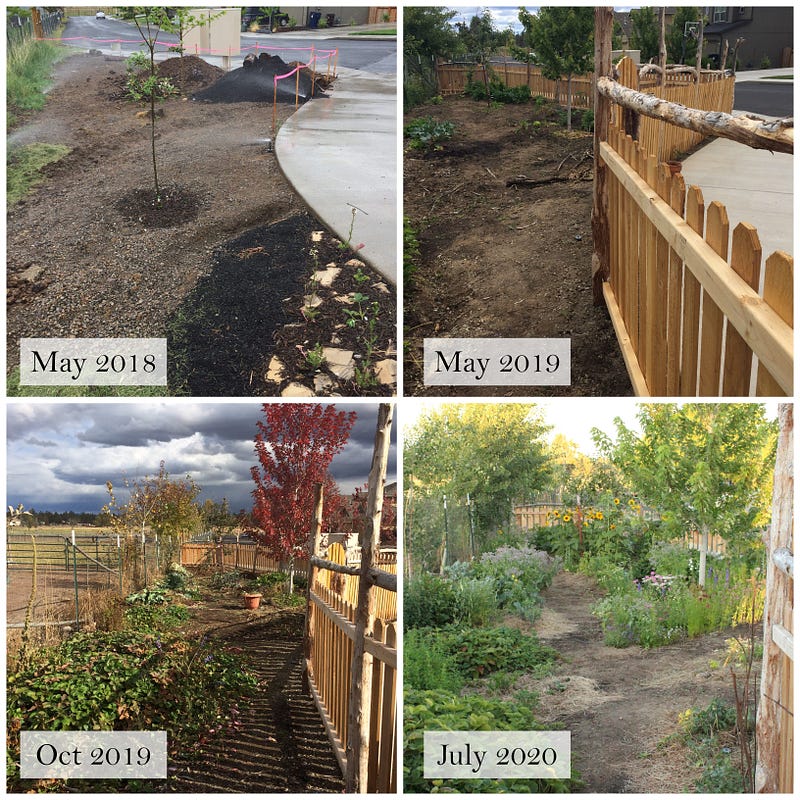
This is my third summer living in this house. What is left of the lawn that I haven’t yet ripped up is slowly dying. Partly because I refuse to dump gallons of water into it, but mostly because it was thrown down on top of gravel.
As with many new homes, my lot was dug up, the house was built, and gravel was poured around it to fill in the dirt that was removed and/or displaced. The lawn is destined to die, unless I endlessly water it, like my neighbors do, because it is literally a carpet on top of rock that dries out in minutes in this desert sun. There is almost no dirt beneath it for its roots to dig into, for it to find nourishment or hold onto water.
As I dig it up, I collect the gravel and remove it, bucket after bucket after bucket, leaving cavities in the ground 3–6 inches deep that I must then fill with compost. Ideally, I’d like to be able to afford hiring someone to backhoe the entire lot again, taking out 6–9 inches of all this gravel and then replace it with a dump truck full of rich, organic compost.
Since I don’t have that option, I do the best I can, ripping out grass in small sections, removing gravel, adding compost, planting flowers, trees, and bushes, and adding mulch to protect the dirt I’ve so painstakingly added.
Create something sustainable
Lawns are not sustainable. They use up too many resources.
I want more.
I want a relationship with my land. I take care of her, she takes care of me.
I want a yard that encourages the biodiversity of life. I’m not interested in promoting monoculture.
I want a yard that uses a justifiable amount of water.
I want a yard that creates shade and protects the earth from erosion.
I want a yard that functions as its own ecosystem, needing me only as a steward.
Make a haven for vulnerable pollinators
Don’t deceive yourself into thinking you are powerless to stop what is happening to our environment. It is incredibly easy to create pollinator sanctuaries in your yard, which is a huge act of rebellion against a system that has deemed them unworthy of our attention and care.
A staggering 33–50% of honeybee colonies in the United States, colonies that give us 1/3 of our food supply, are dying every year, according to entomologist Samuel Ramsey. This is due to an unprecedented deluge of factors including parasites, widespread pesticide usage, and poor nutrition.
The U.S. government has repeatedly failed to take action against pesticide use, even those which have been proven to be deadly to our bees (many of which have been banned or restricted in the European Union). These chemicals remain in the soil for years after they are used, persistently killing our pollinators long after they’ve been applied.
The simple act of turning our yards — or even small areas in our yards — into pollinator sanctuaries is a major help to these vulnerable creatures.
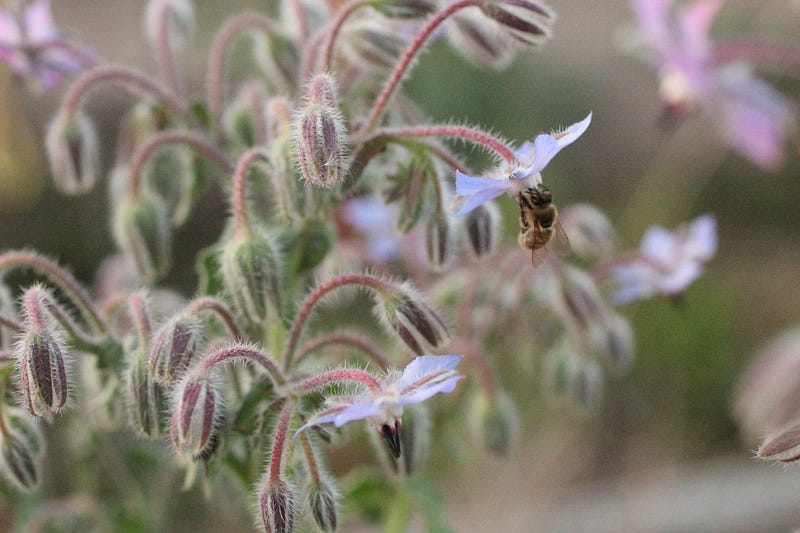
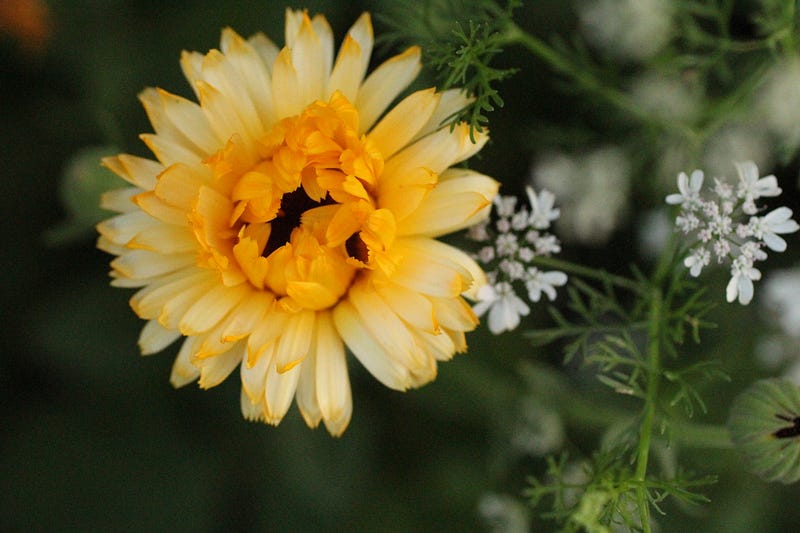
In the summer, I plant sunflowers, borage (a favorite of bees), marigolds, petunias, and as many wildflowers as I can get to grow. I also plant pockets of peppermint and catmint wherever I can — these self-propagate, filling in empty spaces in your yard, and they blossom into beautiful flowers that bees and other insects adore.
Encourage wildness
While highly cultivated gardens with their little rows of lettuce and carrots are beautiful, they don’t tend to grow as well as wild gardens and yards. Life loves diversity, cooperation, and a touch of chaos, after all.
To me, the best gardens and yards are the ones that are a little wild — not so wild that my part in the relationship is irrelevant, but wild enough so that the earth is leading and I am following. Wild gardens or forest gardens tend to be more self-sustaining, need less water, and can survive environmental challenges more easily than a traditional, highly-maintained garden.
I believe in giving the earth and the plants in my space respect — which means giving them choice in what they want. As my favorite garden designer, Mary Reynolds says, you should ask the land what it wants to become.
I want the land that I live on to communicate to me. I want it to know I care about it enough to forward its own agenda — not just my own. And I want it to reflect the wildness that is in my heart.
Create something of beauty
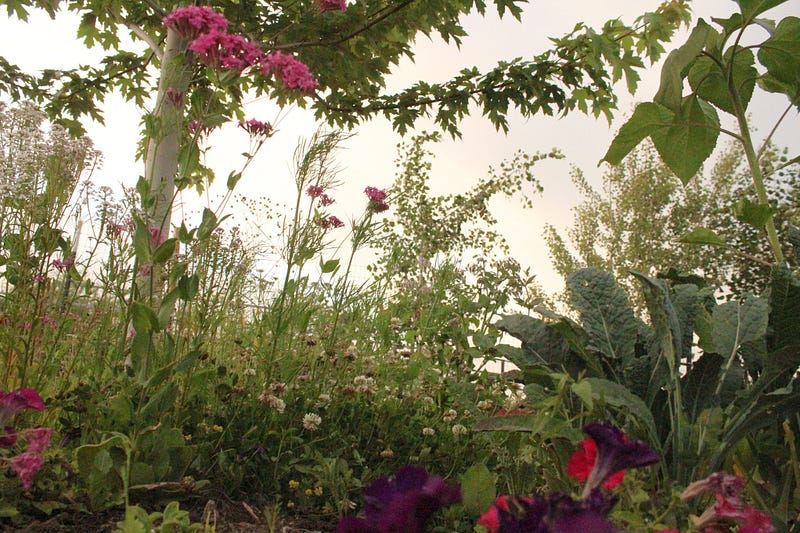
My yard is an extension of my home. I spend a lot of time out there. And even when I’m inside, I want to look out my windows and see something that makes my heart sing. I want to feel the energy of my green spaces from beyond the pane of glass. I want to soak it all in from where I sit on my sofa or at my desk.
More and more, I prioritize planting things as much for their beauty as for their functionality. I want flowers. I want bushes that have different tones of green — or no green, at all (my ninebark). I want purples and oranges and reds. I want shimmery willows and sturdy maples. I want a variety of textures and silhouettes.
I want beauty.
Planting seeds
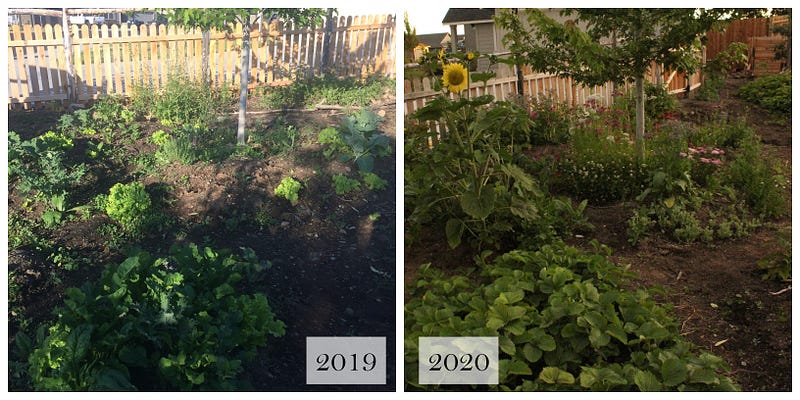
The past three summers have very slowly progressed. A lot of my time went to ripping up two of the lawns and putting up a fence. Only now have I been able to put my full focus on designing the front yard and completing my garden.
I imagine it will take 2–3 more summers to get me where I want to be. But it will be worth it.
People often respond with shock whenever I mention how much lawn I have ripped out and that I plan to get rid of it, altogether.
“What if you have a kid? Or a dog? And what about the property value?”
If I get a dog, he’ll be fine with the clover lawn out back.
If I bring a child into this home, she will spend endless hours in wonder, wandering the pathways between the garden beds and the flowers and bushes in the front yard. If she’s anything like me, she’ll crawl under the Wood’s roses, impervious to the thorns and curl up in the shade, imagining what it would be like to become a fairy.
And when the day comes when it’s time to leave this home, I believe my beautiful yard will attract a very special kind of buyer. They will know this place has been loved and they will want to love it, too.
In the meantime, I spend every morning in my garden, weeding, planting, harvesting, building. My yard is loud with the song of the bees — I’ve never had so many before. The land is healing beneath me, little by little, forgetting its wounds, receiving all the nourishment I can pour into it.
And it’s getting wilder and wilder, just like I am.
© Yael Wolfe 2020
More about my beautiful, wild land:


