avatarRahil C.

Free AI web copilot to create summaries, insights and extended knowledge, download it at here

4250

Abstract

economic opportunity 📉</h1><figure id="1b12"><img src="https://cdn-images-1.readmedium.com/v2/resize:fit:800/1*riECyDmLKWXzndFQQfPaxg.jpeg"><figcaption>Photo by <a href="https://unsplash.com/@anniespratt?utm_source=unsplash&amp;utm_medium=referral&amp;utm_content=creditCopyText">Annie Spratt</a> on <a href="https://unsplash.com/photos/XJmmH6GajlY?utm_source=unsplash&amp;utm_medium=referral&amp;utm_content=creditCopyText">Unsplash</a></figcaption></figure><p id="2a57">It’s no secret that Japan’s economy has been stagnating for several years.</p><p id="5344">Wages between 2001 and 2021 <a href="https://asia.nikkei.com/Spotlight/Asia-Insight/Aging-Japan-wants-foreign-workers-but-will-they-come">have grown by only 3%</a>. Comparing this to Korea’s 40% and America’s 29% in the same period, it makes a lot of sense why skilled professionals are turning the other cheek.</p><p id="0b63">What’s even more bizarre is that the JET Programme salary is the same as it was when it was established back in 1987. But it’s not just JET or English teaching — this is the salary for public school teachers in Japan. In fact, JET Programme teachers are paid more than local teachers.</p><p id="eda2">My annual salary in Japan is 3,600,000 yen (before tax) which converts to AUD 37,953.26.</p><p id="a88a">In Australia, this is 17.3% <b>below minimum wage.</b></p><p id="4f19" type="7">But isn’t the cost of living lower in Japan?</p><p id="97ec">Yes and no. It’s less simple than that.</p><ul><li>First, living alone means <b>you can’t share expenses</b>. Internet, utilities, gas, and water that is enough to sustain multiple people is paid by one person.</li><li>Second, <b>not everything is cheaper</b>. Petrol is roughly the same cost. Coffee is the same or more expensive. In fact, fruits in Japan are comparatively much more expensive than in Australia (I’m talking 2 or 3 times the price). Rents in main cities are roughly the same as in Australia.</li><li>Third,<b> travel isn’t cheap either</b>. If it was super cheap, you’d have even more tourists in Japan than there are currently. The bullet train might be convenient, but it costs a big chunk of your take-home pay.</li></ul><h1 id="aa22">Reason 3: Not being able to fit in 😶</h1><figure id="b37c"><img src="https://cdn-images-1.readmedium.com/v2/resize:fit:800/1*w6VASlbOWB24va62eUkxaQ.jpeg"><figcaption>Photo by <a href="https://unsplash.com/@sashafreemind?utm_source=unsplash&amp;utm_medium=referral&amp;utm_content=creditCopyText">Sasha Freemind</a> on <a href="https://unsplash.com/photos/Pv5WeEyxMWU?utm_source=unsplash&amp;utm_medium=referral&amp;utm_content=creditCopyText">Unsplash</a></figcaption></figure><p id="7d10">A common theme among foreigners who live in Japan is a feeling of not being able to truly fit in. I can relate to this. I have a lot of Japanese friends, but it’s rare that conversations will go past a surface level. There’s a pro to this — you’re not necessarily bound by the same social norms or conventions as Japanese people. But that doesn’t make it any easier to fit in. If anything it reinforces the idea that you are an outsider.</p><h2 id="9edf">It’s really hard to read Japanese people</h2><p id="faed">You may have heard of <i>honne </i>(本音) and <i>tatamae</i> (建前) in Japanese. They translate to “true feelings” and “public behaviour” respectively. Because Japanese people care deeply about how they present themselves in the eyes of the public, it’s incredibly difficult to understand how people feel about you.</p><p id="b2a8">Someone could hate you but always be nice to your face. On the flip side, someone could really appreciate your personality, but they won’t say so.</p><p id="eee7">Sometimes Japanese people will betray their public face and spill some gossip about someone they dislike. At first, it feels like you’ve earned their trust, but you also start to wonder what they’re saying about you behind closed doors. You just never know what a Japanese person is thinking. I personally find that Westerners are a lot easier to read.</p><h2 id="f8b8">Ambition is a double edged sword ⚔️</h2><figure id="06ac"><img src="https://cdn-images-1.readmedium.com/v2/resize:fit:800/1*JDle3csv0_JmRL7W_8TOFg.jpeg"><figcaption>Ambition can be viewed ne

Options

gatively by some Japanese people. There’s a phrase in Japanese “出る釘は打たれる” which translates to “The nail that sticks out gets hammered”. Photo by <a href="https://unsplash.com/@armand_khoury?utm_source=unsplash&amp;utm_medium=referral&amp;utm_content=creditCopyText">Armand Khoury</a> on <a href="https://unsplash.com/photos/Ba6IlmAzl-k?utm_source=unsplash&amp;utm_medium=referral&amp;utm_content=creditCopyText">Unsplash</a></figcaption></figure><p id="8c09">Western culture rewards ambition and drive.</p><p id="0a0f">Japan is a little more conservative in this area. There’s a greater level of job stability, and it’s seen as respectful to commit to a single profession or company for life. Job-switching isn’t the norm, nor is it encouraged.</p><p id="1f8f">I found expressing my desire to grow very challenging — nearly selfish. I resorted to saying “<i>I wanted to get international experience, and I’m satisfied with my time in Japan, so it’s time to go home</i>”.</p><p id="2d29">In response, I was often met with “mmm”, “I see” and “I thought you would have stayed here for longer”. Back home it would be more of a case of “I totally get that!” and “Wishing you the best for your next chapter!”.</p><p id="6015">It’s not that they don’t mean well, it’s just a difficult concept to grasp. But it does confuse me. The JET Programme is advertised as a year-long programme, and a good majority of its participants leave after a year. That being said, there is an option to extend year by year, up to 5 years.</p><p id="3206">But I feel this is where a bit more empathy would make sense. I mean some of my co-workers have never even left Japan before, surely they could understand a person wanting to go home to their own community.</p><p id="7709">Either way, I’ve always been an ambitious person, so it was another reason I didn’t want to stay in Japan for the long haul.</p><h1 id="95db">Reason 4: Weather 🌤️</h1><figure id="74a8"><img src="https://cdn-images-1.readmedium.com/v2/resize:fit:800/1*sAEVq3u2NtmyxZLfq-Jpxw.jpeg"><figcaption>Summer in Japan only looks like this half the time. Photo by <a href="https://unsplash.com/@banktayawee?utm_source=unsplash&amp;utm_medium=referral&amp;utm_content=creditCopyText">Tayawee Supan</a> on <a href="https://unsplash.com/photos/Ot1OsgwBuYg?utm_source=unsplash&amp;utm_medium=referral&amp;utm_content=creditCopyText">Unsplash</a>.</figcaption></figure><p id="8a7b">This is comparatively less important than the first three points, but for completeness, I need to cover weather.</p><ul><li><b>Humidity</b>: Japan has a much more humid climate than Australia. Not only do I find humidity uncomfortable, it also comes with the additional burden of having to fight off mould.</li><li><b>Summer</b>: in Australia, summer is filled with bright days and blue skies. In Japan, almost half of summer is marked with grey skies and rain. This is referred to as <i>tsuyu </i>(梅雨) or “rainy season”. To make matters worse, nightmare insects like <i>mukade</i> and <i>suzumebachi</i> tend to be active during this time of the year.</li><li><b>Winter</b>: Winter in Japan is much colder compared to Australia. Snow is cool but it’s also a huge inconvenience. It makes driving and outdoor activities difficult. I recorded the lowest monthly step count in the last three years in last February. Both I and my Fitbit were disappointed.</li></ul><p id="f5c9">And so these are all the reasons I’ve decided it’s best to come home! Don’t get me wrong, I had an absolute blast. But if you look at the diminishing return and the relative difficulty of making a career or social life work in Japan, it’s a losing game. Those who do make it work usually fall into one of the following categories</p><ul><li>they have exceptional Japanese</li><li>they have a Japanese spouse (which contributes to exceptional Japanese)</li><li>they have nothing tying them to their home country</li></ul><p id="64c2">That being said, I will miss my kids.</p><p id="dafd"><i>The author is a lawyer working as an English teacher in Japan. If you liked this article, follow Rahil to read similar stories. You can also subscribe to Medium from this link which directly supports the author without any additional charge.</i></p></article></body>

Why I’m Leaving Japan

The end of my chapter as an English teacher
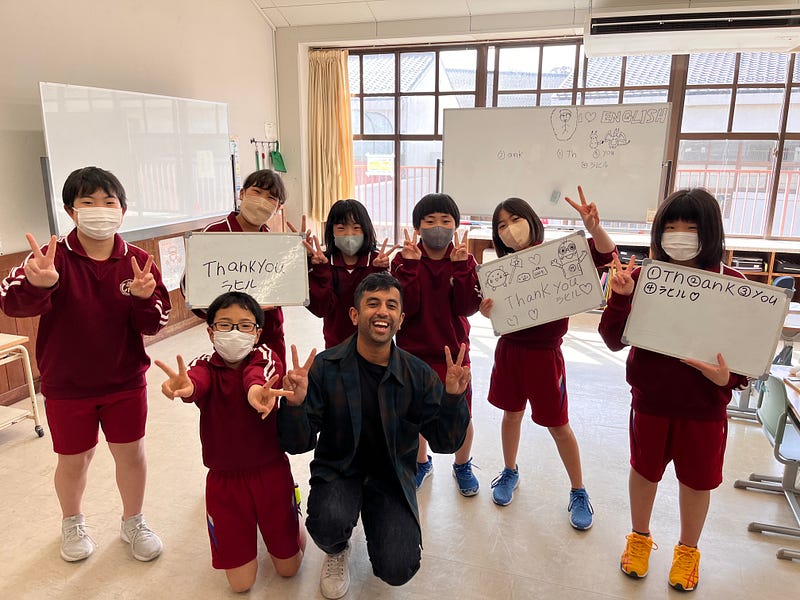
Photo by author.

“No go back!” “We are family!” “Oki family now!”

These are the words of some of my 6th-grade English students after learning that I will be returning to Australia next month.

Their words are reassuring. It’s a poignant reminder of the impact I’ve had on them over the last 15 months. It’s a truly bittersweet feeling. But kids are kids, and it would be impossible for them to truly understand why I’m leaving.

So I turn to Medium, to document the reasons why I’m leaving Japan.

Reason 1: Diminishing returns

Once you’ve learned all you can, it’s easy to fall into a trap of stagnation.

Photo by Aubrey Odom on Unsplash

When I came to Japan I had four clear goals. I achieved them all within the year. A second year wouldn’t offer nearly the same benefits as the first.

#1 Improve my Japanese? ✅

In the span of 15 months, my Japanese improved rapidly. I went from being able to read about 100 Kanji to over 600. I went from broken sentences to debates on minor topics. I went from pulling out my translator app every few minutes to every few hours.

But the reality for me is that the benefits of immersion and daily conversation have hit a plateau. At least for me, pushing from intermediate to advanced is now more about discipline and consistency in study than immersion.

#2 Be a kick-ass teacher? ✅

Not only had I never worked as an English teacher, I’d never worked abroad.

At first, it was nerve-racking, but with time I became adept at communicating with Japanese children. I learned how to create engaging presentations and games. I learned how to encourage good behaviour. I found a balance between being firm and being relaxed. And, because my Japanese also improved with time, I no longer had difficulty following along with the Japanese teacher’s explanations.

#3 Adapt to a foreign culture? ✅

Daily life was initially a challenge. For instance, making a reservation required a phone call in most cases (or navigating a website entirely in Japanese). But as my language skill improved, these heart-throbbing moments became simple ‘to-do’ items on my phone.

I no longer get lost when travelling. I know all the shortest routes to get to the main cities from where I live. And I’ve acclimatised to all of Japan’s customs, rules and social norms.

#4 Travel? ✅
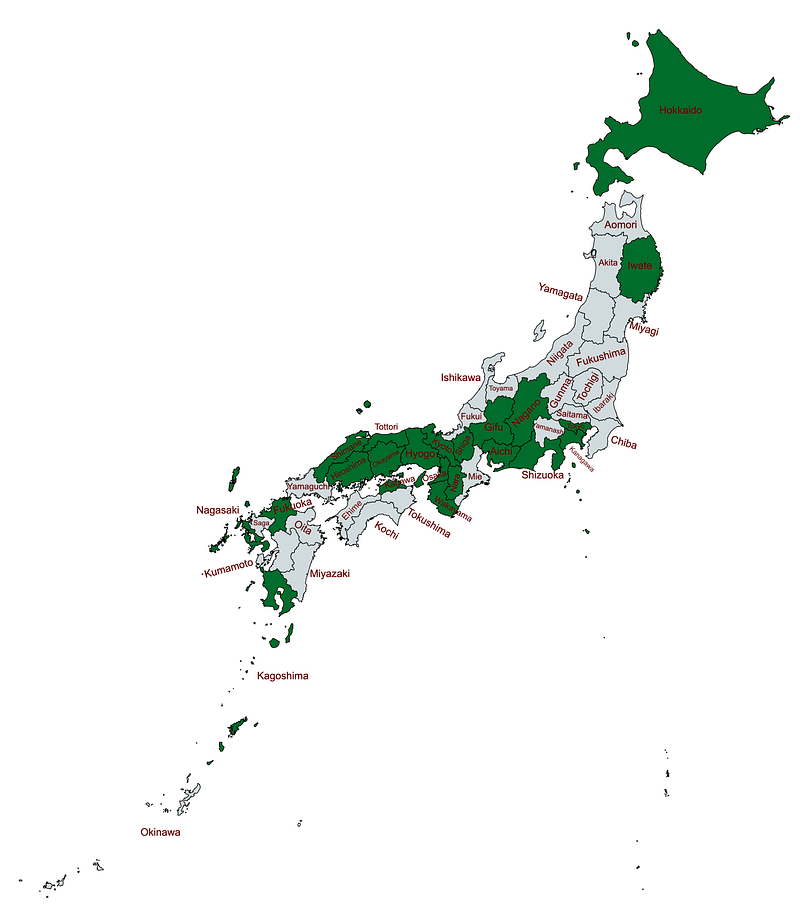
All the prefectures I’ve visited in Japan. Image by author.

Another goal of mine was to travel around Japan and experience its culture to the fullest. Fast forward to today, I’ve visited 23 prefectures, climbed Mount Fuji and even visited Taiwan (edit: 24 now, I just finished Okinawa this week!)

While travelling is eye-opening and enjoyable, it has its drawbacks. It’s hard to bed down a routine, and it’s pretty costly.

But knowing I was only planning to be in Japan for a year or two, I figured I’d do as much as I can. In fact, speaking to other foreign English teachers in Japan, one of the main reasons for staying longer is “I feel like I haven’t travelled enough.” This is completely fair enough — but there’s a serious opportunity cost to doing so, which brings me to…

Reason 2: Dwindling economic opportunity 📉
Photo by Annie Spratt on Unsplash

It’s no secret that Japan’s economy has been stagnating for several years.

Wages between 2001 and 2021 have grown by only 3%. Comparing this to Korea’s 40% and America’s 29% in the same period, it makes a lot of sense why skilled professionals are turning the other cheek.

What’s even more bizarre is that the JET Programme salary is the same as it was when it was established back in 1987. But it’s not just JET or English teaching — this is the salary for public school teachers in Japan. In fact, JET Programme teachers are paid more than local teachers.

My annual salary in Japan is 3,600,000 yen (before tax) which converts to AUD 37,953.26.

In Australia, this is 17.3% below minimum wage.

But isn’t the cost of living lower in Japan?

Yes and no. It’s less simple than that.

  • First, living alone means you can’t share expenses. Internet, utilities, gas, and water that is enough to sustain multiple people is paid by one person.
  • Second, not everything is cheaper. Petrol is roughly the same cost. Coffee is the same or more expensive. In fact, fruits in Japan are comparatively much more expensive than in Australia (I’m talking 2 or 3 times the price). Rents in main cities are roughly the same as in Australia.
  • Third, travel isn’t cheap either. If it was super cheap, you’d have even more tourists in Japan than there are currently. The bullet train might be convenient, but it costs a big chunk of your take-home pay.

Reason 3: Not being able to fit in 😶

Photo by Sasha Freemind on Unsplash

A common theme among foreigners who live in Japan is a feeling of not being able to truly fit in. I can relate to this. I have a lot of Japanese friends, but it’s rare that conversations will go past a surface level. There’s a pro to this — you’re not necessarily bound by the same social norms or conventions as Japanese people. But that doesn’t make it any easier to fit in. If anything it reinforces the idea that you are an outsider.

It’s really hard to read Japanese people

You may have heard of honne (本音) and tatamae (建前) in Japanese. They translate to “true feelings” and “public behaviour” respectively. Because Japanese people care deeply about how they present themselves in the eyes of the public, it’s incredibly difficult to understand how people feel about you.

Someone could hate you but always be nice to your face. On the flip side, someone could really appreciate your personality, but they won’t say so.

Sometimes Japanese people will betray their public face and spill some gossip about someone they dislike. At first, it feels like you’ve earned their trust, but you also start to wonder what they’re saying about you behind closed doors. You just never know what a Japanese person is thinking. I personally find that Westerners are a lot easier to read.

Ambition is a double edged sword ⚔️
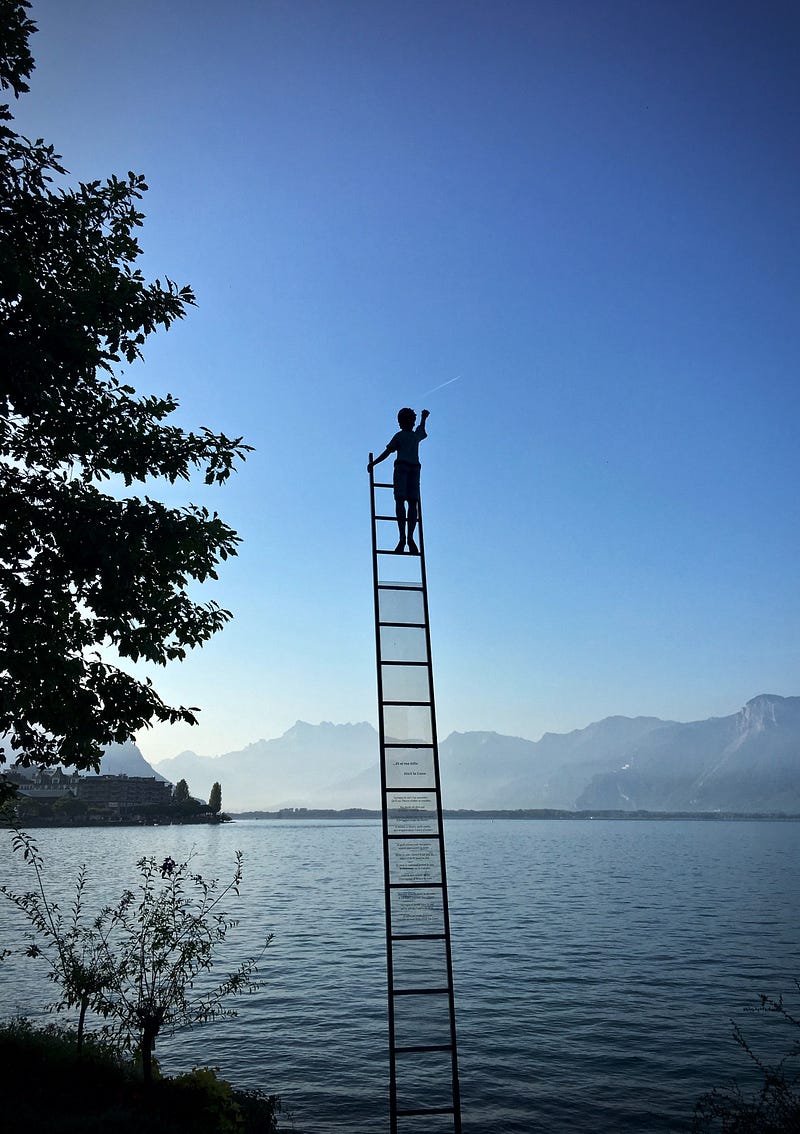
Ambition can be viewed negatively by some Japanese people. There’s a phrase in Japanese “出る釘は打たれる” which translates to “The nail that sticks out gets hammered”. Photo by Armand Khoury on Unsplash

Western culture rewards ambition and drive.

Japan is a little more conservative in this area. There’s a greater level of job stability, and it’s seen as respectful to commit to a single profession or company for life. Job-switching isn’t the norm, nor is it encouraged.

I found expressing my desire to grow very challenging — nearly selfish. I resorted to saying “I wanted to get international experience, and I’m satisfied with my time in Japan, so it’s time to go home”.

In response, I was often met with “mmm”, “I see” and “I thought you would have stayed here for longer”. Back home it would be more of a case of “I totally get that!” and “Wishing you the best for your next chapter!”.

It’s not that they don’t mean well, it’s just a difficult concept to grasp. But it does confuse me. The JET Programme is advertised as a year-long programme, and a good majority of its participants leave after a year. That being said, there is an option to extend year by year, up to 5 years.

But I feel this is where a bit more empathy would make sense. I mean some of my co-workers have never even left Japan before, surely they could understand a person wanting to go home to their own community.

Either way, I’ve always been an ambitious person, so it was another reason I didn’t want to stay in Japan for the long haul.

Reason 4: Weather 🌤️
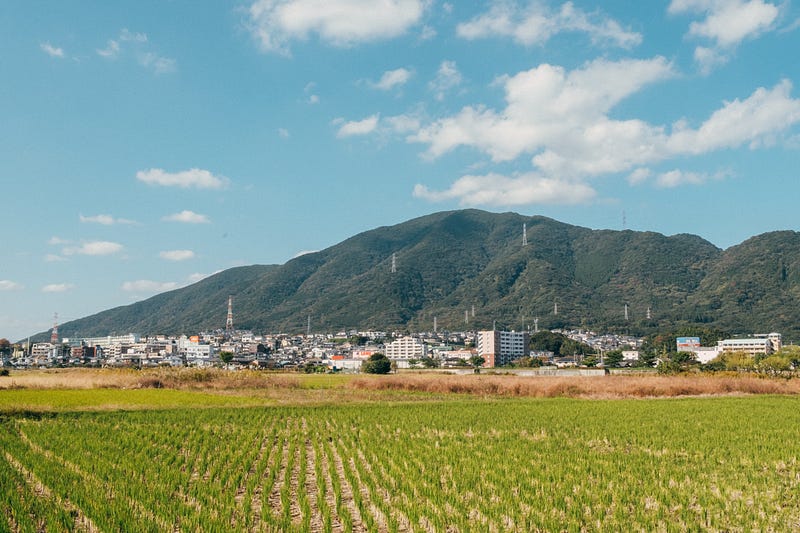
Summer in Japan only looks like this half the time. Photo by Tayawee Supan on Unsplash.

This is comparatively less important than the first three points, but for completeness, I need to cover weather.

  • Humidity: Japan has a much more humid climate than Australia. Not only do I find humidity uncomfortable, it also comes with the additional burden of having to fight off mould.
  • Summer: in Australia, summer is filled with bright days and blue skies. In Japan, almost half of summer is marked with grey skies and rain. This is referred to as tsuyu (梅雨) or “rainy season”. To make matters worse, nightmare insects like mukade and suzumebachi tend to be active during this time of the year.
  • Winter: Winter in Japan is much colder compared to Australia. Snow is cool but it’s also a huge inconvenience. It makes driving and outdoor activities difficult. I recorded the lowest monthly step count in the last three years in last February. Both I and my Fitbit were disappointed.

And so these are all the reasons I’ve decided it’s best to come home! Don’t get me wrong, I had an absolute blast. But if you look at the diminishing return and the relative difficulty of making a career or social life work in Japan, it’s a losing game. Those who do make it work usually fall into one of the following categories

  • they have exceptional Japanese
  • they have a Japanese spouse (which contributes to exceptional Japanese)
  • they have nothing tying them to their home country

That being said, I will miss my kids.

The author is a lawyer working as an English teacher in Japan. If you liked this article, follow Rahil to read similar stories. You can also subscribe to Medium from this link which directly supports the author without any additional charge.

Japan
Japanese Culture
Traveling
Living Abroad
Working Abroad
Recommended from ReadMedium