
Why I’m Keeping My Stablecoin Holdings In BUSD
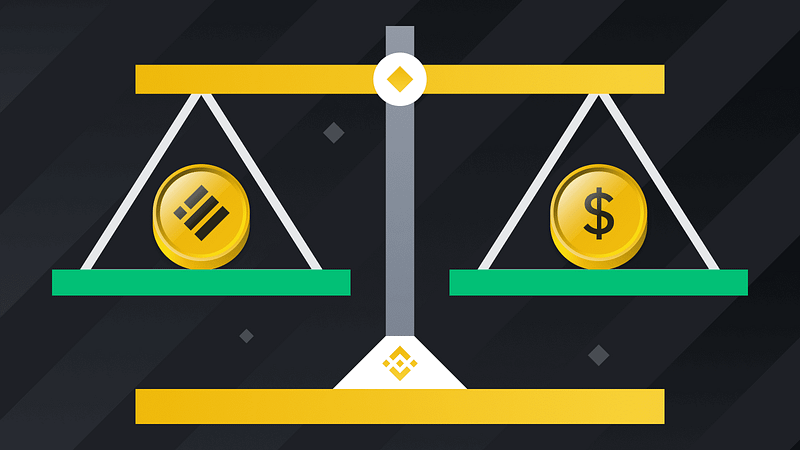
There is an ongoing heated debate about the future of stablecoins in the crypto market.
It all began on May 7, when the price of algorithmic stablecoin terraUSD (UST), which was supposed to maintain a $1 peg, started to wobble.
UST then collapsed and died a sudden death. It wiped out about $30 billion of people’s hard earned money.
Many people are still grief stricken by huge and unexpected losses.
While the collapse of UST serves as a big lesson, the crypto community remains divided on how stablecoins should be managed going forward.
A good number of people are calling for stablecoins regulation, arguing that it’s better for future security.
Another group feels that stablecoins should be abolished.
Others think that the market should be left as is to allow natural selection to take its course.
And there are still those who don’t know what to say.
What everyone seems to agree with is that there must be transparency in how stablecoins are managed going forward.
And it has marked a turning point as Tether (the guys behind USDT which has been a cause of worry for many years) has promised to conduct a full audit to provide more transparency on its USDT reserves.
This is monumental given that Tether has in the past spent huge amounts of money in numerous litigations to prevent people from poking nose into their business.
And it also shows that the market is now aware of the dangers posed by stablecoins, meaning that a lot of people want to deal with fail-safe stablecoins going forward.
What Are Stablecoins?
The first stablecoin was founded on a simple thesis.
The argument was that the crypto market needed a cryptocurrency with zero volatility to counter the effects of highly erratic price volatility in other cryptos like Bitcoin.
Ideally, the stability of a stablecoin would provide a safety guarantee for new users as they began their crypto journey which would in turn create positive sentiment and help in driving adoption.
This use case has already been proven time and time again as traders and investors rush to stablecoins during market downturns.
Beyond that, stablecoins have provided a saving mechanism and a realistic solution for frictionless, cross border payments.
New to trading? Try crypto trading bots or copy trading
Types of Stablecoins
There are four broad types of stablecoins:
• Fiat-backed
• Crypto-backed
• Commodity-backed
• Algorithmic
Under the hood, each type works differently and, crucially, has different pros and cons.
Tether (USDT), the most popular and oldest stablecoin, is fiat-backed.
Tether was launched in 2014 as Realcoin and renamed to Tether the same year.
It’s the first successful stablecoin and has completely dominated the stablecoins market despite the recent growth of other stablecoins, mainly USDC and BUSD.
USDC and BUSD are the second and third largest stablecoins, respectively, according to CoinMarketCap. Both stablecoins are also fiat-backed.
As of June 2022, Tether’s market cap is $66.92 billion.
Its volume is five times bigger than that of USDC and BUSD combined.
In fact, USDT’s trading volume is unmatched by any other cryptocurrency.
Due to its success, Tether is listed in almost all crypto exchanges and it also has the most trading pairs.
Success aside, though, there are many controversies around Tether.
Perhaps the most pressing one is whether USDT reserves are fully backed.
A lot of people believe USDT isn’t fully backed meaning that Tether wouldn’t be able to provide enough real dollars if investors were to redeem their USDT all at the same time.
Situations when people redeem tokens en masse usually should happen during market crashes.
That was clearly demonstrated during the UST crash.
Despite Tether’s controversy, what’s interesting about it is that it has survived all significant crypto market crashes.
Therefore, this begs the question, why did UST crash and not USDT?
Why Stablecoins Fail
I recently heard a joke that nowadays stablecoins and Bitcoin both dump.
I think humor sometimes makes stressful situations better but I am aware that some people may never recover from the financial hole caused by the UST crash.
UST is not the first stablecoin to fail (there was Saga, Empty Set Dollar and Basis), but it’s the first that has caused a swooping market downturn and pushed people to poverty.
The biggest risk for any stablecoin is losing the 1:1 peg to fiat currency.
In the case of fiat-backed stablecoins like USDT or BUSD, the peg is maintained by companies that hold fiat reserves and mint or burn tokens accordingly.
The mechanism of maintaining the peg is different in either crypto-backed, commodity-backed or algorithmic stablecoins.
Crypto-backed and commodity-backed stablecoins are designed the same way as their fiat-backed counterparts with the only difference being the type of reserve assets used to back them up.
Crypto-backed stablecoins are collateralized with another cryptocurrency (mostly Ethereum) while Commodity-backed stablecoins are collateralized using physical assets like precious metals, oil, and real estate.
Algorithmic stablecoins rely on code to maintain the peg. That simply involves maintaining a stable price by expanding & contracting the stablecoin’s supply.
The intent is to influence interest rates and market behavior, which, in theory, ultimately return the stablecoin to its target price.
The key promise is that the algorithm and incentive mechanisms work as promised, and the stablecoin maintains its peg through the issuance and removal of its supply.
But as the market has shown, algorithmic stablecoins are prone to fail when they struggle to maintain the 1:1 peg to the Dollar, especially during extreme market conditions.
Various pundits have pointed out that the main cause of failure for UST, which was an algorithmic stablecoin, was because it grew too fast single-handedly due to Anchor Protocols 20% annual percentage yield (APY).
That kind of growth was unsustainable and maybe UST would still be alive if it had grown as a result of a more balanced demand.
Crypto and fiat-backed stablecoins have a much better track record vs their algorithmic counterparts.
Fiat-backed stablecoins, in particular, are the clear market leader for now. That makes sense — they have the simplest design, are fully collateralized, and have been around for years.
Take USDT for instance which has had controversies since inception.
In the last four years we had three significant market crashes — in 2018, in March 2020 and in May 2021. USDT survived all of them.
The reliability of fiat-backed stablecoins gets better when you introduce something like BUSD or USDC which have a good reputation unlike USDT.
BUSD vs USDC
It’s inevitably hard to choose an outright winner between BUSD and USDC because both stablecoins are extremely well managed, and have reputable companies behind them.
USDC was launched in 2018. It was developed by a partnership between the company Circle and the exchange Coinbase.
On the other hand, BUSD was founded by Paxos and Binance in 2019.
In both partnerships, the role of crypto exchanges (Binance and Coinbase) is to develop the underlying technology.
Both Circle and Paxos are licensed Money Transmitters, meaning that they must comply with United States federal law and regulations.
As licensed Money Transmitters, these companies are also responsible for determining the monetary policy for their respective stablecoins.
That simply means that Paxos is responsible for issuing and burning BUSD, while Circle does the same thing with USDC.
As a fiat-backed stablecoins, one unit of BUSD or USDC is equivalent to one US dollar.
To maintain the peg, Paxos and Circle hold an amount of US dollars that is equal to the total supply of BUSD and USDC, respectively.
Therefore, the price of each stablecoin fluctuates directly with the price of USD.
To enhance transparency, both BUSD and USDC provide monthly audited reports of reserves in compliance with stringent regulatory standards to ensure the security and safety of user assets.
So if neither stablecoin is better than the other, then the choice about which to buy ultimately comes down to personal preferences.
In my opinion, BUSD is the best stablecoin and here is why:
- BUSD is available on both Binance and Coinbase.
- BUSD supports Binance Futures. Binance has added over 40 BUSD denominated trading pairs on its futures interface.
- BUSD supports DeFi. BUSD is an ERC-20 based token as well as a Binance Chain (BEP2) native token, therefore it can be used by any dApp built on the ethereum network or on the Binance Chain.
- BUSD is available for on-site and offline payment. This involves settlement options for private businesses. For example, certain hotels offer their guests the chance to book a stay using a QR code that allows users to pay using BUSD.
Those who are pro USDC may not believe this, but there are numerous benefits that you can get by using BUSD on Binance.
For example, if you make a maker-trade on BTC/BUSD in the spot market, you will not incur fees.
Additionally, converting BUSD to other stablecoins and vice versa is free on Binance.
And it even gets better if you’re a day trader on Binance Futures.
When trading futures on Binance, you will get fee discounts which apply to any trading pairs that include BUSD, such as ETH/BUSD perpetual contracts or BTC/BUSD perpetual contracts.
Why You Should Choose BUSD as Your Collateral?
Perhaps the best reason why you should use BUSD as collateral in futures trading is that Binance now has BUSD-Margined contracts.
BUSD-margined contracts are a type of linear futures product quoted, collateralized, and settled in BUSD.
In other words, you’d be required to deposit BUSD in your Binance Futures account in order to trade pairs such as BTCUSD or ETHUSD.
If you’ve ever traded the USDT-margined contracts on Binance, the process is much the same, except the differences in the base currency. I have included a tutorial below on how to trade BUSD-margined contracts.
BUSD-margined perpetual contracts offer the following benefits:
- Low fees. There are added benefits like cheaper trading fees and occasional fee discounts that apply to the trading pairs available in BUSD.
- Stability. Even though BUSD is much newer, it’s been stable and has been widely adopted and is now used by millions of users on Binance.
- Versatility. Binance has engineered BUSD-margined contracts to be highly flexible. With the Multi-Assets Mode function, users can diversify across various stable coins and increase their capital efficiency. With this feature, users can share their margin across USD-margined products available on Binance Futures (USDT & BUSD); this is particularly useful when opening positions in the two markets.
- Ever growing liquidity. BUSD’s transparency has made it increasingly popular meaning that it is currently being used by many traders on Binance Futures and this ensures all your trades get filled.
Benefits of Holding BUSD
We are in a bear market right now which means that a lot of people have converted their crypto holdings to stablecoins.
This is quite common in bear markets but as this particular one has shown us, it matters quite a lot which stablecoin you buy.
As we have previously mentioned, BUSD and USDC are quite safe in this respect, but there are some additional benefits you’ll get by just holding BUSD.
For starters, BUSD is fully backed by Cash & Cash Equivalents. According to Paxos 96% of BUSD’s total market capitalization is backed by cash and by cash equivalent while the other 4% is backed by US Treasury Bills.
That means the value of each stablecoin token is tied directly to the value of the US dollar, and the amount of “reserve” dollars equal or exceed the number of stablecoins outstanding.
Paxos also provides assurances that the reserves are fully segregated from corporate assets, specifically for the benefit of token holders. This means BUSD is fully redeemable for USD.
Other than being a safe buy, BUSD can be useful for trading on Binance.
If you use BUSD to place limit orders in the spot market, you won’t pay any fees. Binance includes such trades in the Zero Maker Fee promotion incentive.
That promotion also applies to futures trades that use BUSD as the base currency.
In the long run, these initiatives can help lower your total trading expenses.
How to Start Trading BUSD-Margined Futures
If you have never traded futures before, you’ll need to open a free account on Binance.
Open this page to register a Binance Account.
With Binance, it only takes under 30 minutes including KYC verification.
Here’s how it goes:
- Click the link above to open the Binance sign up page and then enter your email or phone number. Then type a strong password.
- Verify your account.
- Enable Two Factor Authentication (either Google Authenticator or SMS Authentication).
Step 1: Once you’ve completed the above steps, click Derivatives on the navigation menu and select USDⓈ-M Futures.

This will open the Binance futures trading interface that allows you to select price charts of different trading pairs and to place orders.
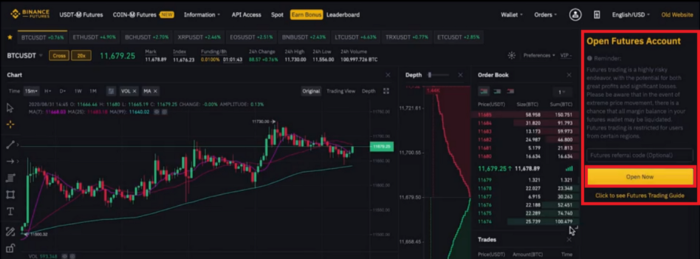
On the right sidebar, click the Open Now button to activate your futures trading account.
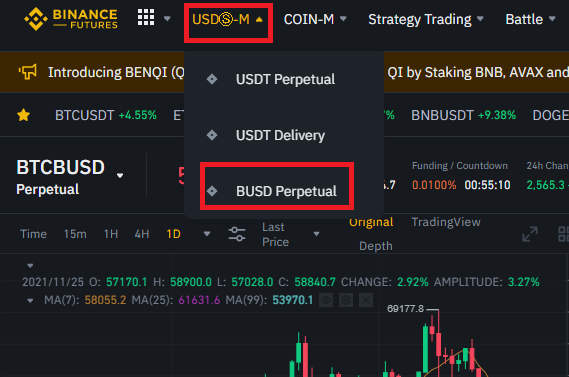
Step 2: Go to USDⓈ-M Futures — BUSD Perpetual and choose the contract you want to trade.
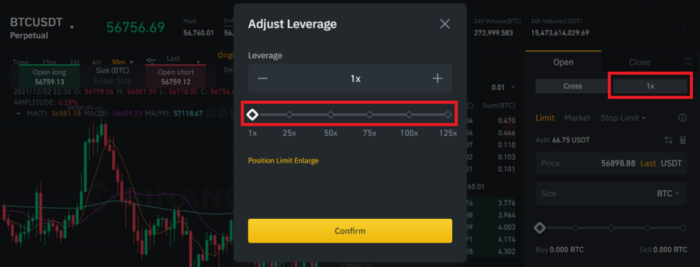
Step 3: Select the appropriate leverage for your BUSD-M futures contract. The default leverage is set to 20x, but users can adjust their leverage.
As earlier mentioned, BUSD-margined contracts are quoted, settled, and collateralized in BUSD.
So, you need to fund your Futures Wallet with BUSD.
Keep in mind, you can convert from one stablecoin to another for free in Binance.
To do this, click the Convert button on the bottom right corner of the futures interface.
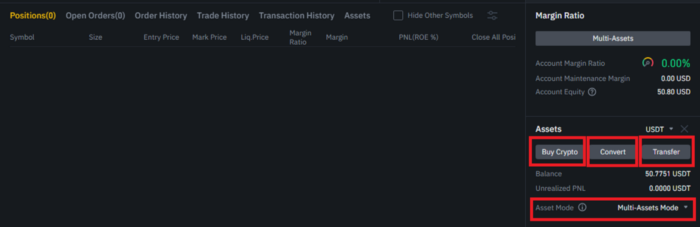
Here, there are several other options that will make your life easier as a beginner.
The Transfer button allows you to transfer funds between futures and spot accounts. To make crypto purchases via credit/debit card use the Buy Crypto button.
The Multi Asset Mode option allows you to share margin across USDT-margined and BUSD-margined contracts. With this feature, you can easily diversify your stablecoins’ holdings to increase capital efficiency.
How to Use the Multi-Assets Mode to Trade BUSD-M Futures
The Multi-Assets Mode makes Binance futures fully interoperable by allowing users to trade various crypto futures contracts using USDT or BUSD as collateral.
With this feature, you can use profits made from either BUSD or USDT trades as margin to open other positions.
This is cool because it simply means you can take advantage of trading opportunities as they occur in different futures markets, without having to close other positions that are already in profit just so as to reallocate margin.
Diversification is another aspect of risk management that is now possible when you trade in multi-assets mode.
Given the compatibility with both USDT and BUSD, you can open positions in the two markets using shared margin.
In other words, you can trade USDT-M contracts without converting them to USDT, giving you the flexibility to open positions in both USDT-M and BUSD-M contracts whenever opportunities arise.
And that’s not all. Under Multi-Asset Mode, trading BUSD-M contracts offer significant discounts on trading fees.
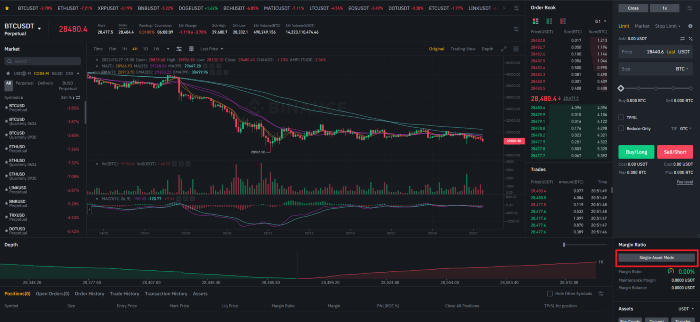
To activate the Multi-Assets Mode on your desktop, click the button labeled Single-Asset Mode on the bottom right of the Binance Futures interface.
That will open a pop up window.
You will notice that the Single-Asset Mode is enabled by default.
On the pop up, select Multi-Assets Mode.
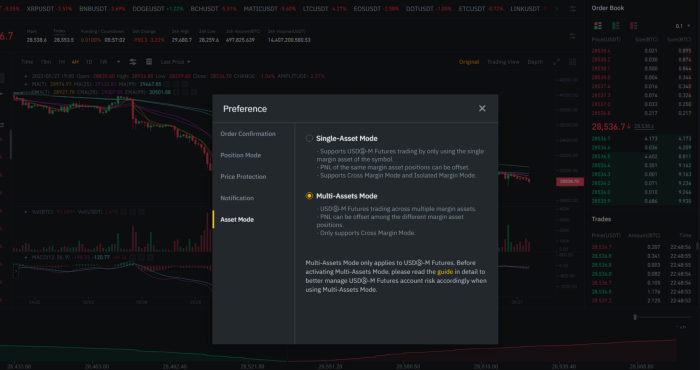
That’s it.
How to access Multi-Assets Mode on Mobile
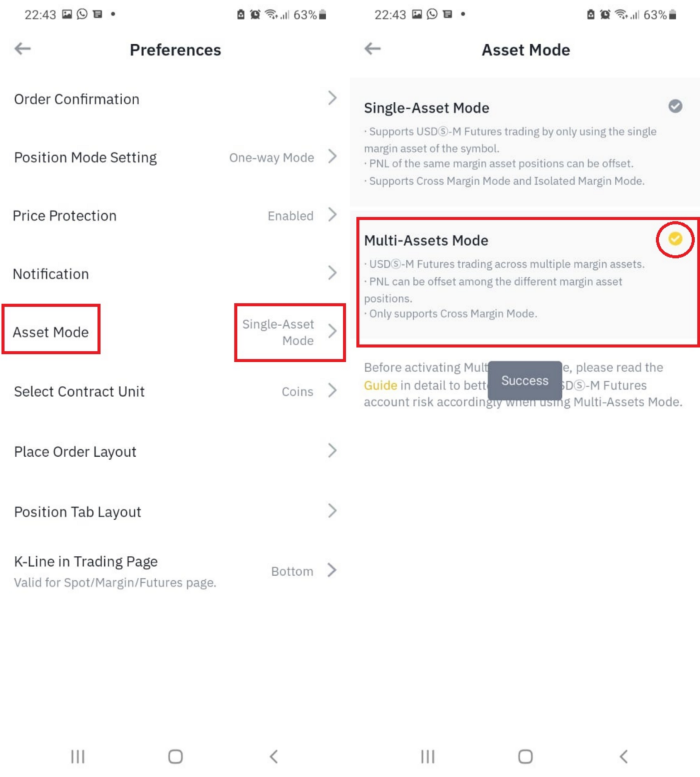
Log in to your Binance App and go to [Futures] — [USDⓈ-M]. Tap on the three dots as shown below and select [Preference] — [Asset Mode].
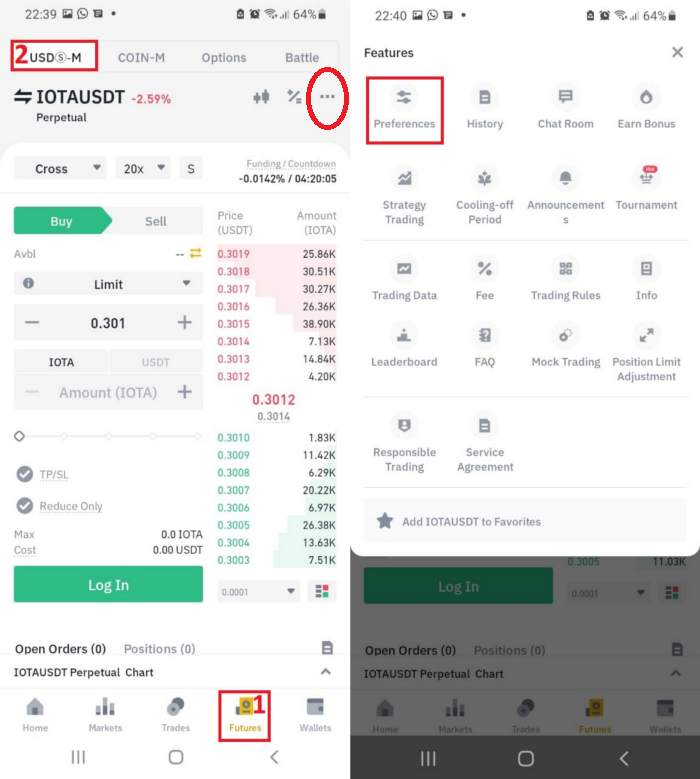
2. Tap [Asset Mode] to select between [Single-Asset Mode] or [Multi-Assets Mode].
Using Mock Trading to Sharpen Trading Skills
In my opinion, bear markets offer the best opportunity to sharpen your trading skills.
And if you’re a complete novice, you can easily learn how to trade futures using risk free methods.
Paper trading is a simple way to practice as you can simply take an imaginary amount of money and trade with it.
Put simply, all you need to do is write on paper the amount of money you want to start with and also write the trades (buy or sell).
The last step is to calculate profit and losses.
But if you’re well versed with paper trading and looking to upgrade to something more advanced, you could try a testnet.
Testnets have all the features offered by regular exchanges and they also allow users to practice with virtual money.
Click this link to open Binance testnet.
The other alternative that can help you improve your trading skills involves trading with a very SMALL amount of real funds (like $15) in an exchange like Binance.
While it’s a very good idea to learn through virtual trading, it’s also not very risky to learn in knee deep waters.
In my opinion, practicing on a regular exchange is better than either trading on paper or using a testnet because real money, however small, ensures that some of the psychological aspects of trading will be present.
I believe every trader would agree that the mental game is always the hardest part to master.
Though it sounds like horrible advice, I think it’s better to practice in the real world, but remember that I suggested doing it with a very small amount.
Actually, that’s how I started.
Final Thoughts
It’s hard to tell what will be the outcome of the prevailing discourse on stablecoins.
But at this point, I think it’s important for everyone to understand good stablecoin designs from the bad.
That’s the best form of protection you can give yourself.
I hope you enjoyed reading this. Please follow me to get more articles like this in your inbox. Also, If you’d like to support me as a writer, consider signing up to become a Medium member. It’s just $5 a month and you get unlimited access to Medium.
Disclaimer: This article is meant for educational purposes only and should not be construed as investment advice.
Disclosure: I only recommend products I use myself and all opinions expressed here are my own. This post contains affiliate links. If you use these links to buy crypto assets, you will get a discount and we may earn a commission.


