
Why I’m Hitting Pause on Pride Month
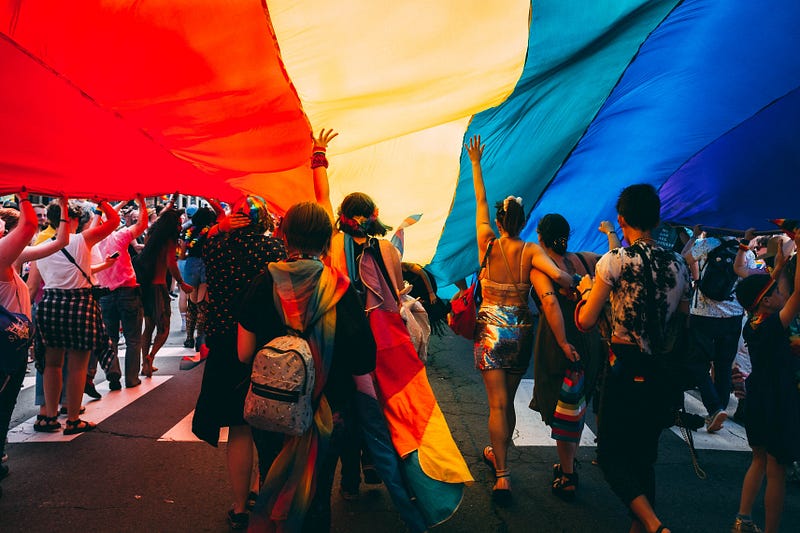
Pride month is a month to champion LGBT+ equality, but this year, in America at least, people of color need that attention more.
Before I begin — I thought long and hard before writing this piece. I want to avoid taking the spotlight away from those who are better qualified to speak on matters of racial equality. That said, I believe everyone should speak out against racism every chance they get. I will never understand the struggle that people of color go through, but ultimately, I think we should all do the best we can to speak up, so long as we do it to the best of our abilities. At the bottom of this piece I have included a list of resources, most by people of color, all made with input of people of color. Please check it out.
Thus far, 2020 has been awful. We’ve dealt with a rampaging virus, a taut political climate, and now, an assault on equality. With the killing of George Floyd, the Black Lives Matter campaign was catapulted back to the forefront of our consciousness. For some, that has meant campaigning on the streets, for others, finding out their parents aren’t as for equality as they had thought.
We’ve finally arrived in June, a month known for its place as a month championing LGBT+ equality, but as necessary as queer equality is, right now, in much of America, black activists need the spotlight more. Despite all time high levels of awareness the Black Lives Matter campaign has reached, there are still those who insist white privilege does not exist, or if it does, that there is nothing we can do about it.
There have been social media movements. Some have been harmful, such as the “Blackout Tuesday” movement which clogged hashtags with black images instead of useful information, as well as let white people off the hook for campaigning for justice. Others have been helpful such as the growing amount of celebrities donating and matching donations to BLM related causes. Both show a genuine level of concern many people are feeling for the state of equality in America.
Pride month is important to many people, both for the sense of solidarity it provides, as well as for the attention it puts toward decriminalizing and destigmatizing LGBT+ people and causes worldwide. It is important for furthering equality on a local, national, and international scale. But for many Americans, it is less pressing than what is going on in America right now.
Outside of America, people may have different priorities. I admit I am not as well-read on the current status of LGBT+ and racial equality on a worldwide scale as I am in America. Still, I have cursory knowledge. No one will be surprised to know that homophobia worldwide often comes attached with violence and death sentences, transphobia does as well, while being coupled with vehement hatred everywhere trans people exist. Now, as the protests in America occur, Hungary is pushing to end legal recognition of trans people, signaling a backwards march in equality.
This is not a push to drop fighting for LGBT+ equality to focus only on racial equality. Both are important fights. What this piece does aim to do is show why members and non-members of the LGBT community who are not currently being persecuted ourselves should focus our time on strengthening our black and brown siblings’ equality. This piece, on the other hand, does not suggest that those who are suffering from discrimination or persecution themselves should stop fighting. Apply yourself to the place you can make the most difference, if you yourself are under attack, you can make the most difference by helping yourself first and others after. With that said, if you are in a position to help others, realize that causes like this must be fought for.
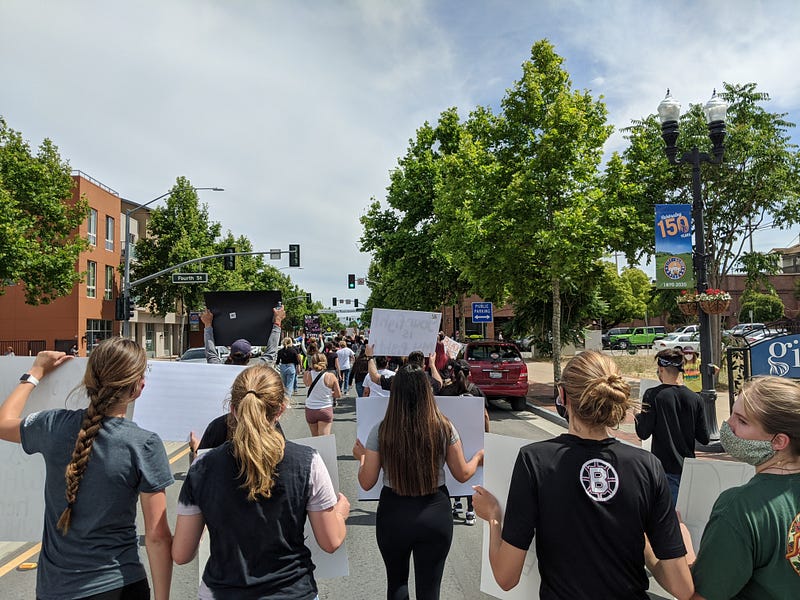
All around the country protests are being held in hope of a future without racism. These protests which, for the most part, have been inhabited with peaceful protesters, have been targeted by the very force they are trying to bring attention to the brutalities of. These protesters of police violence have even been called “thugs” by the man our country elected to lead us.
This should serve as a stark warning of the dangers of electing someone who does not understand the realities of racism in America. Someone who holds an office of such import should be held to a standard much higher than the average person. And yet, President Donald Trump, in his refusal to side with the protests — and protesters — is clearly ill-prepared to lead the nation toward equality.
If you are able to, join a protest. It is an experience you won’t soon forget. Rallying toward equality gives a feeling of earnest fulfillment. You are surrounded by the cause you support and people who side with you against racial injustices.
I hope you can see why, given the current state of the country, rallying around people of color, and raising them up is more important than ever. For many of us, it is more important than Pride. Clearly, I am not alone in this thought — just yesterday Los Angeles’ Pride parade announced it will instead be a Black Lives Matter march — this solidarity between causes is so incredibly important. Racial equality and LGBT equality may be separate causes, but they both strive to make humans see themselves for what they are: equals. We need to focus our joint efforts on whatever the cause needs the most help, right now that’s the Black Lives Matter movement.
Up to this point, I have assumed white privilege, and systemic racism exist. I do not believe those must be addressed here as they have been accepted as facts of life for years now. Still, for those new to these topics, I wanted to include links to some resources to begin reading more on both these topics. Also listed are resources to better understand the Black Lives Matter movement, as well as the need to fight for equality at all costs. All of these are listed below with a short introduction as to what they cover. I hope you find them useful.
Articles:
This introduces the concept of white privilege and how it works:
An op-ed showcasing proof of racial bias in the police force:
Film and Documentaries:
A riveting Netflix documentary highlighting some of the history of black prejudice in the prison system:
A hard hitting look at two friends, one black and one white, and the hardships racism can bring:
Books:
A great resource (non-fiction) to deepen your understanding of the need to vehemently appose racism:
Another great read to expand your knowledge of equality, but through a narrative which can make it easier to pick up:


