avatarJames Jordan

Free AI web copilot to create summaries, insights and extended knowledge, download it at here

6787

Abstract

d.</p><p id="0068">And because of their relative homogeneity, ego-Networks can easily become echo-chambers.</p><p id="7e3e">If the hub of an ego-network goes away the network falls apart. In an ego-network, the person is the purpose, and without that person, the connections are gone. My marriage (wonderful as it is), ended a lovely phase of networked connectedness in my life, because the purpose of our interactions (my need for help with child-raising) ended and the network drifted apart.</p><h2 id="1732">Eco-Networks Fit Between Socio-networks and Open Networks</h2><p id="8853">An Eco-Network is a relative newcomer to the network-science labelling game. I don’t even know where I got the term from. It’s not in the book I pulled the others from, which is what I’d expected. I know I’ve come across it in a few places over the course of my network reading but haven’t been able to re-find them — so if anyone reading this can find them, please share with us!</p><p id="77ca">In any case, an eco-network sits somewhere between a socio-network and an open-network. A socio-network (the ‘network in a box’) generally has a centrally defined, narrow purpose (think ‘mission statement’ or ‘avoiding organizational bankruptcy’); a clear and precise definition of inclusion (think ‘everyone on our payroll’ or ‘the roll-call list’); a relatively centralized and hierarchical command system; and officially-sanctioned and controlled information and resource flows (balanced by secret, un-sanctioned information flows). Whereas an open network is unbounded, random, directionless and incoherent (think Twitter, Facebook, Instagram).</p><p id="0b65">So we could think of an eco-network as skirting the boundary between rigid pseudo-control and a free-for-all. In my mind, an eco-network is the social equivalent of that strange attractor within a system that generates ordered patterns out of chaos. To me, an eco-network has the potential to generate a collective path from our current world — a world presently oscillating between destructive authoritarian rigidity and chaotic collapse — to a new world, built on an evolved understanding of order/structure, connection, and thriving.</p><h2 id="9d53">What IS an Eco-Network?</h2><p id="56e0">But what does all that MEAN, practically speaking?</p><p id="a65c">Well, it helps to think about ecosystems. For one thing, both eco-networks and ecosystems only thrive with ample diversity.</p><p id="05c0">For another — in both cases, flows of resources (whether money, information, skills, trust and shared inspiration or nutrients, shared environmental context, water and sunshine) are complexly reciprocal, as opposed to transactional. In a forest ecosystem, no-one barters with the squirrel to get it to poop out worm and fungi food. And in exchange for the squirrel poop, worms and fungi don’t break the elements down fine enough so that plant roots can absorb them because the trees or the pooping animals pay them to — they do it because that’s what they do, it’s part of their organic process. The trees and other plants only grow if there are adequate nutrients and water — and when they do, they create food some of the animals need to survive (and poop out), some of which become food for other animals, and it all requires water, water retention, healthy soil — and so on. There is an organically-driven flow of value, based on adequate diversity, that is not directly transactional.</p><p id="3124">There is no need for direct transactions because each community member’s survival depends on the in-flows (food, etc.) and out-flows (poop, etc.) of all the members. Transactions are too small a dynamic to support the complexity and adaptivity of an ecosystem.</p><p id="c510">The ecosystem forms an interdependent network of a huge variety of life forms, moving a broad range of nutrients freely through a complex system of flows that sustains the whole thing. Pull out too many parts, or just block up too many of the flows from one component to another and the whole thing collapses. And when I say ‘flows’ here, I mean ‘connection’/’relationship’. You could have all the pieces of the system/network, but if they weren’t able to interact, you wouldn’t have a network, let alone a living system.</p><p id="6f03">In an ecosystem, there is also no ‘boss’, no centralized command and control. The whole thing works because of how the community fits together, not because someone designed it that way. A social eco-network is similar. There may be players with larger impacts and greater input into direction, but that doesn’t mean they master-mind and control the whole thing.</p><p id="248a">Another thing a social eco-network and a ecosystem have in common is boundaries. They may be fuzzy, but they are real and discernable. For instance, there is diversity, but the diversity isn’t infinite (like it could be in an open network) and it certainly isn’t random. Whales don’t occupy forests, butterflies don’t do arctics, polar bears don’t co-exist well within rainforests.</p><p id="c77f">With ecosystems the boundary is environmental, the community members all thrive within a similar environment. With an eco-network, the boundary is purpose. And the boundary is what holds the community together.</p><h2 id="66e9">The Point of an Eco-Network</h2><p id="04f0">So — ultimately — the main distinction between an ego-network and an eco-network is this — the eco-network exists to support a purpose, not a person or an organization. It supports a broad purpose that is greater than any of the individuals involved, but which benefits all the individuals involved. It’s also a purpose which can’t be served nearly as effectively by individuals (or individual organizations) acting on their own, without the diverse and reciprocal flows of support and information that characterizes an ecosystem.</p><p id="4069">The glue, then, is not ONLY strong personal bonds (as in an ego-network) — though it won’t ever work without a lot of them — it is ALSO an intention that is larger than the personal bonds. It is an intention to be one part of a larger, purposeful, whole. An intention to help develop that whole and the individuals within it in ways that are generative for oneself as well as for the larger purpose.</p><p id="984c">An eco-network, then, has: a purpose; diverse membership; complex reciprocity; multiple ‘centers’ with multiple roles; and a robust and free flow of information, resources, capacity and care to where they are needed most. A flow that both includes and transcends the bonds of personal connection, and that emerge from the interactions.</p><p id="453e">Far from being a popularity contest, an eco-network is a puzzle we can do together. It’s a fun but serious game of learning about fits and flows — about

Options

how to amplify the impact of what each member has to offer. It’s a dance between the individual and the collective, an ever-shifting experiment with order emerging from chaos.</p><h2 id="da50">But So What?</h2><p id="4717">Why do I think any of this matters?</p><p id="41bb">I believe it matters because our imaginations matter. All of our actions and behaviors are driven by and reflect our deepest beliefs and values — and these are all gestated in the womb of our imaginations. What we can’t imagine, we can’t create. And the only way we ever create something new, for which there is no current model, is if we imagine it first. I believe it matters that we pull our imaginations a step past what we already know, do and envision — into a higher level of generative capacity — in a way that affirms and includes everyone, not just the social butterflies.</p><p id="8817">And I believe that if we tease out a clearer understanding of the values and intent of network weaving, if we tempt our imaginations into this fresh, promising new territory, we go further to affirm and generate the kind of world we want to live in together. We affirm that weaving an impactful and resilient change network:</p><ul><li>Is not a contest — it’s more about discerning the right network for ourselves (so we don’t end up like a polar bear in a rainforest), finding our natural place, supporting the flow of nutrients where they need to go, expressing our unique contribution and helping others do all of that as well.</li><li>Means supporting others, whether they’re able to support us or not, serves the overall purpose we’re all trying to promote.</li><li>Requires a lot of different roles, as well as understanding and appreciating the roles that are different from our own.</li><li>Means going beyond developing our own personal relationships, and helping others develop relationships that enhance maximum flow of value throughout the network.</li><li>Requires recognizing and acting on the recognition that there is a limit to how much can be accomplished in a transactional context, and that system change is built on an abundance of relationships across differences.</li></ul><p id="ebb9">Stimulating this kind of understanding and imagination requires many tools and approaches — <a href="https://help.sum-app.net/portal/en/kb/articles/what-is-social-system-mapping">Mapping</a> is the tool Tim and I personally contribute to the puzzle. Powerful, adaptive eco-networks are the shift we’re trying to support.</p><p id="8454">What contributions are you interested in making and to which greater purpose?</p><p id="1780">By <a href="undefined">Christine Capra</a>, March 2018 <i>Originally published at <a href="http://greaterthanthesum.com/not-networking/">greaterthanthesum.com</a></i>.</p><blockquote id="ae3b"><p>In case you liked what you just read and you’re getting value out it, I encourage you to <b>click the 👏 button </b>and <b>hold down to 20–50 claps </b>as this will help concepts and ideas above get more exposure.</p></blockquote><p id="f809"><b>Related:</b></p><div id="5ad0" class="link-block"> <a href="https://readmedium.com/types-of-trust-in-networks-6fd7de879d28"> <div> <div> <h2>Types of trust in high-trust Networks (of Community of Practice kind)</h2> <div><h3>If trust is the glue of a network we can’t have too many honest and authentic discussions about it — by Christine Capra…</h3></div> <div><p>medium.com</p></div> </div> <div> <div style="background-image: url(https://miro.readmedium.com/v2/resize:fit:320/1*aguSzTEUAI2rFqltiShAgg.jpeg)"></div> </div> </div> </a> </div><div id="2094" class="link-block"> <a href="https://stories.platformdesigntoolkit.com/7-key-platform-design-principles-d84cc78b9218"> <div> <div> <h2>The 7 Key Principles of Platform Design</h2> <div><h3>To design Strategies that mobilize, in the XXIst Century</h3></div> <div><p>stories.platformdesigntoolkit.com</p></div> </div> <div> <div style="background-image: url(https://miro.readmedium.com/v2/resize:fit:320/1*KBo_EgHlsm5LObwH_20egQ.jpeg)"></div> </div> </div> </a> </div><div id="4106" class="link-block"> <a href="https://readmedium.com/networks-are-not-communities-1df2ac5ac6c4"> <div> <div> <h2>Networks are not Communities</h2> <div><h3>by Henry Mintzberg</h3></div> <div><p>medium.com</p></div> </div> <div> <div style="background-image: url(https://miro.readmedium.com/v2/resize:fit:320/1*eeRI3JaIW05lwVvM3DCYnA.jpeg)"></div> </div> </div> </a> </div><div id="04e6" class="link-block"> <a href="https://readmedium.com/exploring-the-ecosystem-d03b07448b83"> <div> <div> <h2>Exploring the ecosystem</h2> <div><h3>Reflections from the Network Convergence retreat</h3></div> <div><p>medium.com</p></div> </div> <div> <div style="background-image: url(https://miro.readmedium.com/v2/resize:fit:320/1*uskvlPFCIMzpSHOxzsPabg.jpeg)"></div> </div> </div> </a> </div><div id="683e" class="link-block"> <a href="http://workfutures.org/post/178981762658/evolution-of-the-platform-organization"> <div> <div> <h2>Evolution of the Platform Organization</h2> <div><h3>I was recently honored to present a keynote in Qingdao China at the 2nd International Renhanheyi Model Forum, held on…</h3></div> <div><p>workfutures.org</p></div> </div> <div> <div style="background-image: url(https://miro.readmedium.com/v2/resize:fit:320/0*8IQVkfRVoJWIJRip)"></div> </div> </div> </a> </div><div id="4ea5" class="link-block"> <a href="https://newnetworkleader.org/"> <div> <div> <h2>The New Network Leader</h2> <div><h3>Four Network Leadership Principles</h3></div> <div><p>newnetworkleader.org</p></div> </div> <div> <div style="background-image: url(https://miro.readmedium.com/v2/resize:fit:320/0*pV3j7vJQJd1GcDGd)"></div> </div> </div> </a> </div></article></body>

What I learned walking on an abandoned railroad track
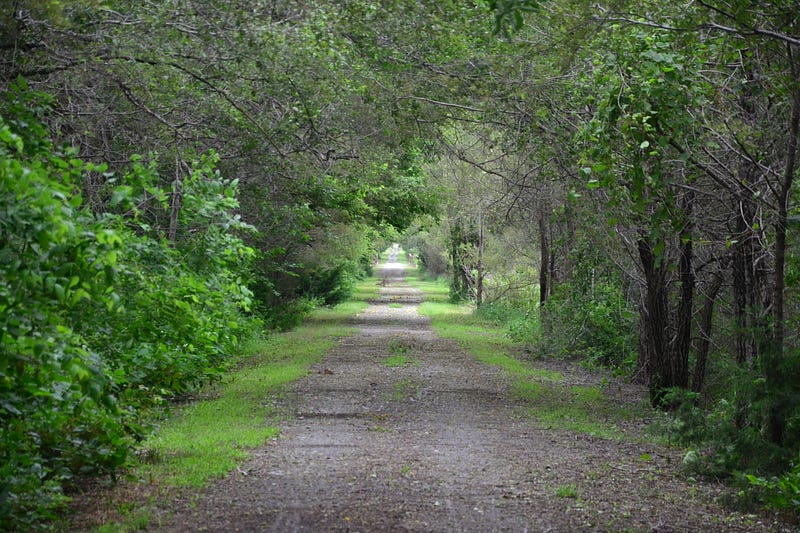
This is what the trail looked like most of the way. All Photos By James jordan

Lessons learned from pushing myself to the limits

I was looking for solitude. The quiet of nature. The only sound was my feet on the trail with leaves rustling in the wind. A small animal here and there or a bird singing. The sounds of nature are the earth breathing.

I was pleased when there was hardly anyone else on the trail. The few people I came across were all going in the opposite direction. Most of them were on bicycles.
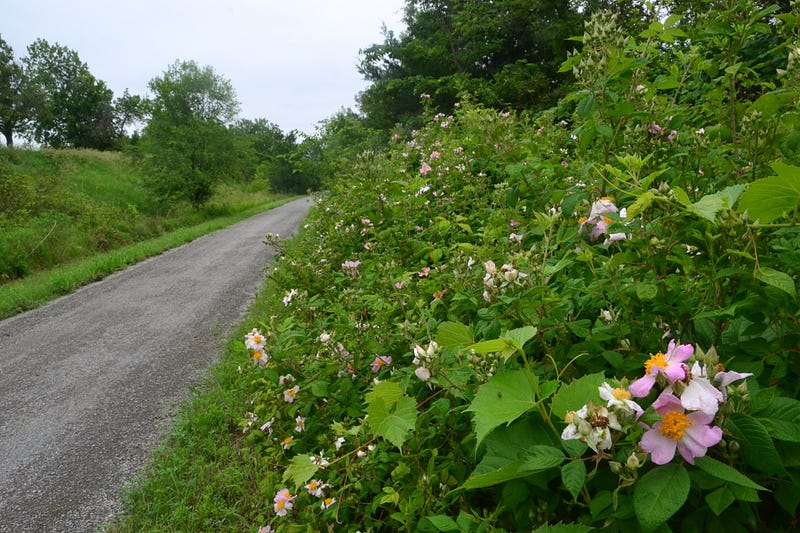
Flowers lined the trail.

Finding the motivation

I walked 12 miles in just under six hours that day. It was exhausting but also exhilarating. That much time alone in nature was the balm my soul needed. A nice feeling of accomplishment was welcome as well. I am fairly certain it was the longest distance I have walked in one day.

I wanted to see if I could do it and wondered what it would feel like. I had made a lot of five or six-mile walks and I walk a lot anyway. I thought it would not be that hard to go more miles. Remembering my days as a runner, going from two to four miles — and then to eight — was not as big of a deal as I thought it would be. Hiking would not either I reasoned. Turned out I was right.

Since discovering the rails to trails program I have wanted to do this. The program converts abandoned railroad lines into trails. You may see the entire national network here:

The trail I chose is an old rail bed that goes from Wichita to Garden Plain, Kansas. The whole trail is 13 miles. I chose a section between two smaller towns that were about six miles apart.
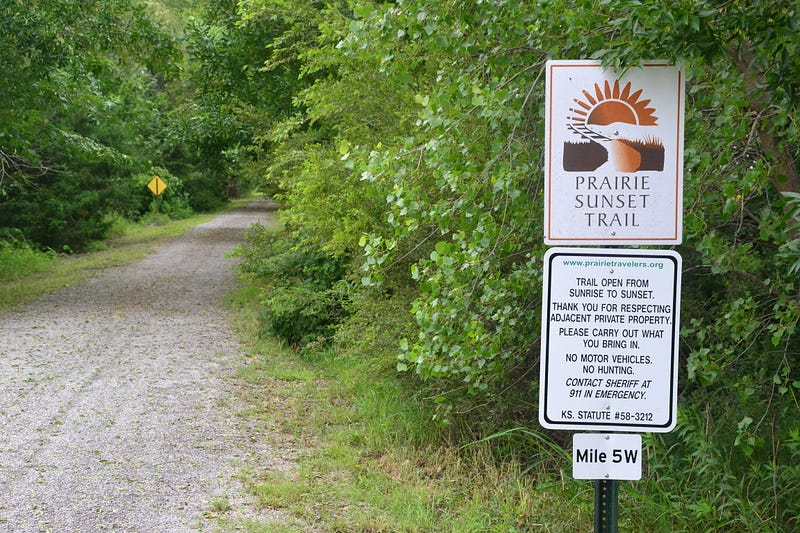
Mile markers along the trail.

Halfway and feeling good

I did the hike from one town to the other and back again. I walked from one town to the other one. In the second town, I sat at a picnic table and ate my food, and rested. I felt good. I was really surprised at how good I felt after walking six miles.

After about 30 minutes I started my way back down the trail. I could feel myself getting tired. My legs began to ache, and my feet were getting sore. I was surprised my back did not hurt. That last mile was the toughest. A few times I stopped and stood still to summon up some reserve that I hoped was still in the tank.

I was afraid if I sat down on the trail I would have a hard time getting up. I did get to the end. I sat motionless in my car after finishing the hike. By then the wind had picked up and it was getting chilly. I called home to tell my wife I had made the hike ok. She was set to come and get me if there was a need. Soon my legs and feet felt ok. Tired but happy to have accomplished the goal. The biggest surprise was that I still felt pretty good at the end. I felt I reached my limit at 12 miles. I would not have wanted to try one more mile when I was done.

Organizing the hike

I had intended to go on Saturday, which was a gorgeous day. I ran into some obstacles though and had to put it off until Sunday. That turned out well. Sunday was cloudy and rainy early, but the afternoon had temperatures in the 60s with some wind. It was still cloudy most of the day, and almost chilly with the wind. Saturday in the upper 80s would have been rough. Sunday in the 60s was comfortable.
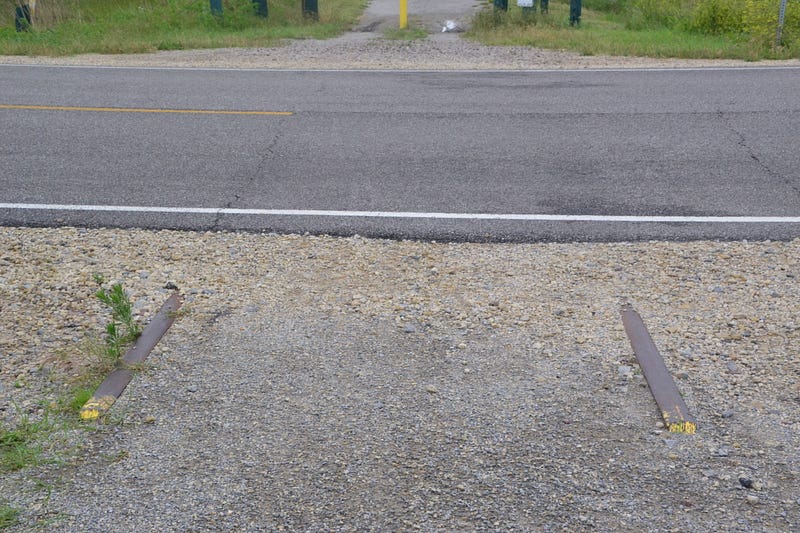
The trail crossed roads a few times, and here you can see the original rail lines.

Trees lined both sides most of the pathway. You could believe you were in the forest most of the time because of the trees. Only rarely could you see the vast empty spaces that are Kansas from the trail.

Hundreds of years ago this was a prairie of grassland as far as the eye could see. European settlers brought the trees and later the railroad. Even in the late 1800s, there were not that many trees. I wondered how old this train track was. I believe it was built in the 1880s, but not sure how long it remained in use.

Along the path and down the rabbit hole

As I walked along the trail I thought about the train that once went between the two towns. I can imagine it being convenient to be able to get on a train and go to the next town at a dizzying speed of 30 MPH, getting there in just a few minutes. I also thought about people who probably walked this trail before the railroad, taking them three hours or so to get from one to the other.

We keep getting faster. In the old days, it took three hours to make this trip one way. Horses made it faster and trains improved on that. Now you can drive it by car in under five minutes. In a way that sounds like progress. I realize though I have driven past here many times and never noticed all that is here along this trail. We can do all things faster, but I am not sure we are doing them better.
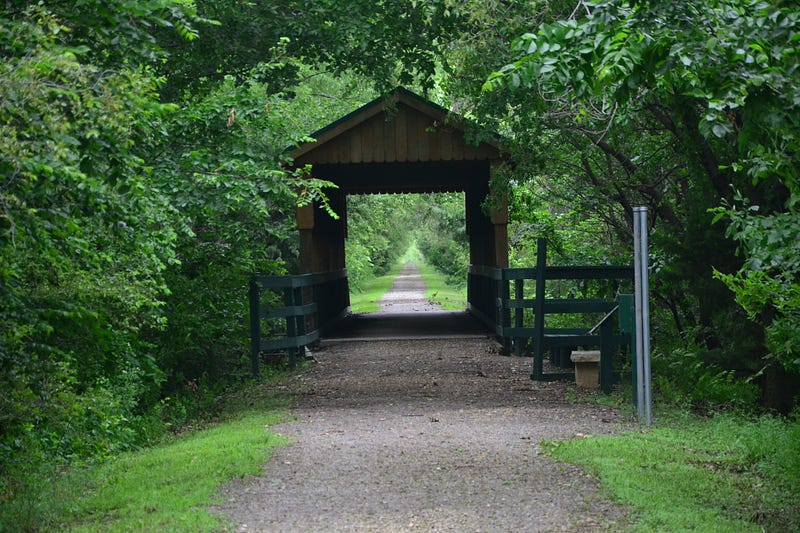
A not very old covered bridge.

My head went down so many rabbit trails like that. Thinking about ancient times, modern times and all points in between. On a long trail, you don’t have to think about where you are going or making any turns. You can let your mind go and just walk. That was the best part for me. Not the individual thoughts, but just being able to walk without thought and let myself go to the wind.

Preparation for the trip

I was not sure what all to take. I borrowed my wife’s backpack and put too much in there. It was also cloudy and a 40 percent chance of rain so I packed a poncho. I also needed my camera and had plastic bags to protect that as well. I should have thought through the food better as I took twice as much as I needed. I also had extra water at the end, but it is better to have too much water than not enough.
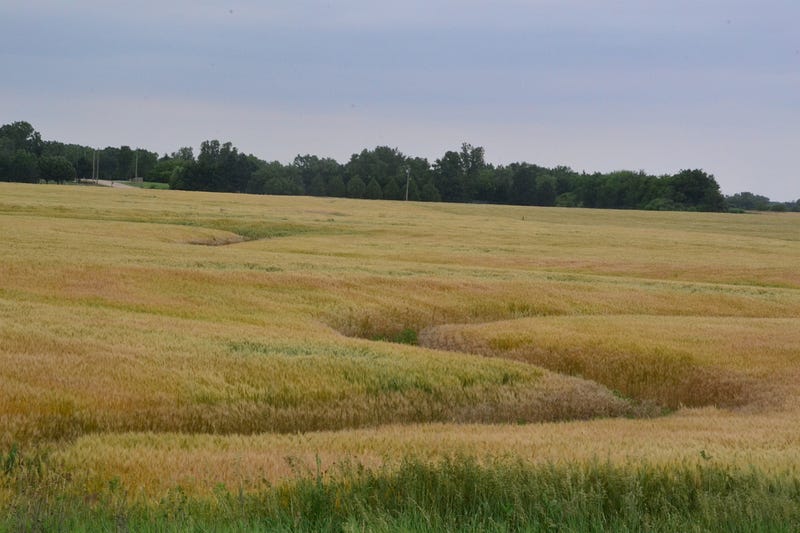
Recent rains have caused problems for wheat. Here is a wheat field along the trail.

The only bad thing that happened the entire way was one of the straps broke on the backpack, so I had to carry it in an uncomfortable position most of the way back. I thought about abandoning it a few times.

There were benches about every mile, along with a mile marker to tell you how far you had gone. I appreciated the benches. On the way back I got very tired and looked for those benches. Sitting just a few minutes restored my legs and my spirits, so I was ready to go again soon.

Here are some things that I took from the experience.

You can do more than you think you can. Maybe we are limited more by our minds than anything else.

Pushing yourself physically does wonders for your self-confidence and self-esteem. Any kind of accomplishment is good for you. Still those goals should be reasonable. I would not try to run 12 miles.

I had too much stuff that was a burden most of the way. What things hold me back in other areas? I know the walk would have been easier without those extra 20 pounds or so.

James Jordan is a freelance writer living in rural Kansas. A former newspaper editor is now writing what he wants and writing for himself. It is a new adventure. I always want to know what you think. Leave a comment if you like.

Hiking
Self-awareness
This Happened To Me
Nature
Self
Recommended from ReadMedium