
Why I Volunteered to be Electrocuted 8 Times
My 21st birthday gift to myself was Electroconvulsive Therapy.
In retrospect, I can admit, I never do anything the easy way. I deliberate over a course of action for a long time, but once I find a workable answer, I throw myself into my solutions with everything I have.
This story is clearly no exception.
Electroconvulsive Therapy (ECT), sometimes called electroshock, is the most effective and most invasive treatment for severe depression. It is not prescribed lightly, but in some studies, ECT is shown to benefit over 80% of its patients.
Its use is controversial and stigmatized, often the subject of psychological thrillers, the procedure holds a reputation similar to complete frontal lobotomies.
Invented in 1937, ECT was performed without anesthesia until 1952. The modern version of this procedure requires a general anesthetic, a muscle relaxant, and roughly 100 volts of electricity passing from one side of the brain to the other. The subsequent seizure lasts roughly 30 seconds.
The exact science behind ECT is not understood, even by medical experts, but experts agree the electric current irreversibly changes the structure and chemistry of mentally ill brains.
All things considered; side effects are shockingly minimal.
On the day of the procedure, patients report general confusion, nausea, headaches, jaw pain, and short-term memory loss. The more severe symptoms include retrograde amnesia, that is, memory loss of the weeks, months, or even years before treatment, or anterograde, memory loss of the weeks, months, and very rarely, years after treatment.
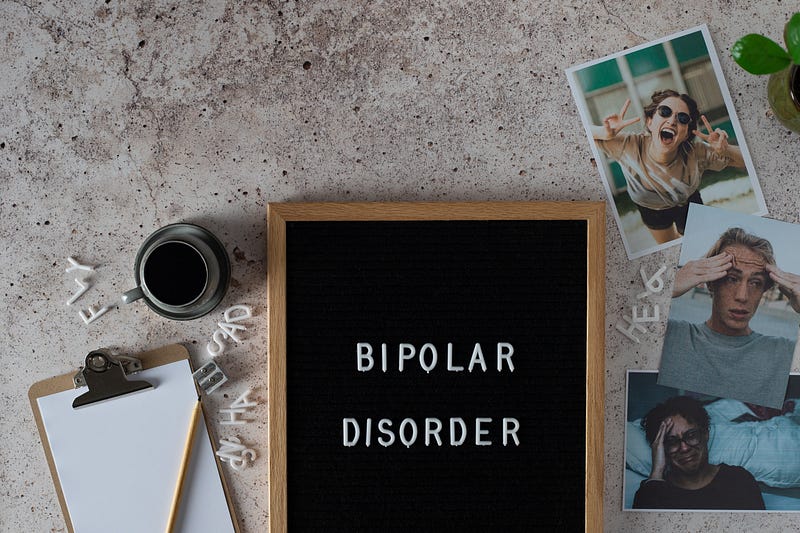
In the most extensive course, rounds of ECT are given every other day, no more than three times a week. Usually, treatment is given on an outpatient basis, meaning patients will spend about 3 hours at the hospital every Monday, Wednesday, and Friday. Treatment lasts from 6–9 rounds with routine maintenance occurring on an as-needed basis.
To prevent relapse, patients are usually placed on psychiatric medications, such as lithium, and receive some form of talk or behavioral therapy. Patients can expect to see results after just their third treatment, though full results may take many months to show.
All things considered, ECT outperforms all other treatments in terms of long-term efficacy, side effects, and speed of results.
If I’m honest, there was never a “before” to my depression.
Though I was not clinically diagnosed with anything until I was 13, I believe I always exhibited symptoms of the disorder.
At 13, my official diagnosis was Post-Traumatic Stress Disorder (PTSD), and Major Depressive Disorder. I was immediately put on Prozac, Klonopin, and Seroquel and enrolled in basic Cognitive-Behavioral Therapy.
Over the years, my diagnoses would take many forms, and I sampled basically every pill available to my demographic. At the end of my stint in mental health facilities, my list of diagnoses and previous medications extended beyond the area allotted to my answers.
If there was a catch-all disorder for a young girl with depression, I received the label. PTSD, OCD, Bipolar 1, BPD, ASD, PCOS, briefly schizophrenia, and most commonly, severe treatment-resistant depression.
I could stock a pharmacy with all the bottles of half-used prescriptions I collected over the years.
When new doctors entered my treatment team, I said to them, “I have tried every starter pill.” They would never believe me, and we’d enter the dance of, “Have you tried Vistaril?” “Yes.” “How did you respond?” “I don’t remember.” “How about Effexor?” “Yes.” “Adderall?” “Yes.” “When?” “I don’t remember.”
I was regularly on a cocktail. I couldn’t pick out which pills caused which symptoms. I simply swallowed what I was told to swallow, and I didn’t ask questions.
I always had the ominous feeling that each doctor, had we lived 200 years prior, would have slapped me with “Hysteria” within ten minutes of encountering me and banished me to some remote asylum. I exhausted them.
In a system meant to push pills and manufacture neurotransmitters, I was their worst nightmare. A young, intelligent girl who resisted their sterile, artificial care but routinely fell into unreachable catatonia.
Between the ages of 13 to 18, I must’ve been hospitalized 10 times. I failed my first two years of high school due to lack of attendance. Child protective services kept a fat file on my family, and the idea of entering group homes came and went. As I aged, more severe treatment options began to find their way to my parents via exhausted case workers.
My depression was not without cause.
At 5 years old, I was raped for the first time. This continued, with my family’s knowledge, until police removed my rapist from my home during my first hospitalization at 13.
My father was a violent meth addict. My mother barely kept her own head afloat amongst her own traumas.
For a very long time, I felt that I was simply a live-in nanny for my younger siblings. At 8 years old, I washed all the family’s dishes and folded all the family’s clothes, and at 12 years old, when my youngest brother was born, my parents rarely spoke to me unless it related to the extensive care I was forced to give him.
My life, for a very long time, was school, servitude, abuse, sleep, repeat.
I coped with my situation using excessive denial.
For a time, I became a compulsive liar. I hid from everything. I feared everyone. When I spoke the truth, I was not believed, so it was easier for me to spin a web of a story less real, and less painful to receive criticism on. I became something of a pariah at school.
The first time I remember feeling the urge to die, I was 12 years old, in the dark of my room, my parents watching TV just on the other side of the wall. I gripped the fabric over my heart, held a hand over my mouth to silence my sobs, and begged it to just simply stop beating.
Even in my suicidality, I could not capture my parents’ attention for very long.
Teachers and hospital nurses showed me more care than my family ever did. They kept me afloat.
As I grow older and find kids like me, I understand the drive they had to offer me a safe haven however possible.
My suicidality came to a head in January of 2018.
I was three months shy of my 18th birthday. I had been placed on a medication new to the market. I quickly moved my way up to the highest legal dose of it.
My mother, perhaps in her own selfishness or perhaps in some sadistic punishment against me, refused to pay for my medication for a month. When she decided my resulting depression was not worth her stubbornness, she allowed me to have the medication again.
Those well-versed in this field already understand the danger of this.
The thing about suicidal ideation is it is usually passive. It’s not really a wish to die; it’s a desperation to discontinue life as you know it.
When you feel truly powerless and out of options, it seems death is your only feasible escape. However, for most who struggle with it, suicide is just a masochistic daydream. You are too depressed to take steps to the one thing you feel might solve your depression. So, you exist in a stage one step away from death.
You don’t have the energy to kill yourself.
But, the thing about medication is it is designed to slowly prod a depressed person back to life. It infuses you with more and more energy. It aims to give you passion again.
If you give a suicidally depressed person the highest legal dose of an antidepressant, the result is almost always an attempt on their life.
They have all the thoughts of suicide. The medication infuses them with the willpower to finally “solve” their torment.
That is exactly what I did.
I took the entire stockpile I had. 5 years’ worth of medications and swallowed handful after handful. I finished my attempt off with several handfuls of Costco ibuprofen. I couldn’t tell you what I took or in what quantity.
It was a blind, impassioned dash toward death.
The last act of my life was to write a note to a baby brother who could not yet read and whose existence enslaved me the most. I remember kissing my elderly cat one last time, pulling her underneath my blankets, and closing my eyes one final time.
The next thing I remember is opening my heavy eyes in a bathtub full of ice, my stepfather slapping me across the face, screaming at me to stay awake.
The nurses would tell me later that I was found over 12 hours after I said goodbye to the world. It was too late to induce vomiting; if I threw up, I would damage my esophagus beyond repair. I had to pass everything manually, with only the assistance of an IV to flush my blood.
“You are very, very lucky to be alive,” an angry nurse tells me as I lay on what might’ve become my deathbed. “How could you do that to your family?”
My intoxicated response surprised me. Usually tame and passive, I sat up and screamed
“You don’t fucking know my family.”
My family wouldn’t visit me. The following week I spent in the psych ward, they would dodge my calls.
When I did finally see them again, they flew me across the country to interview for the first leg of a two-year-long journey in long-term mental health facilities across America.
They were done with me.
My depression was no longer an unfortunate quirk; my depression had become an untamable monster that could land them in jail for neglect. I had to be dealt with.
Ideally, as far away as possible.
The long-term facility rejected my application. I was flown home again. We pretended it never happened.
I moved out three months later, two weeks after my 18th birthday. A generous friend offered me a bed, and I packed everything I owned into their car.
No job, no license, no savings, only a deep, unshakable understanding that even homelessness would be better than the purgatory I existed in.
And for the first year, I thrived.
I became addicted to living. I did everything I could. I volunteered in basically every organization on my college campus that would accept me.
I was the chair of the Leadership Council of the Honors Program. I worked in Wellness Programming. I attended every event that didn’t conflict with my class schedule.
My motto was, “I am everywhere all the time, and I love it.”
I overindulged in this.
So eager to finally be allowed a life, I gorged myself on it until exhaustion caught up with me and demanded itself of me. Not long after, COVID shut down everything.
For 18 years, I had no life. I wasn’t allowed to. My existence was only as valuable as my utility.
For a year and a half, I tasted freedom, but the unresolved traumas crept their way back to the forefront of my mind. When COVID took away the only life I had ever enjoyed, I fell into a deeply destructive spiral.
I was rarely sober. I realized, much later, that I was subconsciously chasing that first high I experienced, years prior, on my deathbed. I couldn’t consent to another attempt to die, but deep in intoxication was the only time I could recall the primal hours in which my survival was a prayer no one was performing.
I put myself in terrible, terrible situations.
I came to in my bathroom, a year later, organizing a week’s worth of pills.
Each day, breakfast was five pills, and each dinner was another five. The cocktail originally started with one or two, but then quickly spiraled into pills treating the side effects of pills meant to treat the side effects of the original two pills.
I decided I was done. I could not go on like this.
I was two months shy of my 21st birthday.
At my next psychiatrist appointment, I begged for a prescription for ECT. The moment it was in my hand, I ghosted my doctor. I received my first 3 treatments outpatient at the very first psych ward to treat me almost a decade earlier.
I don’t remember this time.
I kept a journal during treatment, and upon rereading it 3 months ago, I promptly threw it away. The darkest parts of me came out between electrocutions.
I decided to take the expression of this pain to my grave.
The person I was dating thrived on my insanity.
Victim to their own pains, they used my constant state of confusion and memory loss as a free-for-fall to determine the best possible way to manipulate me.
I wrote pages upon pages trying to decipher their actions, but the simple truth was my partner intentionally exacerbated my condition. If I couldn’t remember how they tormented me 15 minutes after the event ended, they could trial-run manipulative tactics at rapid speed.
I left them 2 months after my final treatment when I found the forgotten journal and realized, without the confusion of amnesia, what they had done.
My life instantly improved. I have been single since.
But, in the moment, their torment consumed me. I cut myself, an act I was dependent on in adolescence but had long since grown out of. I phoned a friend and asked for a ride to an inpatient facility.
I finished my treatment there. I stayed there for two weeks as I finished my course.
I received my fifth electrocution on my 21st birthday, so I don’t remember the milestone, but not for the reasons you’d think.
When all 8 procedures were finished, my doctor told me
“Lithium is your first husband,”
and informed me I’d be on the medication for the rest of my life. If I stopped taking it, the result could be fatal. Months later, this rang true as I lapsed in my medication, and fell, once again, into a suicidal trance I almost fulfilled.
It has been roughly 20 months since my treatment finished.
I decided to cease medication 6 months ago, and I have done well without it. I moved from my state to D.C., and from D.C. to a remote farm in Brazil.
I have written almost a dozen journals during this time, and I consider myself a happy person now.
Setting the retrograde and anterograde amnesia aside, it’s hard to think about who I once was.
I carry reminders of her on my skin, and every now and then, I experience a level of sadness discomfortingly familiar, but I never remain there for long.
I firmly believe ECT saved my life.
I remember a moment, about 6 months ago, as I prepared to move, in which I was sitting on my couch, and a thought organically occurred to me;
“I have no idea what will happen tomorrow. I am so excited.”
And I cried because my lifelong attitude towards my future was always a firm disbelief that I’d live to meet it. I had never believed I was built for a life I could look forward to.
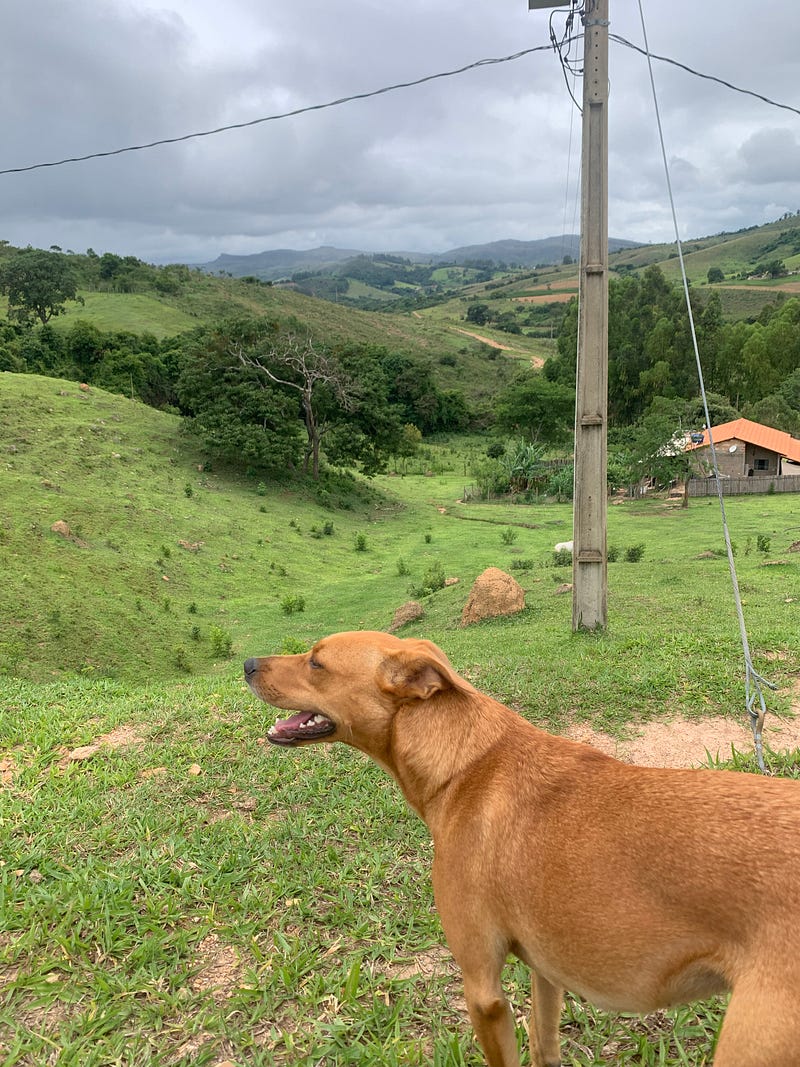
Just this week, I walked up a winding dirt path on a Brazilian mountain alongside a version of caramel mutt that doesn’t exist back home. We sat together overlooking acres and acres of sporadic grazing cattle. I sang to the world in English.
All I have to offer is love. And this is enough.
I have tried, for many, many years, to chronicle the life I lived when I was in pain, and for many, many years, I have always struggled to get past the first sentence.
Looking back, I realize it was always impossible to write about the pain I still existed in.
These past two years have been so hard, but also so beautiful. I have endured my biggest challenges to date, but I have also experienced my best highs so far.
I love everything so much.
I moved to Brazil simply because I really wanted to. I knew I could. I knew I would be happy there. And honestly, I know I’d be happy anywhere I landed.
The happiness I have now is tied to nothing except me. The magic of a life well lived is within me alone.
So, I run barefoot through subtropical downpours. I kiss a stranger in a parade thrown in Portuguese. I experience great love and gratitude for a brooding black dog that guards me in the night.
I give myself away willingly because I know what it was like when I had nothing worthy of receiving me.
Sitting here now, writing about the darkest chapter of my life, I am overjoyed to be able to think about it with peace.
Where there used to be a flurry of anger now only exists a brief murmur of injustice. It had to happen this way for me to be here right now.
The best gift I ever gave myself was those 8 electrocutions that permanently altered the structure and chemistry of my brain.
I sacrificed a year of memories for it. I sacrificed myself for it. But I got a better version of myself out of it.
I am happy. This is enough. The ends justify the means.
— — — — —
If you enjoyed my content, please consider leaving a comment and following me for more work like this. Thanks :)


