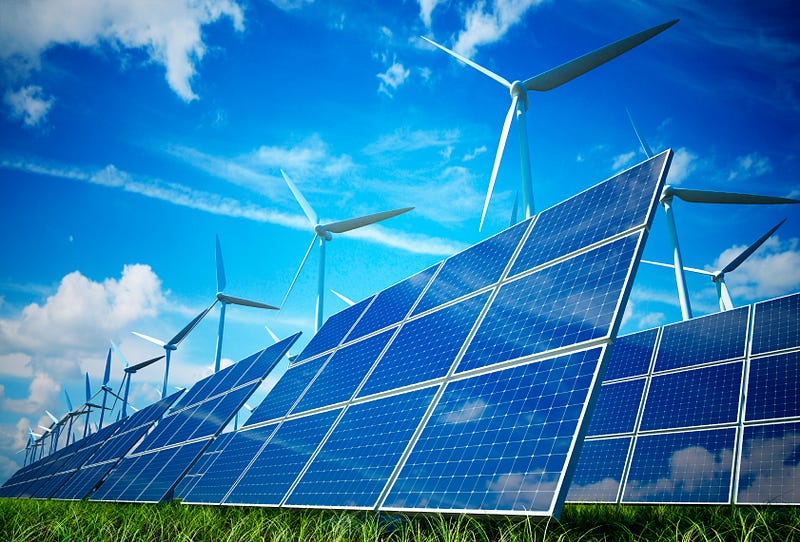
Why I Support Open Source Clean Technology
Humanity’s Only Destiny — “Win, or Die as One”
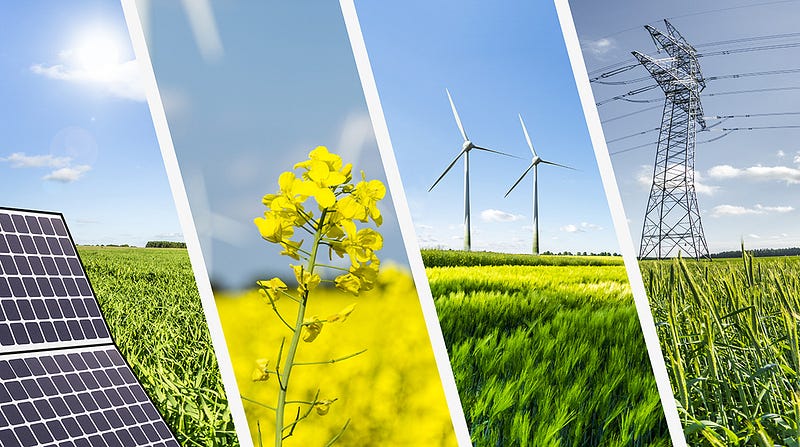
At the COP21 Paris 2015 UN Climate Change Summit, Microsoft founder and philanthropist Bill Gates, President Barack Obama and French President Francois Hollande launched a multi-billion dollar Clean Energy Research Fund (CERF) as a key strategic initiative of Nexus for Development to save the planet from scorching and drowning burning out mankind and all creation. They were supported by at least 19 governments and 28 leading world investors, including billionaires George Soros, Saudi Prince Alaweed bin Talal, Alibaba’s Jack Ma and Facebook’s Mark Zuckerberg.
Nexus currently has 20 NGOs and social enterprises, supported by 165 stakeholders, working to deliver low-carbon solutions in Asia to vulnerable populations.
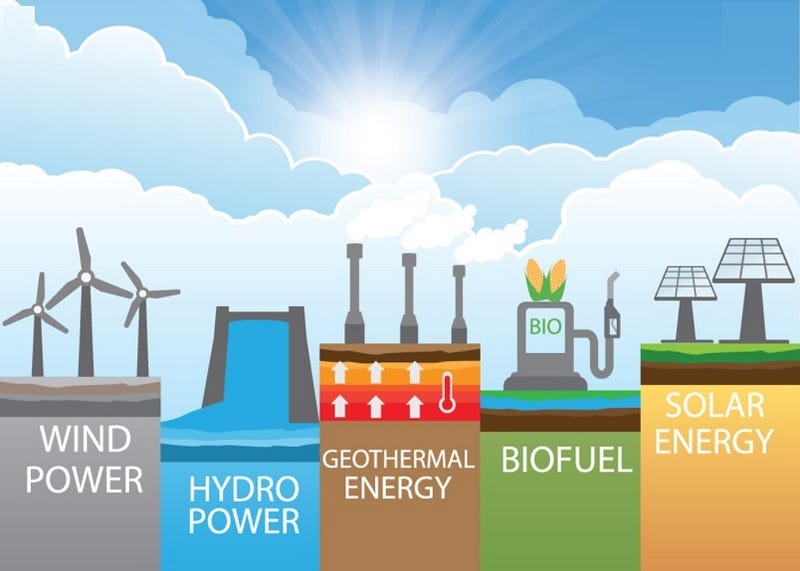
The collective stance of CERF essentially declared a global war on fossil fuel to make fossil fuel history through its replacement by clean renewable energy sources such as wind, solar, hydro, biomass and biofuels. Opposing these clean technology efforts are such formidable traditional oil, coal and gas producers, together with their vast global web-net of vested interests across many industries, who would also lose billions should countries agree to and actually succeeded in reducing carbon emissions since they are the most culpable for the deadly emissions.
Commitment to Open Source
A mental paradigm change is necessary to bring about a swift and decisive rollback on climate change. Now at the onset, a global collective commitment to an open source philosophy and approach would grow an uniquely exceptional clean tech research community that would benefit from the CERF and other related funding. A larger open source clean tech movement can therefore grow a revolutionary marketplace of ideas through an unprecedented scalability of resource sharing and collaboration never before seen in a world hitherto obsessed with marketplace domination through proprietary technology.
Multinational research and development funded by billions of dollars from individuals, governments and corporations committed and invested in the clean technology initiative can expect to generate an explosion of clean tech ideas, innovations and solutions.
Needed therefore is an open source clean technology movement to address the many challenges and opportunities around emergent intellectual property issues and problems that would distract the clean tech warriors from their main focus of making fossil fuel history for the ultimate climate change victory.
5 Compelling Reasons for Open Source Clean Technology
Open source can be the accelerator for clean technology and build the foundation for that “shock and awe” decisive victory to make fossil fuel history. Sharing connectivity and transmission stabilisation algorithms will allow clean power generators to scale up quickly, and empower them to build better clean-powered machines, devices and applications faster and cheaper. Open source clean technology resources drive and fuel the development and growth of a clean-based human eco-system for a sustainable future pollution-free society.
[1] No Patent for Human Survival
There is no copyright reserved for solutions to the salvation of mankind. The privilege to contribute to the sustainability of planet earth and all its inhabitants is a singular honour. Historically, the growth of human communities has been driven by our sense of common hope and destiny. The sharing and collaboration of resources has multiplied them for the betterment of generations. Sustainable commonwealth is created by generous sharing, not by hoarding and exploitation, with lasting benefits throughout human generations down the ages.
In the new discovery era of collaborative clean technology research communities across the globe, the open source research and innovation culture will drive engagement across the entire spectrum of open technical knowledge and applications logistics to build powerful and synergistic networks of researchers, Universities, innovators, entrepreneurs and their associated affiliate value chain and unite them by the single-minded vision of overcoming climate change through renewable energy and radical life style changes.
[2] Availability of Clean Technology
Clean technology is not new. Most have been around over the past 30 years, and earliest devices harnessing wind power are invented from 1000BC. Hydro power is deployed to irrigate farming in pre-modern times, before their large-scale capture through huge hydro dams. Solar energy gives prehistoric mankind the humanizing gift of fire energy.
Clean technology is not rocket science. The current clean technologies can embrace open source, register their ownership and copyrights, and offer to grant appropriate licenses without charge to enable sharing of intellectual proprietary knowledge and source codes in exchange for contractual commitment not to expropriate, infringe or change the technologies, but only to modify, upgrade or use them for non-commercial applications.
In the more recent past 2 decades, wafer-based crystalline silicon cells mounted on layers of silicon produce solar electricity generation when triggered by the sun through the photovoltaic effect. Huge solar power farms now generate tremendous gigawatts of electricity at much lower long-term costs to consumers.
Wind is also a form of solar energy resulting from the uneven heating of the atmosphere by the sun, the irregularities of the earth’s surface, and the rotation of the earth. Clean electricity is produced when the kinetic energy in the wind is converted into mechanical power through wind turbines. Huge wind farms also generate tremendous giga-watts of electricity at much lower long-term costs to consumers. Wind turbines do not have to be large; and some smaller ones need only low wind speeds of about 2 meter per second (m/s) to begin generating electricity. Urban wind electricity is produced by special wind turbines that capture the winds travelling between buildings.
On a smaller scale, clean bio-fuels like bio-ethanol and bio-diesel have been produced from plants, and compared favourably in power ratings with their equivalent fossil fuels. Small hydro plants now bring clean electricity to remote communities without the need for traditional fossil-fuel electrical power grids.
The strategic impetus today in deploying clean technology to combat climate change and not about discovering or inventing more clean technologies, which will continue to improve and evolve. More funds and priority initiatives should also concentrate on open source principles to deploy and multiply the adoption of existing clean technologies.
[3] Key is To Accelerate Adoption
The diffusion of clean technology has been slow, difficult and daunting for various reasons ranging from local power regulations, infrastructure, grid connectivity to the usual higher cost of initial innovation adoption in the marketplace. These are easily surmountable issues with strong and committed climate leadership and political will.
Open source approach to clean technology development would facilitate sharing and modification of algorithms that moderates and reduce the variability of electricity often associated with clean energy production. CERF and other global research money can focus on energy storage devices that would mitigate the vagaries of the weather when using solar and wind power. The traditional grid, where available, can also be used to act as storage for clean energy.
To rapidly bring down the cost of new clean technology for more popular adoption, funds committed to clean energy should be used to pay, partially or fully, for the first 150,000 individual adopters or users within the first year.
A 2014 collaborative global initiative, named RE100, brings together the world’s most influential companies committed to 100% clean renewable energy. RE100 now has over 280 companies who have made a commitment to go ‘100% renewable’. Read about the actions they are taking and why.
For example, Google alone is already the largest corporate user of renewable energy in the world. It has committed to increase its commitment to purchase up to 2 gigawatts of clean electricity, the equivalent of taking 1 million fossil-fuelled cars off the road. Google’s example is followed by Facebook, Amazon and Microsoft.
According to RE100, it only takes 1,000 companies to commit to 100% renewable energy to eliminate at least 10% of global carbon emissions. And it would just be a tipping point for others to follow the new path towards a highly decarbonised economy and society.
RE100 companies come from across the world and over a wide range of industries from IT, insurance and telecommunications to banking, retail and hospitality. Private sector companies account for about half of the world’s fossil-based electricity consumption. A sharp demand shift to renewable clean electricity will accelerate clean power adoption and transform the global energy market to smoothen and hasten the transition towards a low carbon economy, which is the ultimate goal of COP.
[4] Making Fossil Fuels History is Not Negotiable
Numerous scientific studies over the years by the United Nations and other credible research institutes have all concluded that human activities in the past 250 years are responsible for global warming of nearly 2oC (Celsius) due to increasing massive greenhouse gas emission from the burning of fossil fuel (coal, petroleum and gas) for rapid industrial development. The final solution is simple — make fossil fuel history.
COP21 is strangely silent on fossil fuels, which is the major perpetrator of the deadly carbon emissions that create the climate crisis COP21 is formed to combat. The global addiction to fossil fuels is deeply ingrained to such extent that the commitment targets by various countries as submitted to COP21 would only cause world climate to change more than 2.7oC. Following the serial failures of several earlier COP meetings to reach consensus, many scientists and experts now believe that the impending global climate disaster can only be averted by limiting temperature to less than 1.5oC increase.
In November 2015 a month before COP21, it was revealed that multinational petroleum giant ExxonMobil actually researched in the 1970s about human-caused climate change, and its senior executives ignored the findings, and then lied to the global public about the risks of global warming for decades. Documents also revealed that in addition to the deceptions regarding the actual existence of climate change and the role of fossil fuels, Exxon is also implicit in promulgating the idea that natural gas is somehow a friendlier fossil fuel as compared to oil and coal.
The ominous ExxonMobil revelation is reminiscent of the tobacco industry’s 1960s denials of the dangers of nicotine to smokers that consistently kill at least 50% of its customers. The stark difference is that ExxonMobil is more culpable than tobacco companies as its intransigence is more criminally reckless by harming the entire planet. Its silence on global warming from fossil fuels in favour of private corporate profits has denied the world more than 4 decades of valuable response time to combat climate change.
Making fossil fuels history has become necessary and more desperate. Some countries and NGOs have called for complete global de-carbonization by 2050. Only through open source clean technology we promote and quickly diffuse innovations across nations with machines, gadgets, devices and applications that are not dependent on fossil fuels.
[5] Time Is Running Out
It was in 1990 when the Stockholm Environment Institute released a major study on dangerous climate change. The 2oC limit did not become a formal target of global climate negotiations until 2010 with the signing of the Cancun Agreement. Years have passed without any agreed action agenda by world government leaders. In the meantime, islands have disappeared amidst and in between crazy weather patterns, rising sea levels, unprecedented storms, more frequent earthquakes and atmospheric pollutions.
For AOSIS, the Alliance of Small Island States (AOSIS), a group of 44 low-lying island and coastal states from around the world, the COP Goal is a survival matter because many of their islands are already underwater. The recent Cyclones Maysak and Pam have destroyed homes and killed dozens of people in Vanuatu, Tuvalu, the Solomon Islands, Kiribati and Micronesia.
With global warming now at 1oC, scientists expect greater frequency of bizarre weather patterns; and as the warming increases, so would the risk of more severe, pervasive and irreversible impacts. The call for immediate action is therefore clear, unambiguous and urgent.
The Paris COP21 Agreement on actions to reduce carbon emissions, was supposed to commence from 2020, is now delayed by the Covid19 pandemic. When one remembers that it took the electric motor innovation over 40 years to be universally adopted, it is frightfully obvious that the battle to overcome climate change must commence immediately and to obtain significant victories in less than 20 years in order to achieve complete global de-carbonization before 2050.
Save Tomorrow Today
The open source clean technology community shall span across national boundaries and political affiliations to nurture a shared sense of priority about the kind of actions and licensing rules needed to advance the proliferation and innovation of clean technology to reduce fossil fuel dependency. We can then expect a coordinated and collaborative strategic action agenda for the next step of open source implementation in clean technology.
The war against climate change must be total, merciless and relentless to assure ultimate victory for mankind. Making fossil fuel history is the beachhead towards V-day.
Open Source is The New Normal
The open source shift in clean technology solutions is a radical and alternative departure from proprietary fossil fuel solutions that have exacted huge oligopolistic profits from their belief in market dominance based on presumptuous unjust and unfair “proprietary” privileges. The rest of the world was never compensated by fossil fuels producers for their looting, rape and plunder of earth’s non-renewable energy resources.
Open source clean technology will prove to reduce drastically the cost of energy and power by offering better scalability, efficiency and reliability when compared to current fossil fuels producers and providers. The advent of open source thinking and the “share-and-collaborate” culture that it spawns will diffuse across every industry and human communal life for a proliferation of open source solutions in the non-energy sectors eg education, health, food and environment to become the new normal constitution, rather than the exception, of a just and equitable future society.