
Why I Still Use a Traditional Paper Planner In the Electronic Age
I keep returning to this for a reason. A few reasons, actually.
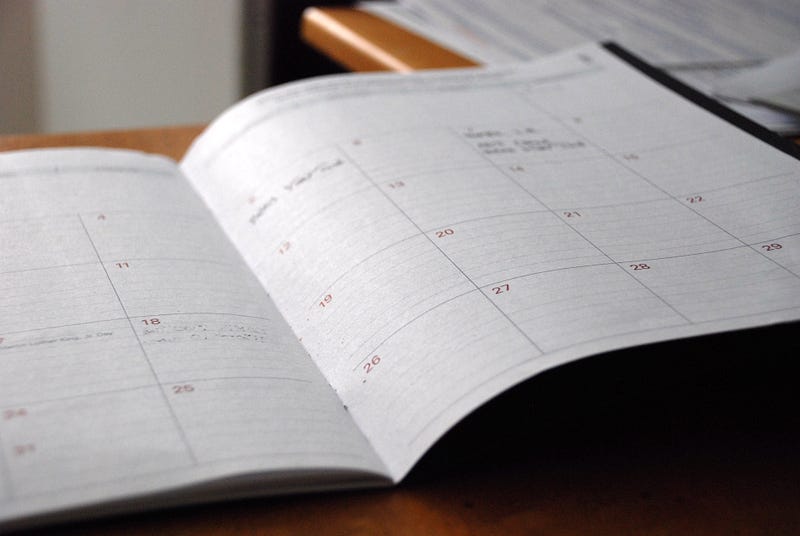
Have you ever been so busy that you spend almost as much time trying to be organized as you do on actual work?
Weird, isn’t it?
I’d been using online calendars and schedules. I’d been using the big names in productivity software — even shelling out for the professional versions. I’d get programmed reminders about tasks. I’d even sometimes get little inspirational text messages sent to me.
All in the name of productivity.
These apps were all very impressive, and I liked how they could sync across various devices.
But that just meant I had more devices to ignore when the reminders and automated text messages came rolling in.
The online productivity tools were not cutting it for me — no matter how cool or expensive they were.
So I did what I should have been doing all along.
I bought a daily planner, copied all of my work-related tasks to that, and deleted most of the apps from my phone, tablet, and laptop.
That’s when my productivity got back on track.
What was not working for me
I sat down and looked at a typical week’s schedule of jobs, chores, and other responsibilities. As a husband, father, and busy freelancer, it’s a pretty busy week.
Which tasks were on track and which ones were not?.
I had nearly missed a couple of medical appointments and events at the local library because those notifications were getting lost in the shuffle of work-related messages.
Personal writing and design projects were getting ignored. Work tasks were doing all right — but I had a lot of overlap and conflicts making the whole process a mess.
I needed a fix.
In studying my schedule, I noticed two broad categories — tasks that needed to be done at specific times during the day and tasks that just needed to be done at some point during the day. Generally, more personal tasks like medical appointments or volunteering at the library fell under the “specific time” category. My freelance work was a lot more flexible. I just needed to get those tasks done sometime that week.
My online calendars and schedules didn’t like how flexible most of my freelance work was, so I put in artificial times, which added to the noise, thereby making me lose track of the personal tasks.
Searching for a solution
So I decided to change things up a bit.
Those tasks that go with being a human being with chores and other responsibilities continue to sit on my online calendar with reminders sent as needed.
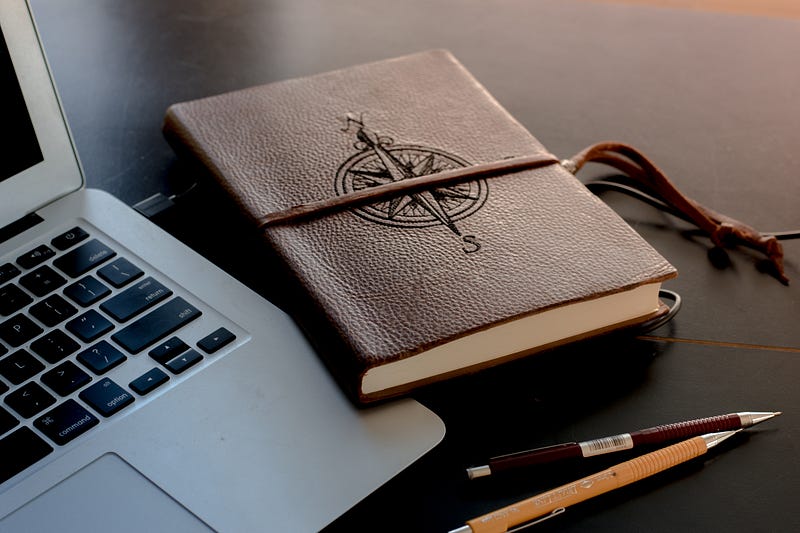
My professional life goes in my planner, which sits at my desk right alongside my computer. If I’m sitting at my desk, I can remind myself of what needs to be done that day and cross things off as they’re completed. Some personal items are listed in this planner, if only to give the rest of my week context.
I find that the physical act of opening a planner, flipping through pages, and using a pen centers me a little. I feel more professional and productive simply through the act of using a planner.
I recommend trying it. If you find your day’s tasks are too much when combining personal and professional, switching to a traditional planner may be your solution.
Finding a planner and making it work
When I decided it was time to use a traditional paper planner again, I spent weeks searching for the perfect one.
That was a bit of a mistake. I needed to get better organized, and taking weeks searching for something perfect was blocking me from my goal. One morning, I woke up determined to buy any planner I could get my hands on and worry about “perfect” later.
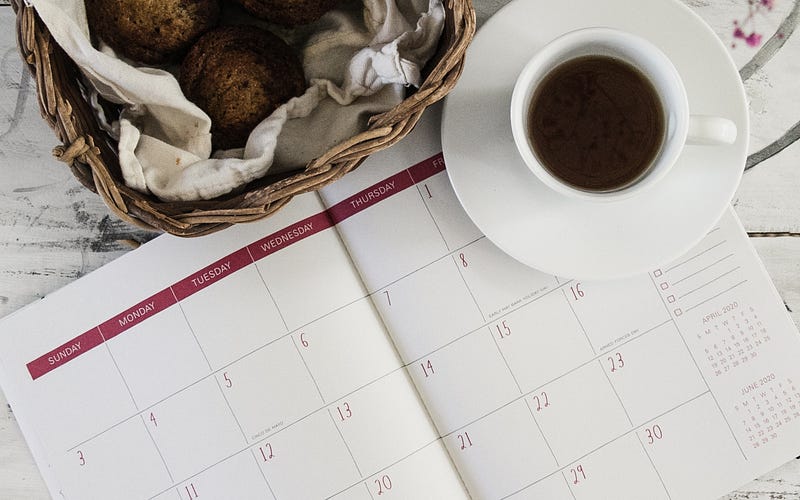
That day, I hit Barnes & Noble and chose a pretty standard, run-of-the-mill 2020/21 planner. It had a monthly calendar section, with additional pages divided into weeks, a generous number of note pages near the rear, and some reference tables at the very end. There was also a time zone map which turned out to be helpful. I live on the American east coast, but I have clients all across the country, plus Japan and the UK. Knowing what time it is where helps me plan emails better.
I wrote important events and deadlines on the monthly pages. I listed individual projects and deadlines on the weekly pages. Doing this also allowed me to break up larger projects into smaller sections, thus making progress easier to track. This is also where I kept social media reminders and personal project notes.
In the back, where the blank note pages sat, is where I write monthly and year-end goals. I also record earnings, word counts, book notes, and a recommended music and podcast list for working with some background noise.
It’s a sound system — for me.
If you’re still trying to find a prime organization and productivity tool, you could do worse than giving this a try yourself.
Is my paper planner perfect?
I suppose my perfect paper planner would have a few tweaks — such as:
- Enough space for individual days to not only list my various projects but their status. A full page for each day of the year would be excessive, but maybe 100 customizable day pages would be nice.
- I want something that looks as serious. I have a bit of a fetish for leather and canvas-covered notebooks, journals, and “padfolios.” I want my planner to look as reassuring as an old leather reading chair. But I also want it to be affordable. I’m not asking for too much, am I?
- I need something that won’t take up a lot of desk space. Maybe something TARDIS-like — bigger on the inside than the outside.
- It needs to be sturdy. With a good ivory paper that takes ink well.
- A discrete spot dedicated to goals, both short and long-term, would be nice.
- Do you know what would be better than a ribbon bookmark? Two ribbon bookmarks. Or three. All in different colors for easy managing.
- A place to keep a pen that’s not going to hurt the binding.
- My perfect planner should greet me each morning with a gentle kiss on the brow and a whispered: “Go get ’em, champ!” That would be awesome.
Stalking the perfect planner
We all have different needs.
Begin with a planner you are comfortable using right away, but keep your eyes open for the planner that speaks to you personally and professionally.
It could be a sober, leather-bound planner with pages that smell lightly of old candles and whale oil, or it could be a floral vinyl-bound set of neon pages visible two streets away.
What matters is that it works for you.
Adopting a traditional planner to separate your personal schedule from your professional one allows you to bear greater focus on both. You’ll have fewer missed appointments and fewer forgotten projects.
And a personal planner can be a unique mode of self-expression. Like a Mickey Mouse watch or cute bumper sticker. Why not?
Express yourself. Organize yourself. Make it work.
Cheers!
Thank you for reading. I’d love to share more with you via my Bi-Weekly Word Roundup newsletter sent to subscribers every other Sunday. It will feature news, productivity tips, life hacks, and links to top stories making the rounds on the Internet. You can unsubscribe at any time.