
Why I Replaced Meditating with HeartMath
You should try it too | Spiritual Saturday
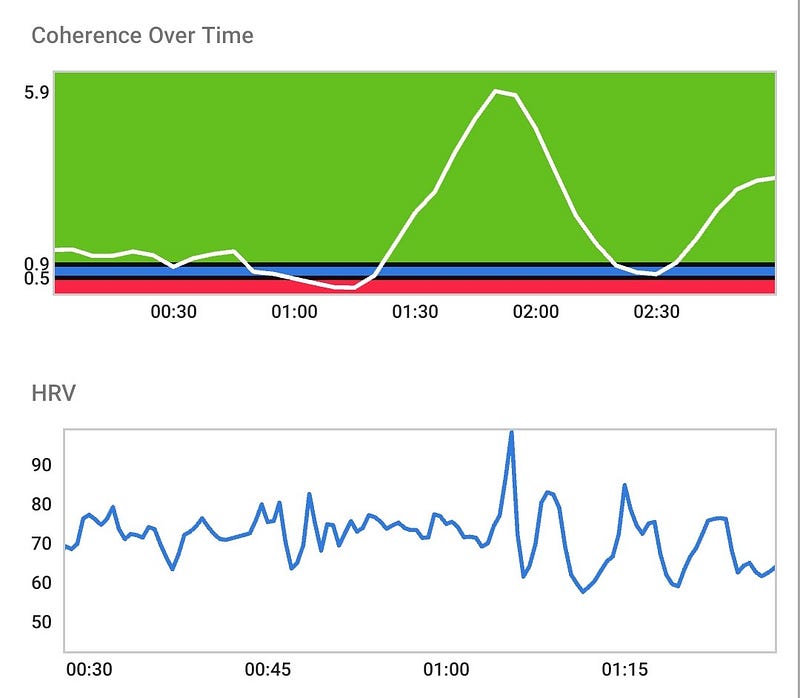
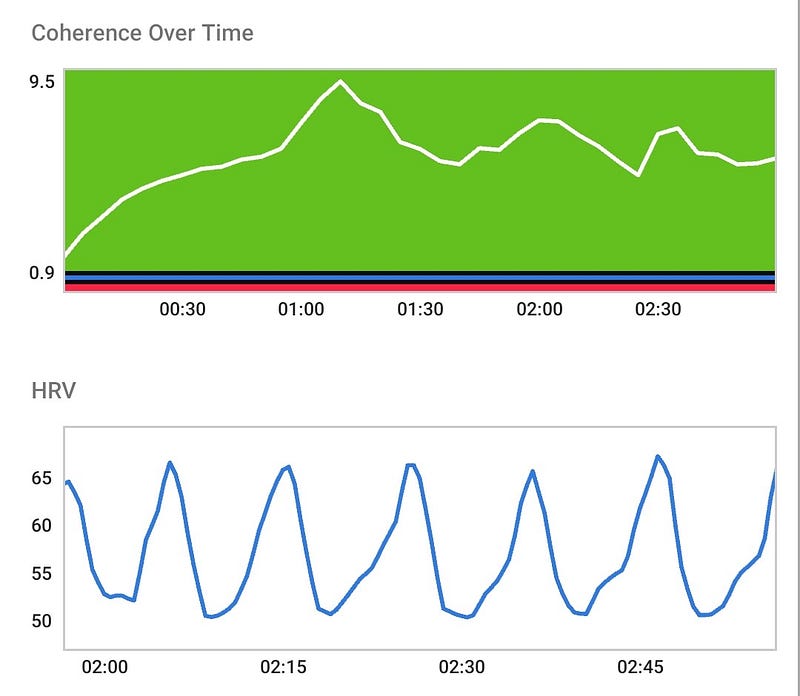
HeartMath technology is an innovative approach to improving emotional wellbeing. Learn to change your heart rhythm pattern to create physiological coherence; a scientifically measurable state characterized by increased order and harmony in our mind, emotions and body. R. McCArty, Ph.D., Dir. of Research, HeartMath Institute
From Meditating to Heart Math
I thought I wasn’t good at meditating. I didn’t feel the benefits. I didn’t have any way to concretely measure my progress. Maybe I didn’t give it a good enough try. When I found out about the benefits of HeartMath and how the sensor could be used to chart my progress —I was sold.
HeartMath Benefits
As I began to research HeartMath I realized I had a major misconception. I thought the brain was the main source of command throughout the body. It is true that the heart does respond to messages from the brain. But, I also found out that the heart sends more messages to the brain than the other way around.
The messages that the heart sends to the brain impacts our emotional processing and our higher cognition, including: attention, perception, memory and problem solving.
The purpose of HeartMath is to gain coherence in the ANS (autonomic nervous system) as measured in heart rhythm. The ANS is made up of the sympathetic nervous system and the parasympathetic nervous system.
The sympathetic nervous system jumps in to save us when we perceive danger — pushing us into fight or flight mode. Our systems such as digestion shut down so that our body can use all attention and energy to live through the dangerous situation.
The parasympathetic nervous system pulls us back to calm.
When these two systems are out of sync there is no coherence in the heart rhythm. These states of incoherence are a push and a pull that can disturb all of the systems in our body. Stress and negative emotions can keep us in this state for long periods of time and that takes quite a toll on our mind and body.
The regular stressors of life leave many of us living in that state of activated fight or flight response on a regular basis. The great thing about HeartMath is that we can train our bodies to operate in coherence and return to coherence quickly if circumstances pull us out.
When the two systems, sympathetic and parasympathetic, are in synch you can imagine how much better our bodies operate! (Indicated by the photo above on the right.) When we are experiencing the feeling of awe, gratitude, or other positive emotion our heart rhythm pattern shows up in nice smooth waves. The systems in our body can work together in this state.
One visual that was shared with me to represent this experience of coherence and system alignment is that of a rowing team. We can all imagine the difficulty the team would have if a few of the rowers were having a fit and doing their own thing instead of operating in synch with the rest of the team. Not only would the team struggle to move forward, they may risk capsizing.
Practicing HeartMath
Breath through your heart. As you breath in for 5 seconds think about the air coming in all around your heart. As you breath out for five seconds push it all out. Focus on your heart.
Keeping a positive emotion in mind as you breath also helps. A place that brings you a feeling of awe, a person that you feel love or gratitude for, or any other positive emotion.
This can be done in conjunction with the HeartMath sensor and the Inner Balance App. The App can be used as a guide without the sensor. The sensor tracks your HRV (heart rate variability) and Coherence.
The goal is to build muscle memory in your heart so that any time you shift from coherence you can easily get right back on track.
Comparing HeartMath and Meditating
The major difference between HeartMath and Meditating is the state of your heart when practicing. During meditation there is more of a focus on a state of rest in the body and a focus on the mind. In HeartMath there is a higher level of activity in the heart muscle.
In HeartMath the heart rate is not lowering and relaxing. It is practicing a calm state of balance between the push and the pull of the sympathetic and parasympathetic systems. This is a more active state than relaxation. When you reach coherence it does feel relaxing to me.
I believe that there are great benefits to both practices. I may even be better at meditating after practicing HeartMath. The understanding that I have about how HeartMath is working on so many systems in the body and the concrete measurement and data is what ultimately brings me to HeartMath instead of Meditation.
My Experience
One time I was in the grocery store and my pocketbook was stolen. I decided to get to the front of the store as quickly as possible to make sure the thief didn’t get out of the front door. I got there in time. I was able to stand in front of the door and confront the thief letting him know that the police were on the way and he should not flee. (Maybe not one of my best choices).
When the incident was over, one of the store workers told my son that I must be pretty shook up about the incident.
He told her I wouldn’t be because I was used to crazy stuff all the time.
Yes, I am used to dealing with highly stressful situations in my work. But, his response left me shaking my head. It was true, but would I want someone to think that this type of situation is in line with my norm? Should this be my norm?
Stress has played a pretty big part in my life. HeartMath, along with dietary and other healthy habits have drastically improved my state of calm. In turn, I am healthier and more productive. I am no longer living in a constant state of high alert. And, if a stressful situation comes my way, I can deal with it and get back to coherence much more quickly and easily. Part of that is due to education and awareness that helped me understand that it is necessary and possible.
Problems
Stick-with-it-ness is one of my weaknesses. I “took a break” recently from HeartMath. Just today I did a session with my Health Coach. I did ok in today’s session — but nowhere near as well as I had done in past sessions when I was practicing regularly.
I am sold…again! Daily doses of HeartMath for me…starting again today!
Conclusions
We all have things in our lives that will throw us off balance. It is important to be aware of this. It is important to have a toolbox to turn to so we can get right back on track. If we use the right tools, or the right combination of tools, we can live our best lives!
Thanks for reading! I hope these ideas will add to what everyone already knows — we must take care of ourselves!
Some of what I have learned about HeartMath are attributed to The Science of HeartMath. Article made available by HeartMath LLC. www.heartmath.com
Thank you for reading! Thank you Darshak Rana for the Spiritual Saturday prompt on the Ways of Meditation.


