
Why I Refuse to Get a “Real Job”
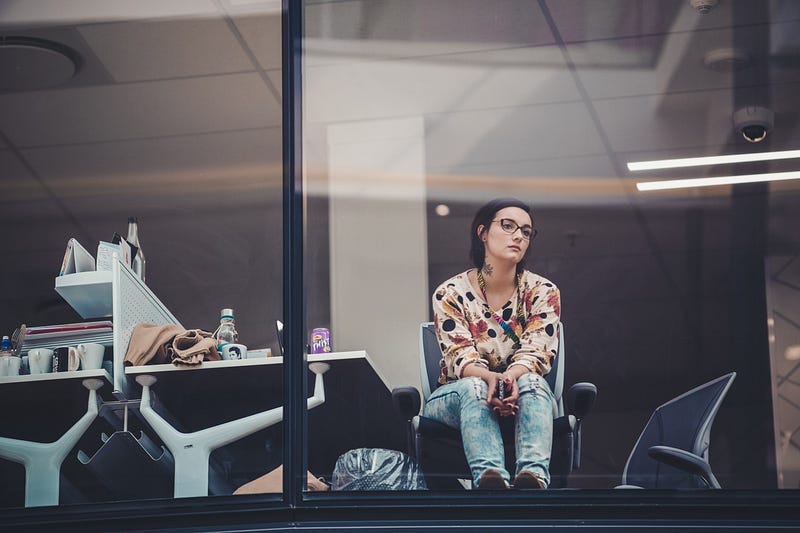
I could see it clearly. Me, in some crowded newsroom, slaving away on articles I couldn’t care less about. Low pay. Constant running around, interviewing, taking photos of dull places. Gaining respect slowly, and in a few years, maybe even working for a respectable publication writing articles I was interested in.
Making enough to live, but not much more. Researching, writing and editing taking up all of my time.
When the moment came, I said, “no thank you.”
I’ve never really had a “real job.” By “real”, I mean working in an office 9–5 Monday through Friday, taking coffee breaks, getting paid a salary, and having a fixed schedule that doesn’t change for months or years. All the features that many Americans equate with “security” and “normalcy.”
From when I started working at age 16, until this very moment, I have never had a job that filled any of those boxes.
My first few jobs were in restaurants. That was one hell of a lifestyle. It was difficult, fast-paced, and stressful — certainly not for everybody. In a restaurant, you have to juggle ten things at once, stand on your feet for hours at a time, and worry about the conflicting opinions and desires of guests, chefs, managers, and coworkers.
Weekends off? Forget it. Only the senior servers get those. Some restaurants don’t even let you take off on Christmas, New Year’s, Easter, or Mother’s Day — and why would you want to? Those are the busiest (read: most profitable) days of the year.
I worked my way through college serving. Then, when the time came for me to start applying for jobs in journalism (my degree), I veered off the path and chose something nobody expected, least of all me: teaching.
Admittedly, I chose to become an online teacher as a temporary measure. It would allow me to make money and live wherever I wanted. It would keep me busy while I look for a “real job.”
It is now three years later, and I have not found a real job. I haven’t even looked. I don’t want one.
In three years, I have learned that there is no “real job” that will propel me closer to the life I want. In fact, having a “real job” would only push me farther from my goals and ultimately prevent me from doing what I love.
I hope to one day be a published writer and photographer. This takes work —practice, self-marketing, endless query letters, writes and re-writes, hours spent on Photoshop & Lightroom.
If I’m spending 8 hours a day, 5 days a week working in an office, when will I have time for editing or writing? For traveling to take photos of events so I can sell them to magazines?
On the weekends, maybe. Before and after my 9–5, I suppose. But in that case, I’d be working almost constantly. While this life might function — and certainly has — for some, I know that it wouldn’t be sustainable for me. I’d be miserable. I would get distracted and burned out, and possibly end up abandoning my dreams entirely.
Many of my family and friends found my choice strange and even worrisome. Some still do.
Even people I love, people who understand me, still occasionally ask if I’m going to start looking for a “real job” soon.
I get it. Western society revolves around capitalism. It relies on people working weekdays, 9–5. Why do you think Happy Hours exist? Why are major clubs and bars only open on weekends? Do you think service workers are able to attend Sunday brunch? No, because they’re often the ones working Sunday brunch.
Life is built around and for the 9–5ers. It caters to them. And it makes sense — they’re the ones who are constantly trying to make more and, in turn, spend more. This is how and why the system works.
I understand that I am still part of that system. I accept it. It’s nearly impossible not to be unless you choose to live on a remote island or a self-sustaining farm somewhere (in which case, more power to you.)
I still make and spend money, of course, but I buy mainly from local businesses and rarely buy things I don’t need. I don’t work 9–5 and I don’t become so overworked that I need to “blow off some steam” throwing out tons of cash at bars and clubs on the weekend.
And most importantly, I am not part of the rat race. I am not vying for a promotion or a raise. My long-term goals are to support myself through writing and photography, and until then, I am happy making enough to live a simple, comfortable life in a country with a much lower price of living than in the States.
The best part is that I only work, on average, four hours a day. I work from home. I can make my own schedule. This gives me enough time to focus on my long-term goals without getting burned out.
I understand that not everyone is in my situation. Some of you might have a “real job” and love it. There is no shame in that. Many need to work “real jobs” to survive. I have nothing against people who do — I think they deserve just as much respect as people who teach online or work in restaurants.
But the idea of a “real job” is not for everyone, and it shouldn’t have to be.
A shift towards more flexibility in the work-life balance is long overdue. People should not have to kill themselves day in and day out to pay rent or support their family. People shouldn’t have to devote their lives to work that gives them no meaning or passion.
Luckily, the idea that working a 9–5 is the best way to be successful is dying.
The global pandemic has thrust the idea of working from home to the forefront. Now that companies — and employees — see it’s possible, there is room for a collective reorganization to take place.
There are also more digital nomad jobs available than ever, which means more people could have the ability to live a life they enjoy without the fear of being unable to support themselves. Including me.
Digital nomad jobs still require hard work, of course, and serious commitment. But the result is more control over your income and more freedom to do what you enjoy.
Because of my humble online teaching job, I am able to spend half of each day doing what I love. That’s worth more to me than anything a “real job” could provide.


