
Why I Read Haruki Murakami
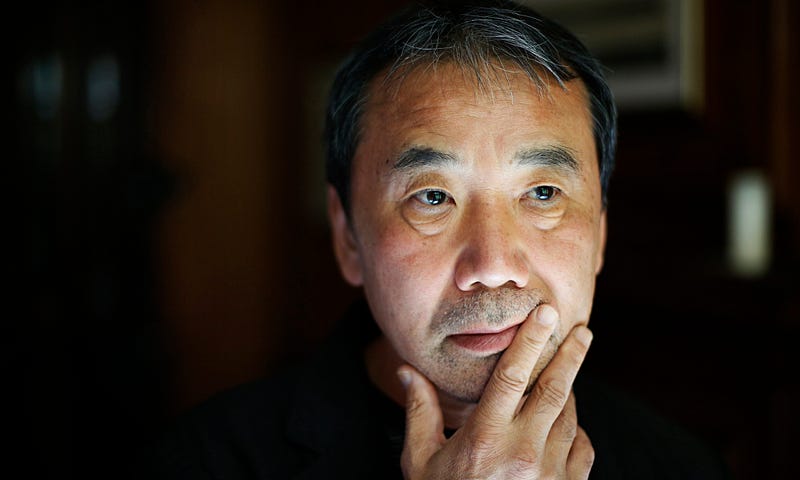
For me, conversations about Murakami inevitably contain some variation of this sentence:
I don’t really like his writing style, but I feel like he’s trying to communicate something deeply important.
I just finished 1Q84, completing all of Murakami’s novels translated into English. Looking back, I think the claim that his works are just rehashes of the same story is a fair one. Wistful person loses somebody, has encounters with elements of the “other side,” indulges in some combination of jazz/classical music/Cutty Sark/cats/unsatisfying sexual encounters. A lot of his novels repeat these motifs.
However, I don’t believe that the rehash argument is valid as criticism. Murakami writes because writing is a form of expression and he is going to keep writing the same book until he captures that “something” and fills in that void.
And that’s really what this “something” is — an engulfing sense of loss or recognition of emptiness. These losses can be as life-changing as the death of loved ones or as mundane as feeling bored at work.
In modern society, our “gains” (success, food, sex) are increasingly superficial, and fail to compensate for the heaviness of personal loss. What Murakami does is restore the magic, the childhood wonder, the almost spiritual importance of everyday activities.
It also seems like Murakami is fighting the different ways that society regulates our desires, our responses to trauma. That’s why I think Murakami is primarily an author of memory, much like Kazuo Ishiguro. We rarely reckon with our personal and cultural pasts, yet everything we touch, the music that we listen to, and even the food we eat is pregnant with memory.
Murakami is also an author of sincerity. Sincerity being, as Lionel Trilling defines it, “a congruence between avowal and actual feeling.” This is basically Murakami’s writing style: straightforward scene portraits, blunt dialogue, and genuinely confused narration. As readers we’re almost offended that the narrator doesn’t know why something is happening. We’re put off that characters are so sincere in their weirdness (cf. Fuka-Eri in 1Q84).
One of the reasons I appreciate Murakami is that he’s given an entire generation of writers the language to write with this kind of sincerity. Contemporary writers, especially young ones, are often at a loss for how to communicate the strangeness of our daily lives. Murakami’s aesthetic of sincerity activates these writers via clear and direct language. (I think Snippets is a perfect example of this applied to writing on the Internet)
Overall, I reject the idea that Murakami is a postmodernist writer. He writes with sincerity, not irony. He has passion for his hobbies and isn’t afraid to incorporate them into his fiction. His characters find meaning and contentment in day-to-day living against the stifling expectations of society.
Murakami is a response to the cast of post-WWII Japanese writers that were themselves responding to the conflict between progress and traditional values with fire. Mishima and Kawabata demanded that we die with our masks off in protest against the narcissism and stagnation of society.
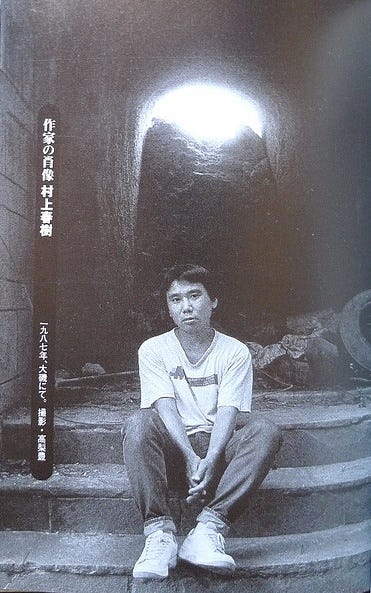
Murakami says no, that just being honest with ourselves is enough. There’s already enough magic in ordinary life, without the contrived plots of aristocratic family dramas.
Reading Murakami has been frustrating, confusing, yet transformative. He prepares me to face the absurd adultism of the world with a bit more bravery. I look forward to reading Killing Commendatore when it’s translated, as I’m sure many readers around the world who have noticed Murakami’s “something” are too.
Note: I recently learned that this article was published on Murakami’s birthday. Happy 69th, here’s to many more.
If you enjoy my writing, please consider leaving a tip on Patreon: https://www.patreon.com/xichen


