
Why I Organize My Goals Based on the Hijri Calendar
How a different calendar transformed my goal setting
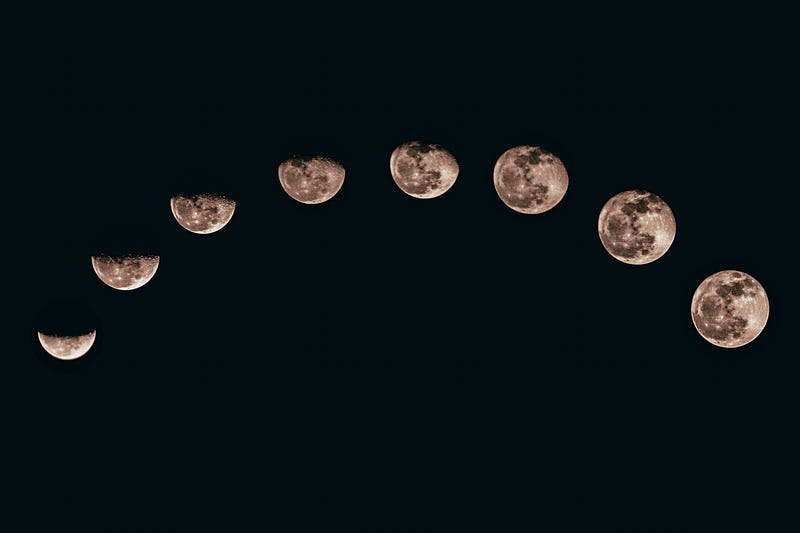
For most, the Gregorian calendar dictates the rhythm of life: New Year’s resolutions, quarterly targets, and back-to-school hustles all neatly packaged within its familiar 12 months.
But for me, a different calendar whispers a quieter, more introspective rhythm — the Hijri calendar, based on lunar cycles and Islamic observances.
For those unfamiliar, the Hijri calendar is a lunar calendar followed by Muslims, marking significant religious events and historical milestones.
It’s eleven days shorter than the Gregorian calendar, meaning it shifts annually compared to the solar year. This seemingly arbitrary shift holds a unique power for me.
My decision to organize my goals around the Hijri calendar wasn’t born out of religious obligation, though faith plays a role. It stemmed from a yearning for a more meaningful structure, a framework that resonated with my values.
The Gregorian calendar, with its arbitrary divisions, often felt artificial. Deadlines loomed based on societal expectations rather than personal growth. The constant pressure to “start afresh” every January felt performative, a fleeting attempt to outrun the flow of life.
A Cycle of Renewal
The Hijri calendar, however, offered a different perspective.
Indeed, the number of months with Allah is twelve [lunar] months in the register of Allah [from] the day He created the heavens and the earth; of these, four are sacred. That is the correct religion, so do not wrong yourselves during them. Quran 9:36.
Its months held names steeped in history and significance. Muharram, the month of remembrance; Ramadan, the month of fasting and self-reflection; Dhul Hijjah, the month of pilgrimage and sacrifice.
These names served as constant reminders of the values I cherished — introspection, compassion, and spiritual growth.
Also, it disrupts the monotony of yearly cycles. Every few years, the months shift enough to fall into a different season, reminding me that life, like the moon, is constantly in flux. This constant shift prevents me from getting complacent, pushing me to re-evaluate my goals and adjust them to the new context.
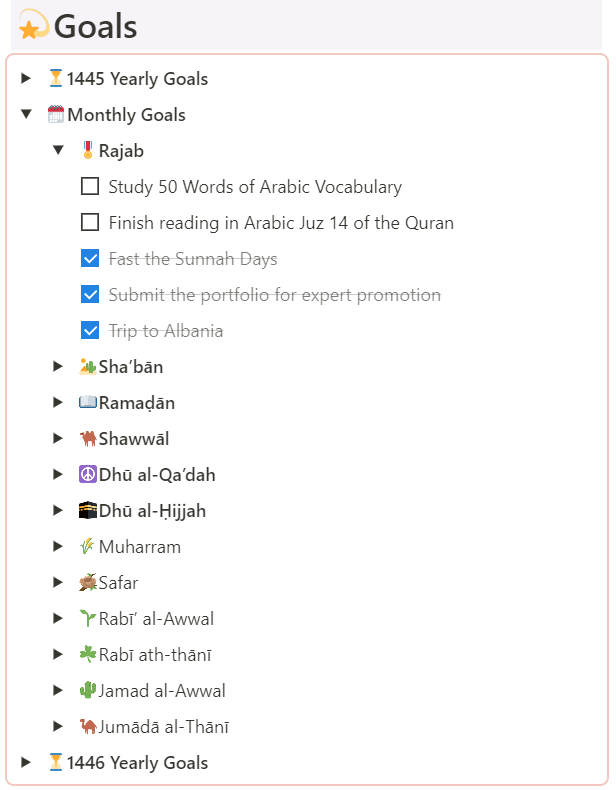
I keep my goals in Notion, and I have yearly ones and monthly ones. And I am very fluid with them. Whenever I think of a new goal, I just go to the month or year I think I can achieve it and add it there.
Or if I want to postpone a goal, I just drag it to the next month, or delete it completely if I don’t want to do it anymore. When the month is over, I move it to the bottom of the list and open the next month. Here’s a screenshot of how they look now.
Spiritual Significance
Organizing my goals around these months wasn’t about rigid planning; it was about aligning my intentions with the inherent flow of the Islamic year.
For example, in Muharrem my goals are about strengthening my connection with family, growing my career, and seeking knowledge that would enrich my understanding of the world.
However, during Ramadan, my goals shift towards spiritual development and community service, and I have less work-related goals.
The month of Ramadhan [is that] in which was revealed the Qur’an, a guidance for the people and clear proofs of guidance and criterion. So whoever sights [the new moon of] the month, let him fast it; and whoever is ill or on a journey — then an equal number of other days. Allah intends for you ease and does not intend for you hardship and [wants] for you to complete the period and to glorify Allah for that [to] which He has guided you; and perhaps you will be grateful. Quran 2:185.
And in Shawwal, following the joyous celebration of Eid al-Fitr, my goals are to focus on integrating the lessons learned during Ramadan into my daily life, practicing gratitude, and maintaining the spiritual momentum gained during the holy month.
The month of Dhul Hijjah becomes a time for reflection on personal sacrifices and setting intentions for the year ahead.
A year-long goal has been to read the Quran in the original language, beginning to end, for the first time. As someone who has been studying the Arabic language for only about two years, as an adult, this is a very challenging goal.
I’m almost halfway and it has been very special and motivating to link the different Surahs completion goals and milestones with the Islamic months.
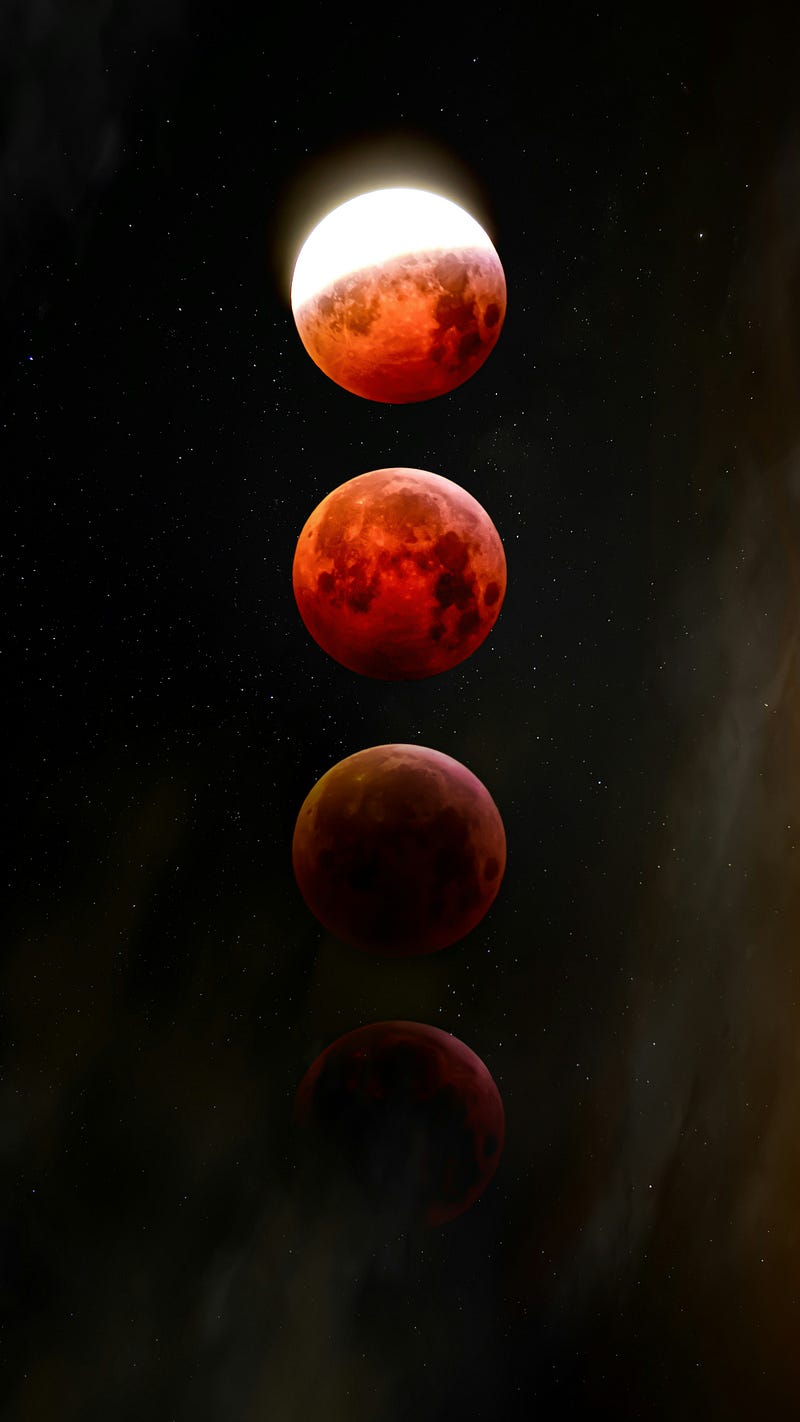
This isn’t just about religious observances; it is about tapping into the inherent wisdom embedded in these lunar cycles. The waxing and waning of the moon mirrored the flow of my own motivation. There were times for focused action and times for quiet contemplation.
A Focus on Progress, Not Perfection
The lunar cycle, with its waxing and waning phases, serves as a powerful metaphor for personal growth. It reminds me that progress is not linear, but cyclical. There will be periods of intense focus and accomplishment, followed by times of rest and re-evaluation.
This understanding allows me to be more forgiving of setbacks and celebrate incremental progress, knowing that even seemingly small steps contribute to the bigger picture.
‘Umar ibn al-Khattāb (may Allah be pleased with him) reported that the Prophet (may Allah’s peace and blessings be upon him) said: “Verily, the reward of deeds depends on the intentions, and each person will be rewarded according to what he intended. Al-Bukhari and Muslim
Gone are the arbitrary deadlines and the pressure to conform to societal expectations. In their place, a sense of purpose emerged, guided by values and traditions that resonated deeply with my core being.
I found myself setting more meaningful goals, ones that aligned with my eternal life aspirations rather than fleeting wordly trends.
A Global Community
Following the Hijri calendar connects me to a wider Muslim community around the world. We collectively experience the same shifts and milestones, creating a sense of shared purpose and motivation.
Knowing others are striving towards similar goals, even in different time zones, fuels my own commitment and reminds me that I’m not alone on this journey.
The Prophet (ﷺ) said, “A faithful believer to a faithful believer is like the bricks of a wall, enforcing each other.” While (saying that) the Prophet (ﷺ) clasped his hands, by interlacing his fingers. Al-Bukhari
The Hijri calendar may not be the mainstream choice for goal setting, but for me, it has become a powerful tool for self-discovery and growth. It offers a cyclical rhythm of renewal, connects my personal aspirations to my spiritual values, and reminds me that progress is a journey, with the destination being in the afterlife and not in this world.
So, next time you see a crescent moon, take a moment to reflect. Maybe, there’s a different calendar waiting to be explored, one that might unlock a new perspective on your own personal journey.
Please consider subscribing.


