

Why I Love Vintage Cookbooks, and You Should Too
Food-focused time machines
Pressed Chicken. Fried Eggs in Black Butter. Suet Pudding
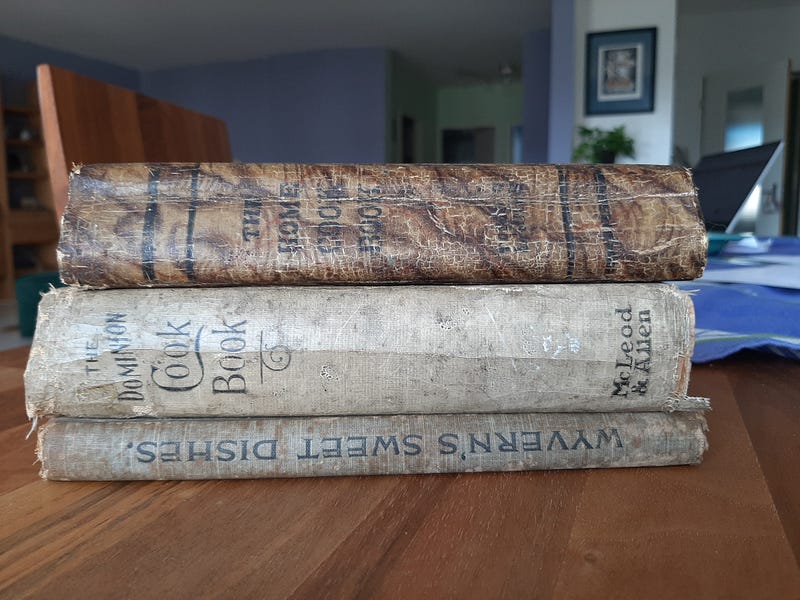
Favorite recipes, at least for the woman who owned my copy of The Home Cookbook, 70th Edition, published in 1877 (yes, you read that right). So was Mrs. William Brampton’s Potato Salad, the recipe handwritten onto a blank page at the back.
I collect vintage cookbooks. They give me a sense of connection with women in previous generations. I’ve often wondered what it would be like to live in the past, before microwaves, vacuum cleaners and hot running water. Would I manage to juggle it all? Or would I collapse like a bad soufflé?
Step into the past
I grew up near the Old Bethpage Village Restoration, a living museum of village life in the 1800s. As a child, the Village, and others like it at Colonial Williamsburg and Plimoth Plantation, fascinated me. I felt drawn to them to the kitchens, the barns and the fields. Maybe, as an aspiring veterinarian, it was how important animals were to life back then. Maybe it was the idea of the one-room school instead of my crowded classes.
Like living museums, vintage cookbooks are windows into the past. They take us back to a world before chemical food additives. A world where you recognized everything you ate, even if that sometimes meant eating your pet cow LuLuBelle.
A hot stove was a step up
Cooking in the early 1800s was not the relaxing pastime it can be now. Back then, families were bigger, ingredients were simpler and the main meal was in the early afternoon, closer to what we would call lunchtime.
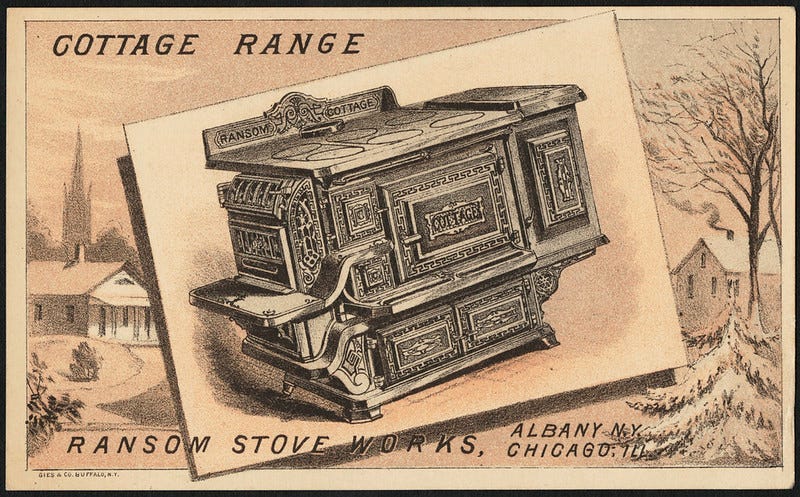
Now we joke about spending hours over a hot stove. Then, a hot stove was a major improvement. Early in the 19th century many women still cooked over an open flame in a fireplace. There was no refrigeration. They cooked every day, for every meal, for hours on end. Imagine doing that for your entire adult life.
Iron stoves, fueled by wood, coal, kerosene and eventually gas, were introduced over the 19th century. They did not allow the tight temperature control we have now. The recipes in my late 1800s cookbooks recommend baking in a ‘slow oven’ or a ‘medium oven.’ What did that mean? Every woman figured it out for herself, changing the temperature by building up the fire or opening the oven door.
These women defined endurance. Day after day, in all weather, with very little help, they created nourishing meals that kept their families going. No 2-week, all-inclusive vacation breaks in exotic locations; with luck, they rested for a day or two after bearing a child, then got back on their feet and started cooking again.
Real agile cooking
Making a good meal meant balancing available ingredients, inaccurate measures and unpredictable temperatures. The cooks had to be agile, and the recipes did too. Women used whatever measures were readily available; it’s not unusual to see ‘two hands of rice’ or ‘a large teacup of flour’ in a recipe.
Because supplies were inconsistent at best, many of these old recipes are quite forgiving. Scale them up or down. Change out one ingredient for something similar. Adjust the seasoning to your personal taste. More than 70% of the vintage recipes I have tried turn out well regardless of what I change.
A typical example:
White Sponge Cake, contributed by Mrs. J.R. Silliman
Take 2 tumblers of white pulverized sugar, 1 1/2 tumblers sifted flour, 1 teaspoonful cream of tartar, whites of 10 eggs beaten very stiff; then add the flour and sugar, and beat as little as possible; bake in a slow oven.
This actually does turn out a light sponge cake, once you get the size of the tumbler right. I replaced the wheat flour with a mix of rice flour and sweet rice flour, and was rewarded with a delicious gluten free cake, delightful with fresh berries and some whipped cream.
Now imagine yourself in a small town with one general store, and a few chickens and cows of your own. No Amazon deliveries of mango chutney or gourmet 78% chocolate. You cooked with what was available, and learned to make do. That’s real agility.
Old friends
The more I learn about life in “ye olde” days, the more respect I have for the women who came before me. They managed their households with minimal help, tight purse strings and none of the conveniences we take for granted.
Maybe one day I’ll join the cast of a time travel show like Back in Time for Dinner and find out what it was really like. Until then, I’ll continue to imagine the women who owned my cookbooks: Mrs. Silliman, Mrs. E Kalgi, Mrs. Stephen Johnson. Women who identified themselves by their husband’s name, but who made each recipe their own.
They have brought me wisdom, comfort and insights. I wish I could thank them.