avatarPaul Myers MBA

Free AI web copilot to create summaries, insights and extended knowledge, download it at here

3676

Abstract

change your approach, adjusting your mindset from:</p><blockquote id="b2a6"><p>How Many Books Can I read?</p></blockquote><p id="3ee8">To something like this:</p><blockquote id="5969"><p>How much information can I gather in the next hour (from 10 books even)?</p></blockquote><p id="ea02">If you begin with what you’re going to do with the information you find then you’ll become more productive.</p><p id="d6f9">Using these techniques I secured <b>one A and three B’s</b> in a Post-Graduate Certificate in Entrepreneurship and Innovation.</p><figure id="30c8"><img src="https://cdn-images-1.readmedium.com/v2/resize:fit:800/1*WeA9c7kqqeVZvyK6Iqc72g.jpeg"><figcaption>Paul Myers Post-Grad Results</figcaption></figure><p id="c8b1"><b><i>Action</i></b><i>: Modify your thinking from the <b>Quantity</b> of books your reading, or about to read, to the <b>Quality</b> of information you’re absorbing.</i></p><h1 id="2788">Tip #4— Clarify Your Purpose</h1><p id="f1f1">Begin with clarity of purpose in mind — knowing why you’re reading a certain book in the first place. That said, don’t confuse purpose with goals, here’s some examples:</p><h2 id="b476">Reading Purpose</h2><ul><li>Get information for an article</li><li>Learn six ways to invest</li></ul><h2 id="8dc7">Life Goal Purpose</h2><ul><li>How to make $10k in a year on Medium</li><li>Learn subject for an exam</li></ul><p id="20fb"><b><i>Action</i></b><i>: Define your purpose from the outset to programme your brain in order to find specific information that you’re looking for.</i></p><p id="4387" type="7">“If you don’t pay appropriate attention to what has your attention, it will take more of your attention than it deserves.”― David Allen</p><h1 id="e936">Tip #5— Use The Pareto Principle</h1><p id="ceb5">The 80/20 rule applies to almost everything in life. When you apply it to reading you’ll discover that 80% of the book is contained in 20% of the words that you read.</p><p id="bf76" type="7">“Aoccdrnig to a rscheearch at Cmabrigde Uinervtisy, it deosn’t mttaer in waht oredr the ltteers in a wrod are, the olny iprmoetnt tihng is taht the frist and lsat ltteer be at the rghit pclae. The rset can be a toatl mses and you can sitll raed it wouthit porbelm. Tihs is bcuseae the huamn mnid deos not raed ervey lteter by istlef, but the wrod as a wlohe.” — Cambridge University, 2008</p><p id="8938">Know this — you can optimise your time five-fold and get 100% of the information from 20% of your time.</p><figure id="9049"><img src="https://cdn-images-1.readmedium.com/v2/resize:fit:800/1*MoyfuMp9gduBYY0rJAe8VA.jpeg"><figcaption>Photo by <a href="https://unsplash.com/@austindistel?utm_source=unsplash&amp;utm_medium=referral&amp;utm_content=creditCopyText">Austin Distel</a> on <a href="https://unsplash.com/s/photos/book-content?utm_source=unsplash&amp;utm_medium=referral&amp;utm_content=creditCopyText">Unsplash</a></figcaption></figure><p id="4f41"><b><i>Action</i></b><i>: Let go of the <b>perfection ideal</b>, trying to read every word, and accept that you can achieve this in a fifth of your time.</i></p><h1 id="14d3">Tip #6— Use Your Peripheral Vision</h1><p id="171e">Peripheral vision is grounded in awareness. Look into space and relax your eyes and notice what you can see from your peripheral vision. Be aware of the objects to your right and your left without moving your eyes. Also notice what you can make out above and below your line of vision.</p><p id="6089">What you see lies outside your central field of vision.</p><figure id="cc78"><img src="https://cdn-images-1.readmedium.com/v2/resize:fit:800/1*5-3l6tDV4cK3rKNSc1cC8Q.jpeg"><figcaption>Image <a href="https://www.eyehealthweb.c

Options

om/peripheral-vision/">Source</a></figcaption></figure><p id="d6cb"><b><i>Action</i></b><i>: Focus your eyes, your line of vision, on 2, 3 or 4 points on a line your reading and you’ll discover that your peripheral vision takes in everything around those points.</i></p><h1 id="50cc">Tip #7— Hotspot Focus</h1><p id="ad28">There are lots of words on a page, many of which lead up to the information that your seeking — padding. Storytelling is a great method that writers use to validate or underpin a ‘Hot-Spot’. Learn how to do this and your golden.</p><p id="6a4a">How to ‘Spot’ a ‘Hotspot’?</p><p id="eed4">Start with testing your aptitude and refine with practice — Pick up a factual book and highlight words, phrases or paragraphs that reflect the author's message. Recognise the Keywords that relate to the message intent — this is the Hotspot.</p><p id="8c44"><b><i>Action</i></b><i>: Following action’s 1–6 and you’ll learn how to recognise hotspots. With practice Keywords will stand out as you speed-read.</i></p><h1 id="3caf">Tip #8 — Choose And Use Your Eye Pattern</h1><p id="d4fa">There’s an array of eye-patterns that you can learn, adopt and improve over time, these include:</p><ul><li>Horizontal</li><li>Super read</li><li>Zig-Zag</li><li>Capital I Shape</li><li>First and last</li></ul><p id="aa33">Personally, I found the “Capital I” method to be the most beneficial, as illustrated below. This method means that you read most of the Top and Bottom of the page, scanning vertically in between.</p><figure id="0556"><img src="https://cdn-images-1.readmedium.com/v2/resize:fit:800/1*YUYy6jMTqFU2kfQIJkeHUw.jpeg"><figcaption>Example by Paul Myers</figcaption></figure><p id="6e79"><b><i>Action</i></b><i>: Test different speed reading methods and choose the one that works best for you.</i></p><h1 id="ceed">Tip #9 — Take A Deep Breath And Smile</h1><p id="5818">Being happy and in a positive frame of mind allows you to take in more information.</p><blockquote id="3b66"><p>So smile!</p></blockquote><p id="0d26">Oh, don’t forget to breath, we all know that oxygen is vital Brain fuel.</p><p id="f998"><b><i>Action</i></b><i>: That’s easy — Smile and Breath.</i></p><h1 id="fce8">Final Thought</h1><p id="9eae">Today there are lots of speed-reading Apps, but from experience there is no substitute to the physical practice — the technology-free tactile version.</p><h2 id="750b">Result</h2><p id="a58e">In the end my results were <b>Twelve A’s and Six B’s</b> by learning how to read <b><i>50 pages in 5 minute</i>s. </b>I read dozens of Books … Books like <a href="https://www.nytimes.com/2011/11/27/books/review/thinking-fast-and-slow-by-daniel-kahneman-book-review.html">Thinking Fast and Slow by Daniel Kahneman</a> and <a href="https://www.amazon.com/Leadership-Organizations-8th-Gary-Yukl/dp/0132771861">Leadership in Organizations by Gary Yukl</a>. Not easy books to read, but that was part of the challenge. When I finished I was surprised about how much information I could absorb and recall in 300 seconds—<b>Every time</b> for every book.</p><p id="ed71">Trust me, it’s Powerful … give it a try!</p><p id="7884" type="7">“Celebrate any progress. Don’t wait to get perfect.” — Ann McGhee Cooper</p><figure id="2a62"><img src="https://cdn-images-1.readmedium.com/v2/resize:fit:800/1*w-sgmXwFtrBYrO39KF1gVA.jpeg"><figcaption>Photo by <a href="https://unsplash.com/@kuzelevdaniil?utm_source=unsplash&amp;utm_medium=referral&amp;utm_content=creditCopyText">Daniil Kuželev</a> on <a href="https://unsplash.com/s/photos/vision?utm_source=unsplash&amp;utm_medium=referral&amp;utm_content=creditCopyText">Unsplash</a></figcaption></figure></article></body>

Why I Learned How To Speed Read

And how you can too with these 9 tips

Photo by Thought Catalog on Unsplash

A few years ago I embarked on a Masters in business. Soon after I started my first module, I was overwhelmed by the amount of content I had to not only read, but digest and understand intimately, to critique academically.

The problem was the sheer volume.

The solution — Maybe I could learn how to speed-read.

So I did and got four A’s in my MBA, 3 shown below plus thesis.
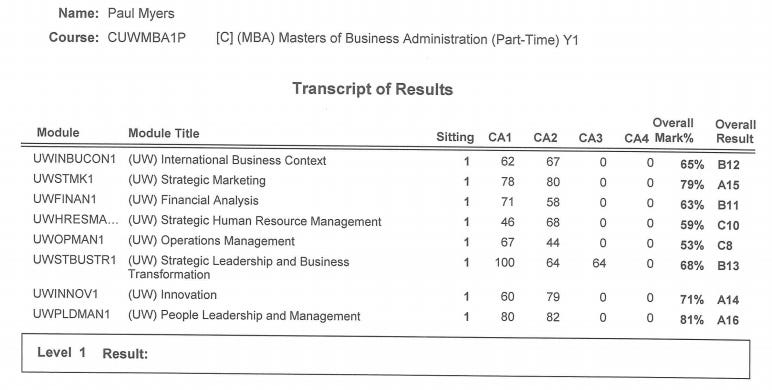
Paul Myers MBA Results

In this article I’ll demonstrate the speed-reading techniques I used to devour mountains of content to ace 12 exams (plus six B’s).

Tip #1 — Apply The Skills That You Already Have

Remember you are not starting from scratch. You can apply some basic competencies immediately by using the skills that you already have.

The fact is you already do it. Think about how you read a newspaper or consume Medium articles — you scan. You never read a newspaper from front to back, so:

“Use books, don’t let books use you.” — Susan Norman

A year after completing my MBA I completed an Honours Degree in Digital Innovation, securing seven A’s in the process.
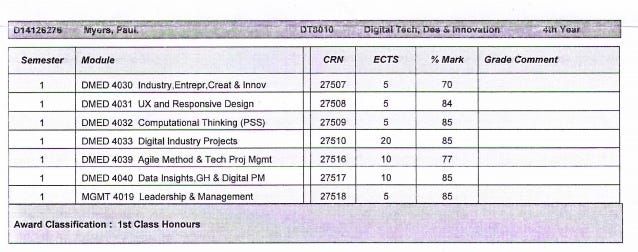
Paul Myers BSc. (Hons) in Digital Innovation

Action: Think about how you read a newspaper or Medium pieces and apply the same method when reading a book.

Tip #2 — Preview Before You Start

Spend a 3–5 minutes looking through a book, quickly learning what it’s about before you start reading, such as:

  • Open the book and flick between the pages a few times.
  • Read the cover, blurb and any testimonials
  • Check the date of the publication for relevancy
  • Read Content list then title heading and subheadings
  • Scan the index for keywords
  • Read about the author too

The more precise your purpose the more information you’ll absorb.

Action: Set your brain and subconscious in motion, ready to consume the topic or book genre you’ve chosen — consider this part of your warmup, like an athlete.
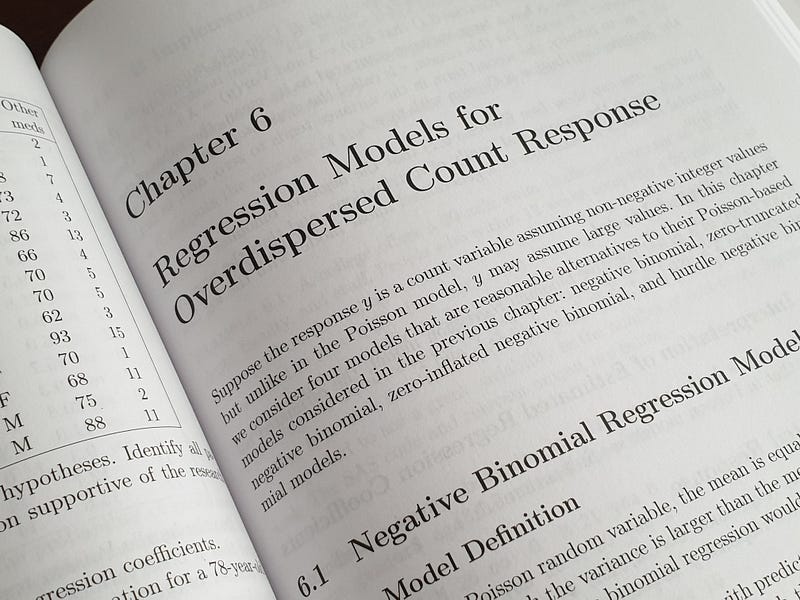
Photo by Enayet Raheem on Unsplash

Tip #3— Think About Finding Information

Don’t just think reading, rather think about finding information. To do so you have to change your approach, adjusting your mindset from:

How Many Books Can I read?

To something like this:

How much information can I gather in the next hour (from 10 books even)?

If you begin with what you’re going to do with the information you find then you’ll become more productive.

Using these techniques I secured one A and three B’s in a Post-Graduate Certificate in Entrepreneurship and Innovation.
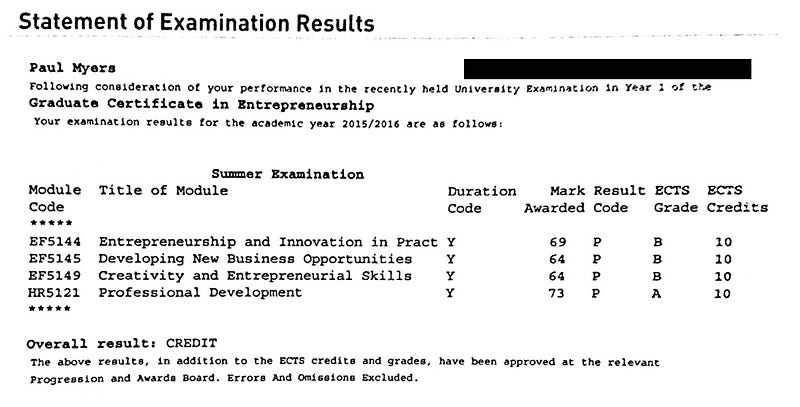
Paul Myers Post-Grad Results

Action: Modify your thinking from the Quantity of books your reading, or about to read, to the Quality of information you’re absorbing.

Tip #4— Clarify Your Purpose

Begin with clarity of purpose in mind — knowing why you’re reading a certain book in the first place. That said, don’t confuse purpose with goals, here’s some examples:

Reading Purpose

  • Get information for an article
  • Learn six ways to invest

Life Goal Purpose

  • How to make $10k in a year on Medium
  • Learn subject for an exam

Action: Define your purpose from the outset to programme your brain in order to find specific information that you’re looking for.

“If you don’t pay appropriate attention to what has your attention, it will take more of your attention than it deserves.”― David Allen

Tip #5— Use The Pareto Principle

The 80/20 rule applies to almost everything in life. When you apply it to reading you’ll discover that 80% of the book is contained in 20% of the words that you read.

“Aoccdrnig to a rscheearch at Cmabrigde Uinervtisy, it deosn’t mttaer in waht oredr the ltteers in a wrod are, the olny iprmoetnt tihng is taht the frist and lsat ltteer be at the rghit pclae. The rset can be a toatl mses and you can sitll raed it wouthit porbelm. Tihs is bcuseae the huamn mnid deos not raed ervey lteter by istlef, but the wrod as a wlohe.” — Cambridge University, 2008

Know this — you can optimise your time five-fold and get 100% of the information from 20% of your time.
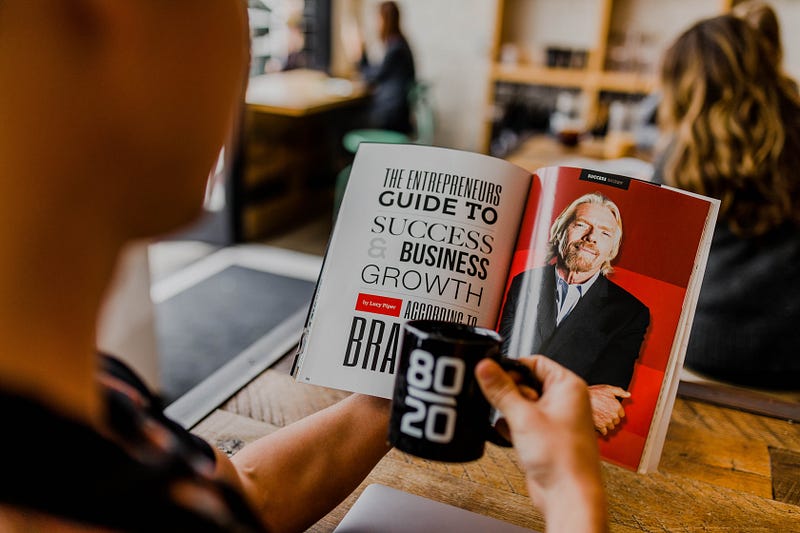
Photo by Austin Distel on Unsplash

Action: Let go of the perfection ideal, trying to read every word, and accept that you can achieve this in a fifth of your time.

Tip #6— Use Your Peripheral Vision

Peripheral vision is grounded in awareness. Look into space and relax your eyes and notice what you can see from your peripheral vision. Be aware of the objects to your right and your left without moving your eyes. Also notice what you can make out above and below your line of vision.

What you see lies outside your central field of vision.
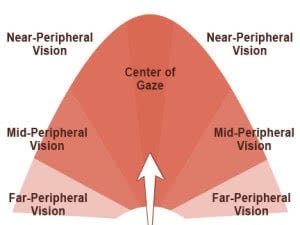
Image Source

Action: Focus your eyes, your line of vision, on 2, 3 or 4 points on a line your reading and you’ll discover that your peripheral vision takes in everything around those points.

Tip #7— Hotspot Focus

There are lots of words on a page, many of which lead up to the information that your seeking — padding. Storytelling is a great method that writers use to validate or underpin a ‘Hot-Spot’. Learn how to do this and your golden.

How to ‘Spot’ a ‘Hotspot’?

Start with testing your aptitude and refine with practice — Pick up a factual book and highlight words, phrases or paragraphs that reflect the author's message. Recognise the Keywords that relate to the message intent — this is the Hotspot.

Action: Following action’s 1–6 and you’ll learn how to recognise hotspots. With practice Keywords will stand out as you speed-read.

Tip #8 — Choose And Use Your Eye Pattern

There’s an array of eye-patterns that you can learn, adopt and improve over time, these include:

  • Horizontal
  • Super read
  • Zig-Zag
  • Capital I Shape
  • First and last

Personally, I found the “Capital I” method to be the most beneficial, as illustrated below. This method means that you read most of the Top and Bottom of the page, scanning vertically in between.
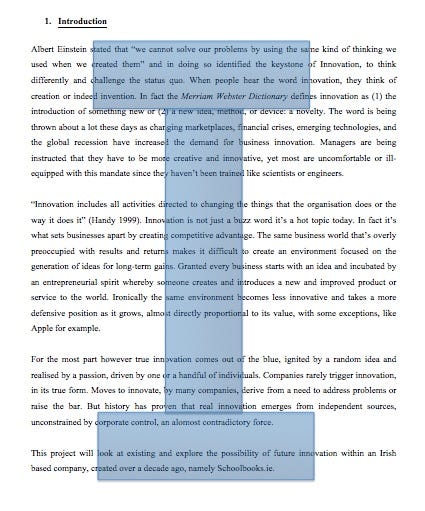
Example by Paul Myers

Action: Test different speed reading methods and choose the one that works best for you.

Tip #9 — Take A Deep Breath And Smile

Being happy and in a positive frame of mind allows you to take in more information.

So smile!

Oh, don’t forget to breath, we all know that oxygen is vital Brain fuel.

Action: That’s easy — Smile and Breath.

Final Thought

Today there are lots of speed-reading Apps, but from experience there is no substitute to the physical practice — the technology-free tactile version.

Result

In the end my results were Twelve A’s and Six B’s by learning how to read 50 pages in 5 minutes. I read dozens of Books … Books like Thinking Fast and Slow by Daniel Kahneman and Leadership in Organizations by Gary Yukl. Not easy books to read, but that was part of the challenge. When I finished I was surprised about how much information I could absorb and recall in 300 seconds—Every time for every book.

Trust me, it’s Powerful … give it a try!

“Celebrate any progress. Don’t wait to get perfect.” — Ann McGhee Cooper

Photo by Daniil Kuželev on Unsplash
Reading
Personal Development
Self Improvement
Personal Growth
Life Lessons
Recommended from ReadMedium