
Why I Just Say No to Productivity Porn
What if you could live a richer life, systems-free?
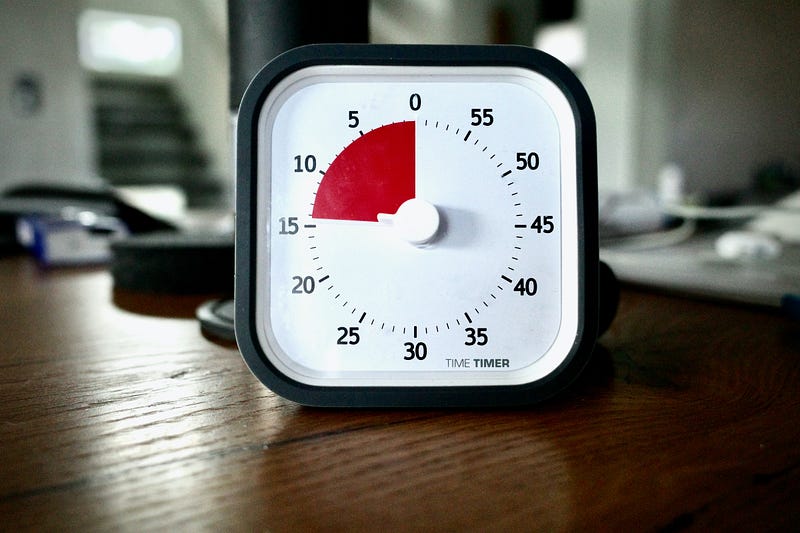
I sometimes joke that I “pray to the god of efficiency.” It’s less of a joke than a peek into my psyche. I get (internally) stressed watching people do things haphazardly.
At my last office, I often went to a sandwich place for lunch. The cashier would inevitably ask me if my order was for take-out or eat-in at the beginning, then forget by the end and ask again. Each time, he’d sound surprised that he’d forgotten and needed to ask a second time.
Every single time.
That’s a silly first-world “problem”, so I never mentioned it, despite my inner self looking like a cartoon character with steam coming out of my ears. How hard is it to ask about take-out at the end so you’ll actually remember the answer?
You’d think with this mindset I’d be a big proponent of systems designed to maximize efficiency. Actually, not so much. That’s because most of this stuff ironically makes me (and I suspect many others) far less productive.
Time-Management
Let’s start with time-management systems. I agree with the idea that everything has a time and place, and if you get those right, you’ll spend more time in a flow state.
The problem with these systems is they treat us all like we’re the same person who functions exactly the same way. Productivity content assumes everyone is best and freshest first thing in the morning and everyone is most productive when they work x minutes then take a break for y minutes.
I’m afraid it doesn’t work that way. Yes, we all have times when we are more mentally capable, and that is our best time to do thinking work. But that time isn’t necessarily the morning. Some people really come into their own in the afternoon or when the sun goes down.
Then there’s the Pomodoro system, where you set a timer for 25-minutes, work completely uninterrupted for that time (ignoring emails, texts, etc.) then take a short timed break. Repeat ad infinitum.
Every time I tried this, I either needed a break early or was deep in the flow of something when the timer went off and skipped the break. The general idea of deep focus followed by a break is sound, but the rigidity kills it. The chance of this exact formula fitting your needs is about the same as being able to find a pair of jeans that perfectly fits your waist, hips, and thighs. Good luck with that.
All of this rigidity doesn’t take into account that we have individual needs and life happens. I’ve yet to meet anyone who really thrives in these systems.
The best time-management book I’ve read is The Power of When by Michael Breus. He’s a sleep specialist who found there are four types of sleep patterns. He outlines your ideal schedule depending on your chronotype (including work, eating, social, movement, everything), taking into account energy and hormone levels. The customization is key, here. I made a few tweaks based on his suggestions and they’ve been helpful.
But generally speaking, trying to fit into a time management system has only made me less efficient. I know when my brain is cooking with gas and when it needs some coddling and I order my day accordingly. I think most of us do the same.
As for morning routines — they’re not the end-all and be all many people claim. Breus backs me up by suggesting that if you’re not a morning person you can muscle yourself into faking it, but it will always be a struggle. Our sleep patterns are our sleep patterns. Forcing yourself into a different one means you’re always working against nature.
Systems
Productivity lovers are big systems people. Shudder.
There are some systems that are helpful. An automated appointment scheduler is great because it’s easy to set up and intuitive for others to use. Take that administrivia out of my hands, please.
I can also respect having a “big three” list of tasks to knock off each day. This keeps you focused on the important stuff. Putting a bit of mindfulness into planning your day will take you far in terms of outputs.
However, many of the systems designed to make me more efficient just do the opposite. I did some freelance work for an online accounts management company. They wanted me to use their product, which made sending invoices three times more complicated than it was when I did it manually with a homemade template.
In one of my first jobs, the clunky contact management system made it far more difficult to have organic conversations with clients. I typically wound up ignoring it and just sending regular emails, the route of least resistance.
I’m not big on rules and when you make everyday responsibilities more complex and time-consuming by incorporating unnecessary steps, it bucks against my natural ability to get ish did.
If something’s not natural, it’s taking up my time and mental energy to use it. How is this more efficient or productive?

What’s the end goal here?
But the real reason I dislike productivity porn is the intention behind it. The idea is that it helps us get our work done in less time. However, it’s not so that we can have more downtime or more time with loved ones. Oh, no.
It’s so that you can actually fit more work into that same amount of time.
The biggest reason I’m down on productivity porn is the inherent assumption that my worth is measured by my output. I bought into that lie for quite a while — staying late to complete more work, finding the most efficient way to do things, being proud of the fact that I never missed a deadline, no matter how unreasonable.
Yes, I got noticed for it. Managers loved me. But with that love came a whole lot more work with nothing to show for it. It didn’t get me a raise or a promotion. It just meant I was doing more than many of my peers.
It took me a long time to face the reality that work doesn’t love you back. Just because I can do more of it super-efficiently doesn’t make me a better person. It makes me a more stressed-out person.
It wasn’t until I left corporate life and started freelancing that I realized what life was like with a realistic workload. It still took me a while to get there. I was so entrenched in the productivity mindset that I spent years taking on more projects than I could handle.
But when I finally started saying “no”, it was a revelation. Suddenly, I had time for the things I’m interested in. I socialized more and tried new restaurants. I traveled. I lived life.
I was nicer and more understanding with people. I didn’t secretly want to punch someone if they were daydreaming in the elevator and took a minute to realize we’d reached their floor.
I’ve deliberately set up a life that I can support with less output. I live in a small but comfortable condo. My local park is my greenspace. I don’t own a lot of things, but I have all that I need. I walk or take public transportation to most places.
My life doesn’t cost that much, so I don’t need to bring that much money in. This means I have the power to gatekeep, and only do what I want.
Marissa Renee wrote a great piece about the fact that her friends were too busy and distracted to realize it was her birthday. I remember when I was deep in corporate life thinking what an inconvenience my dad’s birthday was.
What kind of thinking is that? If we don’t make time to celebrate the people we love, what are we prioritizing, anyway?
I recognize I’m in a privileged position, but it’s also one I bucked a lot of trends and gave up material possessions to be in. I’ve had people tell me my lifestyle is their goal. I hope it is. I’d love to have more people around that aren’t stretched so thin and chronically exhausted.
I remember that place, and I’m not going back. It’s a much better view from here. No systems or morning routines required.
Thanks for reading. If you enjoyed this story, you may also enjoy this one.
Medium is full of lifestyle and business content like this. You can get access for only $5/month by clicking here. If you join using this link, I’ll earn a commission.