
Why I Hate the Grammar Police
Science agrees with me that they’re jerks
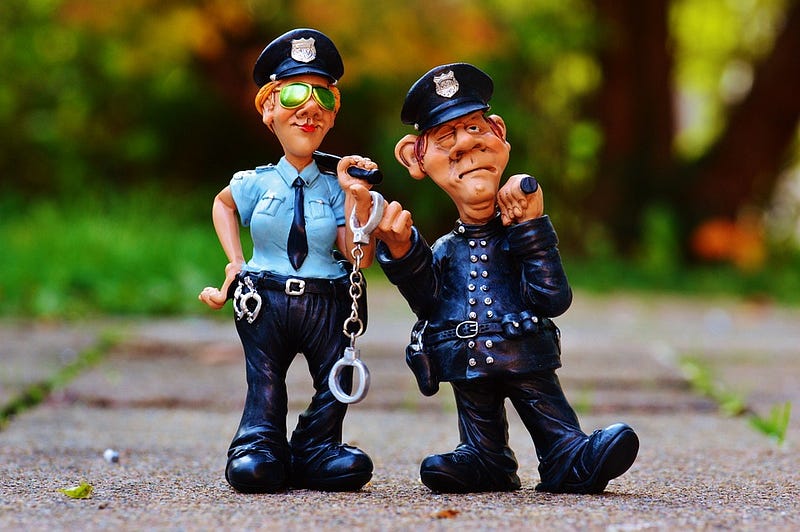
Ever encountered someone who LOVES correcting your grammar and spelling? They’re the type of person who has a smug smile on their face and a revolting air of superiority as they tell you why your mistake is the most hilarious thing they’ve ever seen because you must be really thick? Yeah, I’m on about those jerks.
I really hope that there are a few mistakes here, just to really piss the grammar police off.
I make quite a few mistakes in my work. I’m tired all the time, deal with a lot of physical symptoms due to my mental health and I type way too fast. I ask people to check my work and I run my writing through Grammarly but still, despite all my best efforts, it happens. Errors slip through the net. I cannot even begin to tell you how irritated it makes me feel when I discover that, despite my best efforts and asking for help, I still find errors in my published works.
To be honest, I don’t care. Not just about my own work, but about the errors in other people’s work too. I don’t care if I see a typo or two. I keep reading, understanding that this person took a lot of time and effort to write their article and they are a human being who made a little mistake. Not a big deal. Actually, I find it pretty easy to ignore.
That’s why I don’t trust the grammar police. I normally find people who can’t let go of little things really irritating. As for people who belittle others and make people feel inferior? No. Just no.
People who spot errors and politely tell you privately because they genuinely want to help are awesome. Editing is a skill, a talent and I love the magic editors do. We need more editors in the world! But grammar police? People who get off on correcting people? People who make you feel small because you made a mistake? Eww, no. Gross.
What I hate the most is the air of superiority they have as they correct you. What little pointless life you must have if you get a big ego boost from correcting a misspelled word and insulting someone because of it. Please get a life. I think it all boils down to this: if you’re obsessed with grammar, then you probably don’t understand writers.
It’s a common misconception that writers can write. Writers are incoherent beings who drink too much coffee then splurge words out onto the page. They have too many exciting ideas and often, especially in the first draft stages, the words they write make absolutely no sense. That’s why editors exist, and why books go through several rounds of editing — because writers are the ones who are full of exciting ideas, and it’s an editor’s job to make them look good.
I have read bestselling books from large publishing houses and have seen errors. Did I complain? Did I guffaw whilst wearing a monocle and bask in the knowledge that I am a supreme being for spotting a grammatical error in a book? No, I did not, because I am not a giant pompous moron. I continued to read the book and I enjoyed the story, then moved on to the next book.
There are better things to do with your time than belittle someone for their bad grammar or spelling. If you really care that much, help them. Ask them if they would like some assistance. Don’t make a big deal and embarrass someone.
I’ll tell you what I hate the most. I really hate when someone reads a heartfelt personal essay, story or article that is really emotional and intense and you can tell that the author went through a lot of pain and inner turmoil to share their personal experiences – and all the reader has to say is something like “this was unbearable to read due to all the spelling mistakes I spotted” or “wow bad grammar”. Completely insensitive.
I understand that in some scenarios it is really important to look professional, and basic errors can look sloppy and lazy, but on the other hand, I think being kind and patient with a person who perhaps struggles with their spelling and grammar or has a disability or learning difficulty that makes writing a challenge is more important.
All I am suggesting is that you kindly and POLITELY help people if they’ve made a few errors in their work. Don’t be rude or pig-headed. It’s gross, and it makes YOU look bad. And guess what? Science agrees with me.
Scientists have found that people who constantly get bothered by grammatical errors online have “less agreeable” personalities than those who just let them slide.
And those friends who are super-sensitive to typos on your Facebook page? Psychological testing reveals they’re generally less open, and are also more likely to be judging you for your mistakes than everyone else.
See, I told you. Jerks.
If someone rudely corrects your grammar and spelling, don’t let it make you disheartened. Humans are prone to making mistakes, therefore our writing is prone to errors. It’s natural, even though the grammar police make us feel like we suck. Just because you’re a bad editor, doesn’t mean you’re a bad writer.
Now, for giggles, let’s count how many errors were in my article!
Thanks for reading!
I am a writer, poet, mental health advocate, introvert, bookworm and proud mummy. You can find me and get in touch on Facebook, Twitter or Instagram: katmorrisbooks


