

Why I Hate How HGTV Portrays Home Ownership
By Ijeoma Oluo
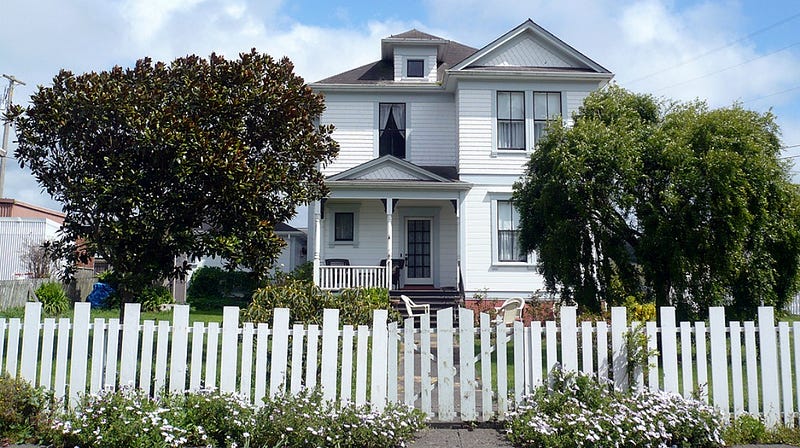
“Some people say that I’m high maintenance. But I think it’s important to be high maintenance when I’m buying a house.”
I’m watching HGTV during breaks while trying to write my book and this line was the final straw. I love HGTV. I love the creativity and “do-it-yourself” pluck of some of the shows. I love seeing rundown shacks converted to pristine palaces.
And I hate HGTV. I hate the glorification of home ownership as the ultimate goal of citizenship. I hate the overwhelming whiteness. I hate the gratuitous wealth. I hate the celebration of privilege.
When I see a well-off white woman talking about how important it is to be “high maintenance” when shopping for a house (as if you’re buying shoes or a handbag), I think of my mom. My mom is also a white woman, but she is not a well-off half of a suburban couple looking to find the perfect house for her pre-approved $500k; she’s a single parent of three kids saddled with $100k in student loans. And she loves HGTV. She always has. She watches each show and dreams about what she’ll buy with money she’ll never have for the house she’ll never own. And that inability to own a home has excluded her from far more than the ability to decorate at will — it has cost her the security and stability that many consider an integral part of the American dream.
My entire childhood was spent in flux, moving from place to place in search of reasonable rents. All of my mother’s hard-earned cash was sent to conglomerates profiting off of Seattle’s forever-rising home prices. We were constantly chased out of neighborhoods by the same people I’m now seeing on my TV screen: hip white people with money who want to “get in early” on an “up and coming” neighborhood, buying as much square footage as their privilege will allow. And I watch these couples on my television worry that the noise from traffic might disturb the sleep of their children in their mini-mansions and I wonder, how many affordable housing units could fit in that space?
I’m not against home ownership. I am, against the odds, a homeowner. I say “against the odds” because I’m a single black woman. Home ownership is one of the biggest indicators of financial security in the U.S., but not if you’re black. Blacks are 30% less likely to own homes than whites. A lot of this is due to the generational inheritance of wealth that enable many young whites to make their first down payments. Studies show that the average white household has 12 times the wealth of the average black household, and a lot of that is due to disparity in both home-ownership and home value. Historical practices of redlining, current practices of predatory lending, and the ever-present under-valuation of “minority neighborhoods” means that even if a black family does everything right, they are likely to see far less return on their investment in their family’s future — and will have far less capital to draw on to help their kids get their footing as they enter adulthood, leaving them more likely to also start off their adult lives with student loan debts that compete with high rents to keep them forever insolvent and unable to help their kids. And on HGTV, I watch wealthy people pay cash for affordable houses they don’t want or need, to turn them into expensive houses they can sell for profit.
When I bought my house, I did not whine to my exasperated realtor from house to house about how this house didn’t have a kitchen island and this house didn’t have the wrap-around porch I had my heart set on. I bought my house with a sense of urgency. I bought my house knowing that at any minute an emergency could take away the money that I had scraped together (literally every penny I had, including my retirement) for a down payment. I bought my house knowing that I was likely months from being priced out of the market. I bought my house knowing that this was the only way I was going to be able to avoid the $1,000-a-month rent increases that some of my friends were seeing. I bought my house knowing that this was my only chance for a bit of security.
And that’s what my house is to me: It’s the knowledge that for now, the mortgage I can barely afford is not going to be the rent that forces me to move. My house is the knowledge that if there’s an emergency, I can forfeit the house to keep my family afloat on the equity for a year or two. My house is the comfort that as a single mom, if I were to die today, my sons might be able to sell the property to afford college.
And I’m terrified of losing my house before I need to. I’m terrified of going back to rising rents and no safety net. I’m terrified of having to uproot my kids, who are so blissfully happy at their school. I’m terrified of the looks I used to get as a black single mom from property owners as I tried to explain that yes, I know that this rent is more than 30% of my income and no, I don’t have the money to pay an extra deposit. I’m terrified of having to live the way that so many people live right now.
And I’m angry at being so beholden to this piece of land that I have no right to, land first stolen from Indigenous Americans. And I’m angry at being so grateful for the privilege of owning this small parcel of a White Supremacist system that has actively worked to keep people who look like me out. And I wonder, does the couple on TV — currently arguing about whether or not to use the overpriced reclaimed barn-wood from small farmers likely forced out of business by some environment-destroying corporate farm — ever have these same thoughts?
My house isn’t perfect. It’s tiny and my floors are laminate and the kitchen is barely functional and it’s all I could afford and it is so much more than I thought was possible for me. And in the unmanicured backyard of my tiny house with no wraparound porch, I often sit and try to come up with ways to build some space for my mom one day, as her rents rise and she looks at a future without retirement. A space that she wouldn’t have to worry about getting priced out of, a space she can’t lose when she can no longer work, and yes, a space for her to finally decorate with all the tips she’s collected over the years from her favorite home improvement shows.
This story first appeared at Medium.



