
POSTPARTUM DEPRESSION
Why I Don’t Want a Second Child Anymore
About Postpartum Depression

Introduction
There is a medical classification for what I experienced: ICD-10 code: F53. The diagnosis is: “Mental and behavioral disorders associated with the puerperium, not elsewhere classified.” [1]
What is that supposed to be? I asked myself the same thing when I read the diagnosis.
No one prepared me for this. My life has changed permanently.
To explain it in an understandable way. The postnatal period begins immediately after the birth of a child. It is also called the postpartum period.
There are many internal and external factors that may change a woman after birth. Those may be hormones, (missing) support from the partner, a complicated birth, and many other factors.
Baby Blues
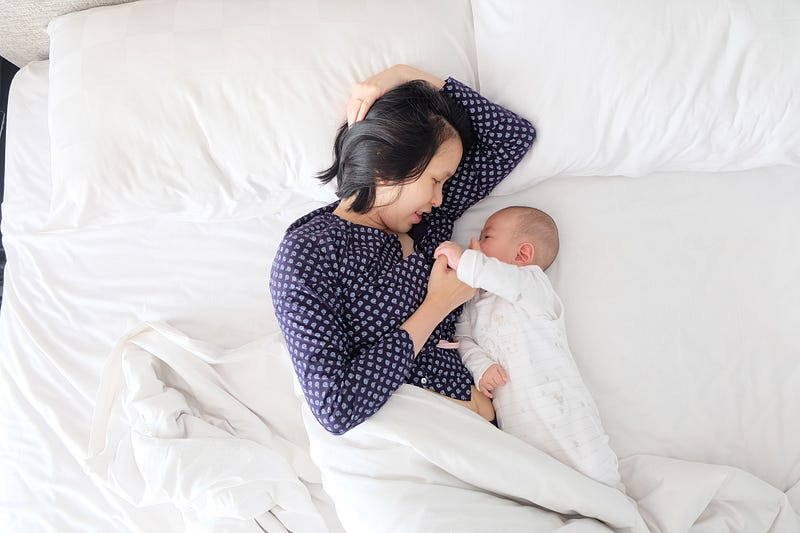
Don’t confuse postpartum depression with the so-called “baby blues”. Let me explain the difference.
Many women experience a low mood for several days after giving birth. This is called the “Baby Blues”, and usually vanished after a few days.
This is nothing to worry about, and many women who gave birth experienced it to some degree.
Postpartum depression
Postpartum depression (also known as postnatal depression) is a more severe and longer version of the “baby blues”.
Women who experience this usually have depressive symptoms. They feel mixed emotions toward their baby. The symptoms can be moderate or strong, and long-lasting.
Women with postpartum depression have typical symptoms of depression. They often feel guilty, too.
Here are some symptoms:
- deep sadness
- sleep disturbance
- lack of interest in the child
- self-doubt
- feelings of emptiness
- hopelessness,
- feelings of guilt
- anxiety
- loss of appetite
- difficulties concentrating
- thoughts of self-harm
I had all those symptoms, at least to a certain degree. I also blamed myself, because my baby didn’t sleep more than 30 minutes in a row for several months.
On some days, I didn’t sleep at all. I was crying all day and night while breastfeeding my baby.
I took good care of my baby, but I didn’t feel the happy feelings that I should feel.
I blamed myself for being a bad mother and that I wouldn’t love my baby.
The birth of my baby
I had many complications while giving birth. I got an emergency c-section without having a choice.
The doctor told me after 22 hours in labor that I immediately needed a c-section, or I could get blood poisoning and my baby and I could die.
At that moment, I couldn’t comprehend it and didn’t say anything.
Because my water broke early (over 20 hours before), I had already lost a lot of amniotic fluid. I wanted a natural birth, and they kept telling me it was time.
I had contractions every minute for hours, but my baby had turned a little more and it didn’t work. I was in terrible pain and worried about my baby.
I didn’t want a c-section, but in the end, I wasn’t allowed to decide that for myself. What could have led to my postpartum depression:
- The helplessness at my children’s birth
- The traumatic birth itself
- my husband, who was hardly there for me after the birth
On top of that, it was the deepest winter, dark, and depressing. Due to the fact that I had an emergency c-section, I was also in a very bad physical condition.
For the first few days, I could neither go to the toilet nor shower on my own. For days, I only lay in bed, nursed my baby, and tried to sleep for a few hours.
At that point, everyone assumed I had the normal baby blues because I was crying all the time and felt very bad.
My husband was only with me for about 1 hour a day despite being on parental leave. He doesn’t like hospitals and still wanted to work a little and get stuff done.
Ask me, I don’t like hospitals either! I was alone in bed day and night with our baby and crying! I felt so left alone.
He was free and enjoyed his life. Besides, he emphasized how happy he is about our common desired child.
Why didn’t he show it then? Why wasn’t he with me?
I cried and begged him every day to stay a bit longer. I had to stay in the hospital for a whole week. It was hell!
On the fourth day, I could finally get up on my own. I was walking with my baby in a little rollable bed to get my own breakfast. That was it. A few minutes of walking in the hospital with my baby finally asleep in the rollable bed.
Still, it was the best moment I had in the hospital. I could finally go to the bathroom alone and gradually walk a few steps with my baby in my arms.
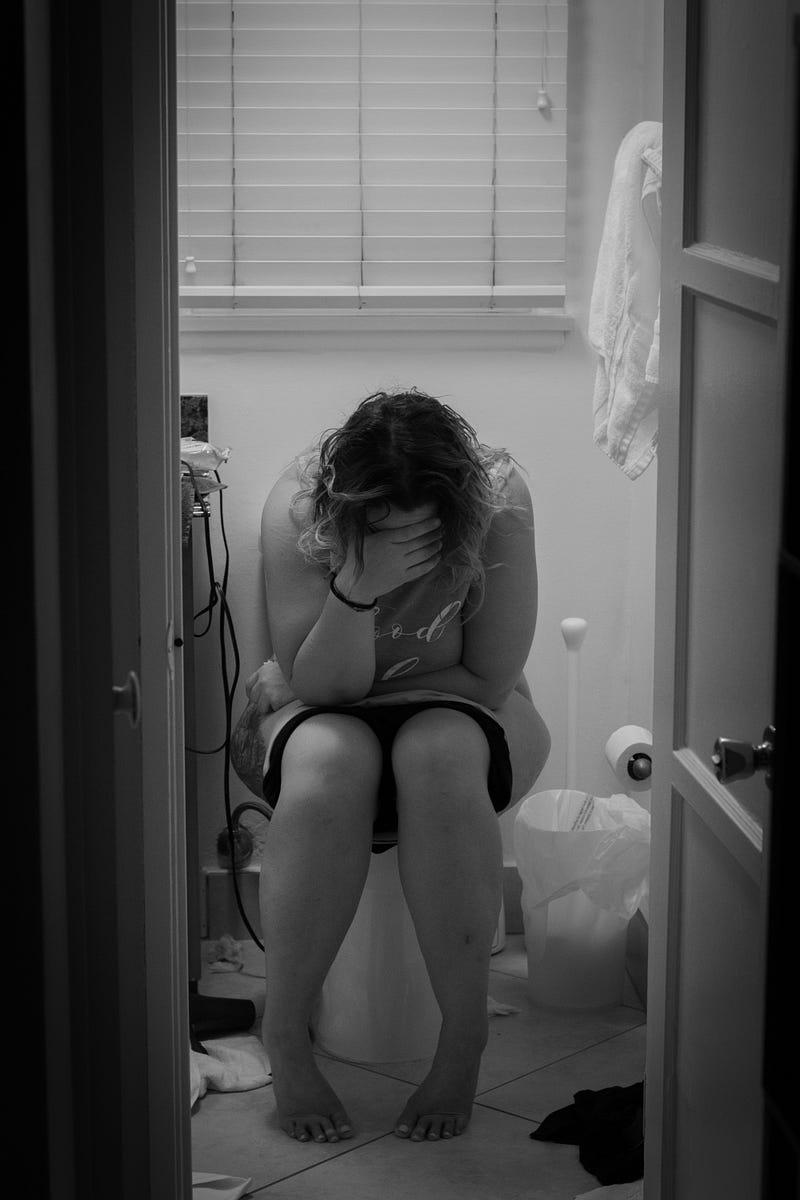
A difficult start
To this day, I have not been able to forgive my husband. Even though he has apologized several times for not being at the hospital with me more often.
At the same time, he searched for excuses every time.
Because of this difficult start, I was already feeling bad. Then when I was home, the midwife came daily for aftercare.
My baby lost a lot of weight, and even 10 days after birth, she had not regained her birth weight. This was critical, and I also had to lie in bed at home, breastfeed, eat, drink lots of water and take care of the baby.
Since it was so cold outside and this would need a lot of energy, I was “forced” to stay in bed. I love to walk, it relaxes me. Plus, I could finally walk on my own again!
This made my mood worse, and I didn’t have a day where I didn’t cry for the first six months after giving birth.
My husband doesn’t like to see me cry. So he only provided me with food, and occasionally took our baby so I could shower or sometimes take a short nap.
But most time of the day and the complete night I was responsible.
How I feel today
She has turned out great, and I love her with all my heart. I would not have thought it was possible shortly after birth. I am grateful for it every day.
The only thing that remains is the scar on my stomach and my psychological scars, which I am trying to minimize.
I am now more comfortable with how things went. I am infinitely grateful to the doctors and nurses and am happy every day to have such a great child.
Causes of postnatal depression
It isn’t clear what exactly triggers postpartum depression.
Some theories assume that the women’s hormonal changes after birth are responsible. But there is no proof.
Another aspect is that women often don’t receive the help and support they need, like in my case. It is therefore hardly surprising that some mothers feel overwhelmed after giving birth.
That they respond to problems by becoming depressed. [2]
Another point: motherhood is usually portrayed as something natural and fulfilling. Happy mothers and families everywhere!
And this is exactly how it is for many mothers, and that’s great. Yet, the role of the mother can also be difficult and challenging. Both physically and emotionally.
Even if you wanted a child, this doesn’t mean you will feel happy about it all the time. That’s okay!
Why I gave up my dream
I am most of the time happy with my life and my kid. Although I always wanted to marry, have a family, two kids, and a house, and live happily ever after. I’ll never have that, but that’s okay.
No, it’s even right and perfect that way! I always wanted a second child, but the experiences have made me rethink.
A child is already often a challenge, especially when you have almost no help. I gave up the dream of our happy family of four.
I will divorce and also move out of the house at some point, along with my child. I don’t need all that! My child is enough for me.
In the meantime, I also met my perfect man by a happy coincidence. That’s all I need and want.
Writing this article was a big challenge for me.
Even though I have worked a lot on myself and my thoughts, and I am doing well, it is a difficult topic for me. I couldn’t write without tears running down my face the whole time.
It saddens me that my child had to grow up this way and that she will soon be a child of divorce.
Still, it is the right decision. I will do everything I can to make her happy. Without siblings and without having her father around all the time.
Join with my link to get full access to all stories on Medium!About Me — Iris B. Stehn ▪ Twitter ▪ FacebookSources: Clear and simple explanations of the ICD codes are provided by the “Was hab’ ich?” gemeinnützige GmbH on behalf of the Federal Ministry of Health (BMG): [1] https://icd.who.int/browse10/2019/en & [2] https://gesund.bund.de/en/icd-code-search/f53