
I Don’t Get Writer’s Block
And you don’t have to either.
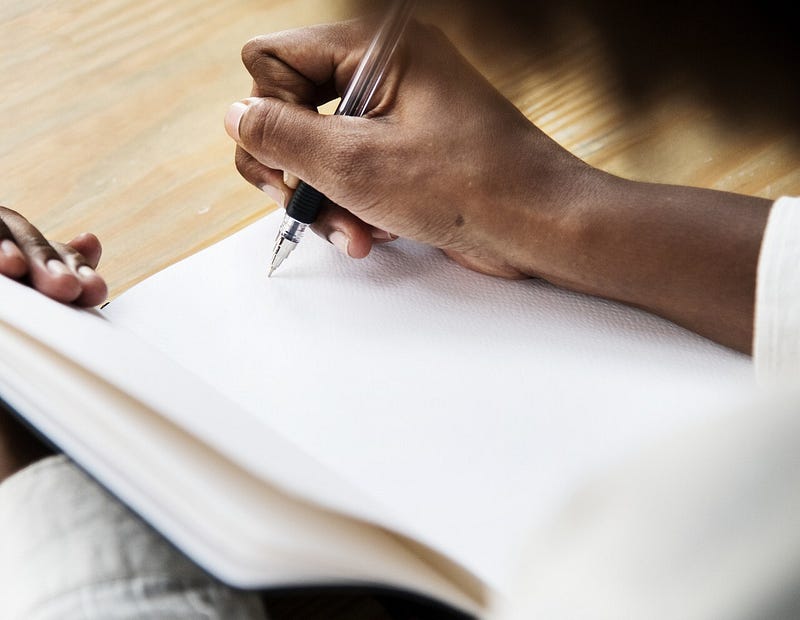
You’re staring at a blank page, perplexed. Of course I get writer’s block, you say. It happens to everyone. Or does it?
Why do we feel like we can’t think of anything to write, even with a ton of ideas?
It could be that you decided to take an assignment about a topic of little interest to you. You could be tired or distracted (hello, stay-at-home parent). Maybe you’ve been trying too hard to make something happen (that would be me). It could be that your fears are holding you back from creating your masterpiece. Maybe you’re not fully present for a plethora of other reasons. You might have a debilitating illness or troubling life situations.
You’re not interested.
Let’s start with that freelance gig you don’t really like. You might want to ask yourself why you took an assignment that doesn’t intrigue you. Is that job to pay the bills or gain experience? That makes sense until you’re staring at the white space that has zero content. Is it worth it? All that wasted time could be spent writing about stuff you like.
Thankfully, Medium has plenty of perks, one being that we can write whatever we want, whenever we want. There’s no pressure of a deadline and we aren’t expected to pull out a ton of research for any of our stories (unless we want to). But some of us still draw a blank when we sit down to write a story.
You have limited time.
Having less time could be your best motivator and work to your advantage. You have to go with the idea and free write until something gels. Otherwise, nothing will happen. Blank screens can’t exist in my world or I wouldn’t write for Medium. It’s that tight.
I’m currently writing on my bed while my kids are asleep. I got the idea and wrote the title last week, then finally began writing at the park earlier today.
I have to write everywhere throughout the day or I won’t get anything done and I’ll lose momentum. That’s my current situation, and subject to change. I write about 2–3 hours in 30–45 minute increments, sometimes 10 minutes at a time. Ideally, I let the story sit for a day or two. Then I get clarity on what needs editing. I tried writing two stories a day and they flopped. A couple of times I tried to frantically edit as they were being processed. It got stressful and my writing suffered. I had to start setting realistic expectations and make good use of the time I have.
You get distracted.
Then there’s all that time we spend doing other things that aren’t good for us or direct us away from our writing. I’m referring to those of us who work from home. Since we can make up our own schedules, we might find ourselves getting busy with unrelated tasks. It helps to create a structured time, but things happen.
Distractions are everywhere, but I won’t let that stop me from creating something. I might not start off with a stellar piece, but at least I have some ideas jotted down before they’re lost.
I’m primarily distracted by my kids, followed by my Facebook feed. You’d think I would have no time for Facebook, yet I seem to find the time. I made a recent commitment to write while I’m there. My daily writing prompt is a description of three amazingly awesome things. It’s a practice I’ve adopted by Pam Grout, who wrote a life changing book called Thank and Grow Rich. I often turn my “amazing things” posts into Medium stories.
You’re trying too hard to make things happen.
If I’m trying too hard, my creative flow slows down or stops altogether. I kept doing that last month and most of my stories fell flat. They lacked that one key element: my heart.
The Law of Paradoxical Intent shows us that our attempt at forcing our desires to come to fruition usually backfires.
Author Sandra Ann Taylor explains what happens when we push for things to happen or complain about what isn’t happening:
“The Law of Paradoxical Intent reflects the Law of Magnetism in warning that you’ll only get a return of your own negative energy. If you’re desperate to make something happen, that repulsive vibration will push it away, turning away the very people and situations that might bring your desired outcome. Your desperation, therefore, creates the paradox-or the opposite-of your original intention, leading you to failure instead of success.”
My intentions have been clouded by pushing too hard.
I have a goal to make enough money on Medium to support myself and my family. But I’ve only been here for over a month, and now I realize it’s going to take longer than expected (I’m known for my high expectations). There are a few exceptions, but most of us keep writing and honing our skills, and grow our audience in time.
I notice the people making money on Medium are active participants on the platform. The most prominent example I’ve seen is Shannon Ashley, who just published four stories in one day. As a fellow single mama, I’m impressed and inspired.
That said, each of us have individual needs and challenges. I tend to force outcomes and results, and end up failing.
Whenever I take a simple action then let go, everything falls into place.
You’re afraid of not being good enough.
I keep telling myself I’m not afraid of what you think of me. Yet, if that were true, I would publish a lot more material and let go of results with a lot more ease. Of course, I don’t want to produce junk. But here’s the thing. If we wait until all the stars are aligned and our story is worthy of going viral, we’ll be waiting for a long time and missing out on opportunities to learn and grow.
Every time my stories don’t get a lot of attention, I get important information. Either what I wrote wasn’t of interest, or I need to build my skills so my readers take notice and engage. It also might be a matter of being seen on the Medium platform.
If you’re new to Medium like I am, keep trudging. If you pour your heart into your pieces and you’re willing to follow suggestions and take direction, you’ll see results. That’s what I’ve been told, and I believe it.
I almost abandoned this story, because I questioned the legitimacy of it. Do I really not get writer’s block? It’s true that I don’t stare at an unwritten page without any ideas. But I do stop writing when I get stuck in the lies I tell myself.
Do you ever tell yourself these lies?
I don’t have enough time, I need money, I’m not a good enough writer. If only I could just have enough of ______, then I could be a famous author and make lots of money.
That’s a whole lot of worry about time and money, and too much talk of not having enough of either.
Truth is, we all have a lot to offer and plenty to gain. Yes, we can all draw blanks at some point and not find any creative flow. Yes, we can choose to take on assignments to pay the bills. That’s ok, too. We all have choices. We can also choose to live in the present, take some guided action and see what happens.
If our intentions are clear and we trust the process, we will be in flow and create amazing things.
Next time you’re staring at a blank screen, ask yourself, what’s the worst that could happen? What if I just started typing and discover what comes? There’s a chance you’ll have plenty to share.
Check out my personal blog at gratefulx365.wordpress.com


