Psychology, Assertiveness & Radical Authenticity
Why I Don’t Feel Bad About Saying No
And you shouldn’t either.

“Real freedom is saying ‘no’ without giving a reason.” ―Amit Kalantri
“Yes” and “no” are two of the most powerful words in the English language. They lead to wedding bells, fuel business deals, and empower the democratic process. They are so powerful they evoke positive or negative emotions by the very thought of saying them.
Whether it’s on the job or in our personal lives, people often approach us for favors. When we say yes, it feels good for both parties because it conveys congeniality. But saying no can feel uncomfortable because we are going against the grain. Even when it is in our best interests, we may still feel guilty or worry about disappointing other people.
When I encourage people to practice being assertive, some respond with, “I don’t want to be mean. I just want to get along with everyone.” I understand and respect this desire. On some level, everyone wants to be liked. But we pay a psychological price when we agree to situations that don’t serve us. We pay a price for choosing to betray ourselves to protect the feelings of others.
I would like to present a solid argument for feeling great about saying no. This may sound lofty, but what if my argument could forever change the way you feel about yourself when you have to say no?
I will make my case below. Hopefully, you will continue to read and take it in. But before getting into it, I want to lay a foundation from the annals of cognitive psychology.
How Thoughts and Feelings Influence Our Decisions
When people change their beliefs or philosophy about something, their emotions and their behaviors also significantly change. ―Albert Ellis
Albert Ellis was a renowned clinical psychologist who created rational emotive behavioral therapy (REBT). He believed living a healthier, happier life begins with our thoughts. Ellis was a proponent of cognitive theory, which indicates our feelings and behaviors arise from thoughts. In his book, A Guide to Rational Living, Ellis explained, “when people change their beliefs or philosophy about something, their emotions and their behaviors also significantly change.” Numerous clinical studies support this theory.
People who have a hard time saying no often get caught up by two trains of thought:
- Their core beliefs about relationships (e.g., I should always support my friends, no matter what)
- Their concerns about how others will perceive them (e.g., If I say no, they will think I’m a terrible friend)
When we focus on negative outcomes, whether real or perceived, negative emotions usually follow. Some people are overwhelmed by concerns about disappointing others or being judged negatively. They can experience a cascade of thoughts and feelings that color their decisions.
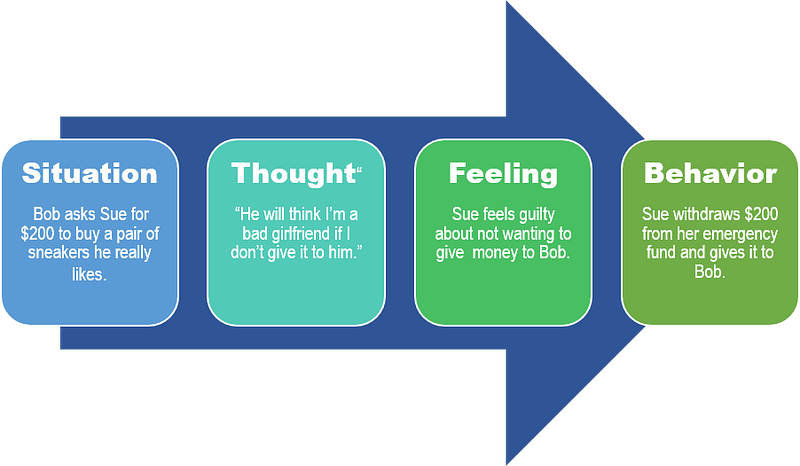
The cognitive model above shows the sequence of events leading to Sue’s decision. It takes four months for Sue to accumulate $200. Yet she set her financial goals aside to cater to negative emotions. This example shows how feelings can affect our actions. And sometimes these decisions override our best interests.
We Naturally Avoid Pain
The basic tenet of behavioral learning indicates that our behavioral responses are learned through trial and error. We learn to maximize pleasure and rewarding experiences. We also learn to avoid pain and negative experiences. According to this premise, if we believe saying no is painful or negative, it is likely that we will avoid it.
Now that we understand how thoughts affect our feelings, might it be possible to change how we feel about saying no by transforming it into a positive experience? I believe it is. And I believe it can be done by pairing positive personal meaning to our reasons for saying no.
A Case For Authenticity

When we base our decisions on the desires and perceptions of others, we are not being true to ourselves. We reinforce the belief (to ourselves and others) that our needs aren’t as important as the expectations and feelings of other people. And each time we choose to cater to other people’s feelings and expectations, we are strengthening neural pathways associated with the habit of self-denial (I couldn’t resist stacking the deck with a piece of neuroscience).
Authenticity is a philosophical term that refers to the ability to be true to oneself. It means being true to our desires, beliefs, values, and standards, without wavering in the face of external pressure. It means:
- committing to our goals,
- asserting our needs,
- acting on our convictions, and
- keeping promises we’ve made to ourselves.
With this definition in mind, consider this: Any time we face a decision, it is a test of our authenticity. We can choose to live authentically according to our commitments. Or we can allow people to convince us to make decisions that disregard those commitments.
Saying No (But Thinking Yes)
Question: When does no mean yes?
Answer: Always.
When we make decisions, we are always affirming something. For me, it became easier to say no once I realized I was saying yes to other things. Each time we say no to things that don’t serve us, we are saying yes to our convictions, needs, values, and standards. Saying no is about acknowledging our core truths and always saying yes to them. Reframing our decisions so we are always affirming can keep us grounded in positivity.
How does this work in our daily lives?
- Each time we say NO to negative relationships, we are saying YES to our desire for love, respect, positivity, and peace.
- Each time we say NO to partying, choosing to study instead, we are saying YES to the commitment to our academic goals.
- Each time we say NO to career suggestions we have no interest in, we are saying YES to our own interests and need for fulfillment.
- Each time we say NO to projects we don’t have time for, we are saying YES to a stress-free schedule and our commitment to mental well-being.
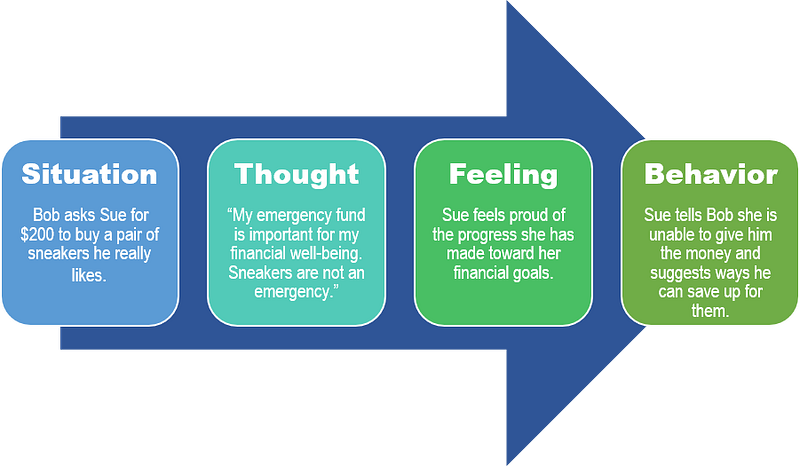
The revised model shows how affirming her commitment helped Sue feel more positive — and authentic — about saying no
A Word About Emotional Reactions
If a person is upset by a decision you have made, you must allow them to take responsibility for managing their disappointment. Being true to yourself is not a hurtful act. Any negative feelings they experience are those they have created for themselves, based on their own thoughts and beliefs. It is their responsibility to manage them.
Revel in Your Superpower
We began by acknowledging that the words “yes” and “no” wield a lot of power. This power, if used properly, transforms us into protectors of our truths. Reframing our thinking to where we are always thinking YES, even when we say NO, is simply another way for our inner superheroes to use their powers for good.