
Why I Completely Stopped Using Social Media
Even though I know I might be missing out.
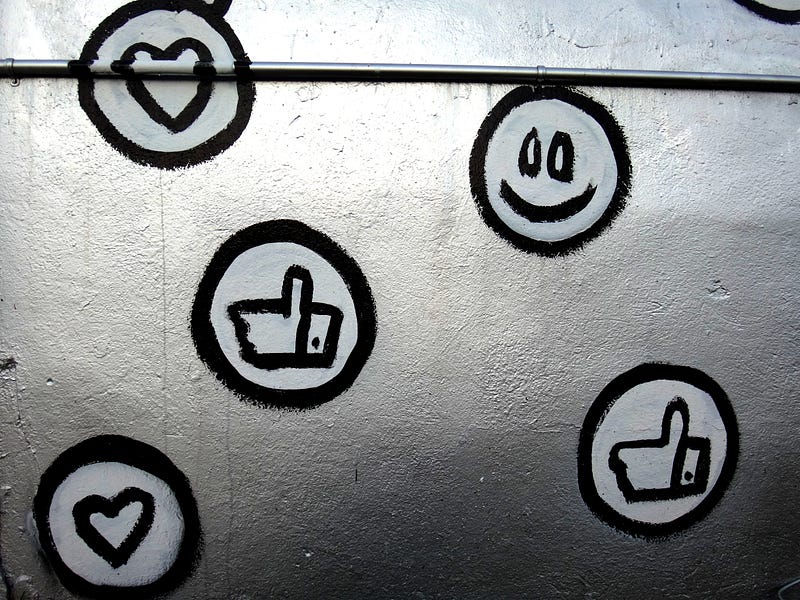
I used to be active everywhere — Instagram, Twitter, TikTok, YouTube, messengers, Facebook, email, what have you. I posted something at least twice a day. I paid for ads. I did giveaways. Hell, I even ran a small boutique agency in Moscow, running other people’s and companies’ social media accounts.
I remember watching the fifth Gary Vaynerchuk’s video in a row and writing long blog posts about how everyone — with no exception — should be on social media, promoting their “personal brand”.
It’s been four years since then. I’ve changed. My outlook has changed. And I realized that social media is not for me.
I erased my iPhone two months ago.
After I erased all of the apps from my iPhone a couple of months ago, I started to pay more attention to each new app I installed. If I didn’t use it for a week, I deleted it. (Goodbye TikTok, Uber Eats, and FaceApp!)
With social media, it was harder. There was still a voice inside my head that said, “You should be active on Instagram…look at all those other writers, they have a following on Twitter.”
The version of me four years ago would have listened to that voice. I would have forced myself to “create content at scale” through a “content pyramid” and commenting on other people’s content — as many people do — not because I cared, but because I wanted to get exposure.
But these days, I try to be more mindful of my choices. Maybe it's my new obsession with yoga — I don’t know — but I started to ask myself questions, “Do I really want this?” or “What am I trying to achieve through this?” and when I couldn’t come with a reasonable answer to using Twitter and Instagram, I deleted them from my phone too.
I like how Seth Godin thinks about social media.
When asked whether he uses Twitter, he said,
“I asked myself, what am I ready to give up or be worse at to become good at Twitter. And when I realized I didn’t want to give up anything, I knew I couldn’t start using Twitter.”
Social media takes time. A lot of it. Being “active” — as in, professionally active, trying to increase your following — can become a full-time job before you know it.
Am I ready to write worse and less, in order to become “good” at Twitter? No. Then that’s out of the question.
But there’s more than just time and attention expenditure. There’s also anxiety.
Social media makes me anxious.
Four years ago I was less aware of myself and my body, and I didn’t notice these things. I just thought I was stressed because of work and because “life is stressful.”
It turns out, as I recently noticed, that seeing other people comment on my posts makes me over-aroused. I realized I didn’t want other people to judge my looks, my thoughts, ideas, and life. I wasn’t interested in what “@crazydude228” was thinking about my hair.
Then the obvious question is, “Why do I post anything at all?” Just because everybody else is? That’s no way to live.
If I am honest with myself, I am not interested in what 99% of people (who claim to be my “friends”) on Instagram do or think. And I am OK with them having the same attitude towards me.
I don’t understand the concept of ‘comments.’
I know that most people do — and I am happy for them. I even envy them. But I just don’t understand why you need comments.
I almost never read comments — even on Medium — and my readers know that. My email is public ([email protected]) and people can always email me, and I always reply. I value honest feedback that’s personal and directed straight to me.
But comments are a different species. Comments are semi-public, semi-personal messages that mean nothing. People rarely think twice before writing a comment. And even though 80% of my Medium comments are good, the 20% that are bad can leave me anxious for three more days.
That’s too much a risk for me. I can’t afford that if I want to stay mentally sane.
Each person’s Instagram account is virtually a magazine of their life.
And there are all sorts of problems that come out of that.
None of it is reality. Instagram is 1% of your life. It’s a jealousy machine.
If you want to feel FOMO and that your life sucks, go on Instagram for two hours.
And the idea of sharing your life with strangers seems more like bragging to me. (If it weren’t, we would have kept the photos to ourselves.)
So even though I don’t judge people who use social (I used it myself for many years!), the ROI of time at this point in my life is unclear to me. For companies — it makes sense. For some people it also does. For me? Not really.
I might be missing out.
I know that if I was more active on Twitter on Instagram, I could reach more readers. But then my readers value my work — not my being active on social, don’t they? And I doubt that if I became a worse writer just to be on Twitter, they’d understand.
Life — and success at it — is about prioritizing what matters to you.
That’s the problem with today’s world.
We have so much. There are too many opportunities. We can be writers, but there are so many other things you could be doing. Like being active on social. Or going to writers’ parties. Or blogging. Or whatever. And we rarely stop and ask ourselves whether we need it all. We forget what our priorities are.
The cure to this world of abundance is to pick what’s yours and leave out all the rest. You can’t do that unless you understand your priorities — so self-awareness is key, too.
Being a good writer is a higher priority of mine than being a good “social media” user.
Being a good learner, and educating myself on things is a higher priority than being a writer (because otherwise, I have nothing to write about).
And being a good human being is the highest priority of all. Optimizing your life around your hierarchy of priorities — that’s what brings maximum fulfillment.
It’s strange to think, but we have so much more time than our ancestors did. From finding love mates to writing a book or building a business — many things that used to take years, now take days to develop.
And what did we do with this freed up time? Nothing.
We increased the speed of everything to do more things. And most of these things are secondary or unnecessary at all. We are living in a life overload. Our minds aren’t equipped to deal with so much information and things to do at once.
The key skill of this century, of this age of overload, is to cut through the BS. To figure out what works for you — who you are — and eliminate all the rest. For me it was social media so that I could focus on my work, reading books, and having peace of mind. For you, it might be something else.
Focus on what’s important to you.
You don’t need to be and have everything. Living within your human constraints, and being true to who you are (even if it means saying “No” to something seemingly important) is enough.
Get the Mini Post-Grad Survival Guide
A 5-day email course with amazing tips on budgeting, investing, and productivity for 20-somethings. Learn how to spend $40 per week on groceries, among other things, by signing up for free.


