
Why I Choose to Teach My Preschoolers So Much about the Natural World
I believe the world needs a little brainwashing
As a preschool teacher for a public preschool program, I get to do something most teachers wouldn’t even dream of doing. I get to decide what to teach my students.
In general, administrators, specialists and politicians aren’t too curious about what preschool teachers do in our classrooms because it doesn’t affect their jobs much. We’re hardly accountable to them, and, in turn, they rarely give us much thought.
You see, all children have the right to a K-12 public education. However, for children ages 3 to 5, federal law mandates public education only for those with identified special education needs.
Goals for special education preschoolers are set at the individual level. Therefore, districts have no use for across-the-board scores to assess student progress or teacher effectiveness. There are no uniform measures for parents, administrators, elected officials, and even us teachers to obsess over and teach to.
The happy result is that I get to decided what to teach. And, obviously, I have an agenda.
My agenda is two-fold, and includes what I’d like for my students to gain, and what I’d like to prevent them from losing.
What do I seek to add? First, excitement about going to school and being part of our classroom community, and, second, a love for the natural world.
What do I try to avoid at all costs? Limiting, or stifling in any way, my preschoolers’ curiosity, creativity and enthusiasm for learning — all of which they already have!
I understand some would assume I’m not getting my students “ready” for kindergarten, but such isn’t the case at all. My students learn their letters, numbers and counting, age-appropriate self-help and group participation skills too.
There’s plenty of time for it all. No need to choose one or the other. My students attend preschool 17 hours per week. If you have a preschool age child, you’ll know they have the energy for infinite activities spread across 17 hours.
I’ve chosen to focus my curriculum on the natural world. I love nature and care deeply about it. Teaching about what I love is selfish. We all like to think, talk and teach about what we love, don’t we? Believe me, though, I don’t do it just for selfish reasons.
I believe that if I nurture my preschoolers’ love for the natural world, this love will stay with them, at least to some extent. I hope so much it does. I figure they’ll grow up caring more about it, and that, perhaps, they’ll use their skills, creativity and determination to safeguard it.
And do they ever love it, at least while they’re in preschool!
Because I’m in Connecticut, we learn about oak, elm and maple trees; blue jays, cardinals and robins; eastern cottontail rabbits, possums and chipmunks; daffodils, cherry blossoms and coneflowers.
However, because the world is way bigger than Connecticut, we also learn about penguins, blue-footed boobies, toucans, polar bears and western cottontails.
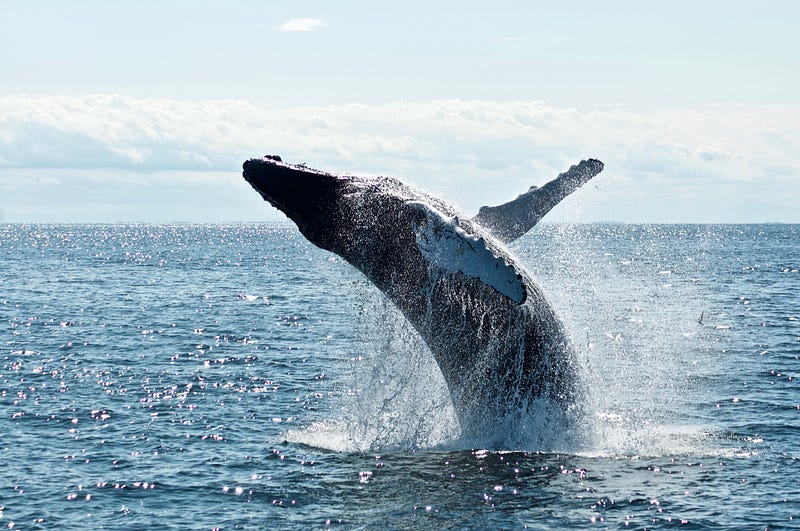
Moreover, since whales are the most amazing animals ever, we learn about the blue whale (the biggest animal that ever lived!), beluga, narwhal, humpback, orca and bowhead whales.
Preschoolers get that bubble-netting — one way some humpbacks catch their food — is incredibly cool. They also can’t wrap their heads around the fact that a penguin and a polar bear shall never meet.
And, finally, because our planet changes as a result of various forces (including our actions) and animals can go extinct, we also learn about dinosaurs.
Let’s be honest, education involves brain washing. I mean, repeating the Pledge of Allegiance every school day for thirteen years makes it far more likely that we’ll feel some attachment to our flag and nation. This is actually the purpose of the Pledge of Allegiance, isn’t it?
Since I get to decide what to teach, why not choose to explore something that really, really, really matters? It’s never to early to begin to understand that we’re part of, and depend on, our natural world.