
Why I Appreciate Disability Jokes
On July 2nd, 2005, I shattered my fifth cervical vertebra, rendering me a quadriplegic. I spent a month in an intensive care unit, and another three months in physical rehab. I spent the next three years doing physical therapy, only to learn the hard I would never walk again without technological intervention.
It was by far the darkest time of my life.
Everyone with whom I interacted was worried, scared, and treated me like human-shaped Faberge egg.

As much as I hated that, I understood it. Before my accident, I was a big, strong guy. I was the person you’d call if you were moving or just needed someone big and imposing to stand behind you for…reasons.
In the hospital, no one knew if I would be able to function independently, much less walk or lift heavy things again.
To say I went through a period of adjustment is a gross understatement.
More than not being able to walk or have full use of my body, one of the most difficult transitions of my post-injury was the change in the way people treated me. Before the accident, my friends and I excelled at breaking each other’s balls. None of it was ever malicious, and if anyone ever crossed a line, which rarely happened, they were quick to apologize. Jokes were a form of affection that were acceptable to freely display.
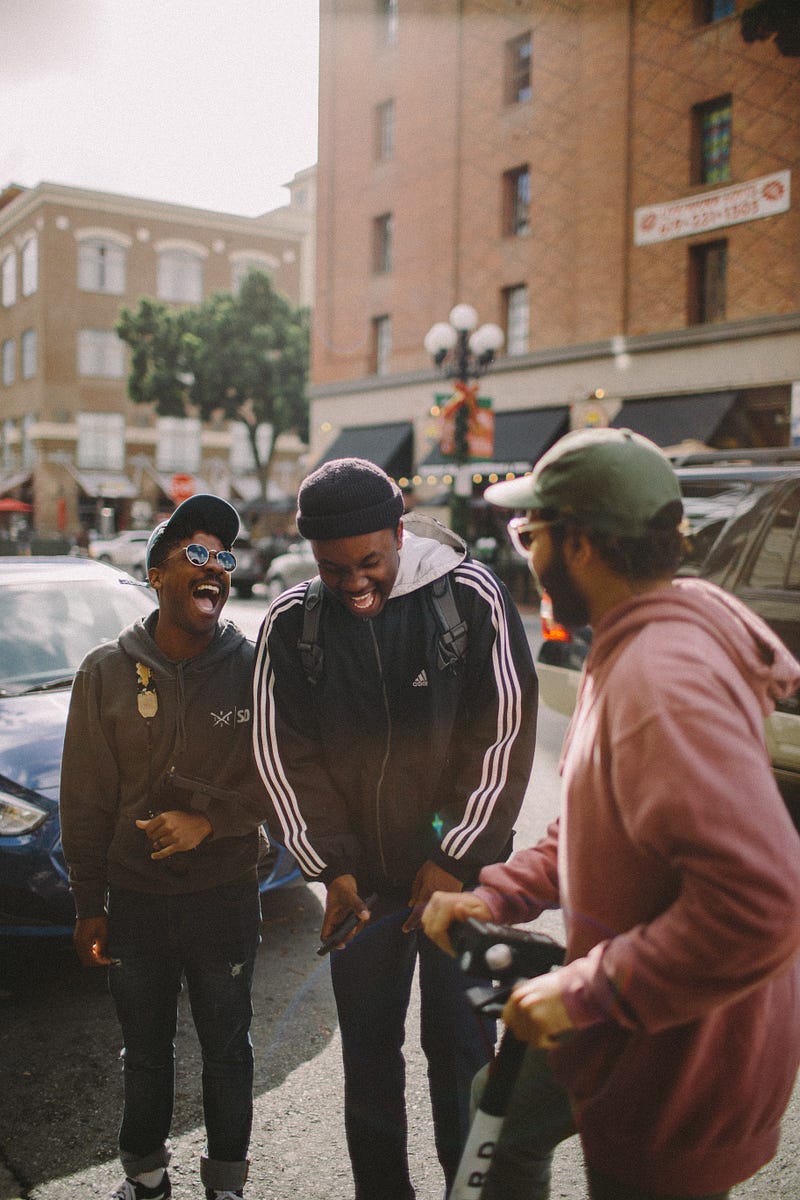
After my accident, my friends were reluctant to poke fun at me for any reason.
We currently live in an age in which so many people are so quickly offended. When I was growing up, however, being able to joke with and take shots at each other was a sign of friendship. This was different from malicious teasing or bullying, as that was a one-way avenue the express intent of which was for one person to hurt someone else.
Moreover, if we didn’t like or know someone well enough to joke with them, we just didn’t talk to them. Not in a shunning sort of way. It was more that, since our language of friendship was jokes, we had difficulty communicating with people with whom we didn’t know how to joke with.
When I was in rehab and shortly after I was home, I would make jokes about my being in a wheelchair and about the various other unpleasant aspects of my disability. At best, my attempts at humor were met with uncomfortable laughter.
Occasionally they were met with tears. Often, I only succeeded in making things awkward.
So, when some of the people closest to me stopped joking with me, it set off that warning signal in the back of my mind that maybe my accident was too much for them do deal with. This was something they warned us about in our peer counselling sessions, an unfortunate side effect of acquiring a disability.
Physical rehab is one of the most depressing experiences I’ve ever had. I was reminded daily of how broken I was. And in the therapy gym, there was a general air of sadness thinly masked by hope that we would all get better.
Dour doesn’t begin to describe it.
What helped get me through the difficult days were the therapists who would crack a cripple joke or two during therapy.
One afternoon in the rehab hospital, I was having a particularly difficult physical therapy session. My therapist saw this, and while I don’t remember exactly what preceded it, he stopped and said, “Hey, you know what you call a quadriplegic on a wall?” When I didn’t know, he said “art.” A hokey variation on an old series of jokes, but it made me laugh. Mostly, however, it was a much needed break from the ceaseless intensity and seriousness that permeated my day-to-day routine in the rehab hospital.
From that day on, he would have a different joke each session, many of which would fall under the category of “dad jokes.” While not all them made me laugh, I so greatly appreciated his attempts to inject humor into a situation that desperately needed it.
Being able to find the humor in my newly acquired disability was one of the things that kept my spirits up during the grueling years of recovery and therapy.
Humor is the great equalizer. It is the unspoken part of the social contract by which we deem things to be acceptable of not. If we can laugh at something, that thing is generally accepted by society. If we can’t laugh at it, then it’s not.
One reason I appreciate humor that pokes fun at disabilities is because, as strange as it may sound, that says that whatever disability is the butt of the joke is acceptable and normalized enough that people can find the humor in it.
For example, I love that the TV show Family Guy pokes fun at disability in the form of paraplegic character Joe Swanson. I know many people who have been offended by how Joe is portrayed on the show. Most of the complaints stem from some belief that disability is a social taboo, one not to be made light of or the subject of jokes.
My counter arguments have always revolved around the fact that the other characters love Joe. Much of the humor comes from the other character’s ignorance when it comes to disability, and through a series of hilarious events, the other characters come to learn and more deeply understand their paraplegic friend. Moreover, none of the humor in the show is mean-spirited.
No one pities Joe. No one gives him undue credit or calls him a hero or an inspiration simply for leaving the house. Even from a wheelchair, Joe is borderline superhuman. He is an easily digestible means by which a larger audience can gain exposure to disability. His high visibility has been a positive step toward normalizing disability in the public’s eye.
On a personal level, if people are poking fun at my disability in good fun, they’re telling me that they accept me, wheels and all.
It also tells me they’re comfortable enough with me and my disability to try to connect via humor. This is a great social litmus test, particularly with people I’ve recently met. If I make a cripple joke and they laugh, I know they’re comfortable with my whole situation. If they don’t laugh, it shows me they’re uncomfortable with some aspect of my disability or that they’ve been conditioned not to see the person behind the disability, as sometimes is the case.
I know I’ve really won someone over when they will beat me to the punchline of a cripple joke. It brings me so much joy and laughter when someone comes up with a brilliant joke at my expense.
Admittedly, this is something of a fine line to walk.
For example, some friends of mine from college began making such jokes once they got to know me and my sense of humor. That shared humor made us grow closer. A friend of a friend with whom I was forced to interact, who didn’t know me, saw this and immediately began making disabled jokes at my expense. It wasn’t funny. In fact, a lot of it seemed mean-spirited.
Much of this was because this person didn’t know me. They were making jokes based on stereotypes or pity-inducing portrayals of disability they’d seen on TV on in movies. When I pointed this out, I was accused of being overly sensitive. The more my friends pointed out this person was in the wrong, the more defensive and angry they got. The whole thing ended in mutually hurt feelings and an agreement to keep a considerable distance from one another.
I would be remiss if I didn’t state that my views on disability humor aren’t representative of everyone living with a disability. I know several people who find absolutely no humor in living with a disability. I’ve also been told by able-bodied people I shouldn’t joke about my disability.
Oh, how I love being told how to feel about my disability by people who’ve never experienced what it’s like to be disabled.
The reason behind this is disability makes them uncomfortable. And that’s ok. If you’re someone who doesn’t want to joke about disability, that’s ok, too. I’ve been a quadriplegic for 16 years — long enough that I’m occasionally guilty of forgetting this isn’t the norm for most people.
Humor, however, is a good icebreaker. It’s a way of showing people that life with a disability is different, but still normal enough that we can laugh at it. And for me, it helps me get through the day to find the humor in my day to day life in a chair. Some of my daily challenges are too funny not to laugh at.

Furthermore, finding the humor among the tragedy has kept me sane. I would rather laugh at some of the ridiculous aspects of life with a disability than cry about them. I’ve known people who couldn’t find the humor in their circumstances. Sadly, most of them succumbed to depression. Some coped by abusing various substances. A handful have overdosed or committed suicide.
Tragedy so often begets more tragedy.
Humor is the light that can break through the darkness. Laughter has a lot of positive health benefits. Laughter makes us feel good. Without it, the world is a dark, horrifying place.
Humor is a way of telling people, “Hey, this is normalized enough that we can joke about it.” Its absence tells us much about people, particularly when it comes to something like disability. And while I can’t speak for everyone living with a disability, I can’t stand people walking on eggshells around me, scared they’re going to say or do something to offend me, or who treat me like a toddler simply because of the wheelchair.
I think Nurse Gollum from South Park said it best when she said…
If you liked this story and/or my writing, sign up for my email list to stay up to date on new stories, upcoming features, and cool news. C’mon, support a struggling writer already!
Do you enjoy the content but you aren’t a Medium member? Sign up here to become a member and get unlimited access to all of my stories as well as other writers who might tickle your reading fancy.
You can also follow me on Twitter, Instagram, Vocal, and BitClout.