
Why I Actively Choose to Get Lost
It was not too long ago when I had a counseling session with a professional at work. There was much worry coming from my loved ones about the time I worked. I have to admit, from the outside looking in, it looks bad. I spend about 14 hours a day working. That is actually a slight decrease from what it was before.
Anyway, I enjoy what I do. And no, I am not talking about my day job. It is writing, of course. I spend a lot of time working on my craft and broadening my knowledge to help others through my writing. But it takes a lot of energy and time, as some of you are aware.
So for my workaholic nature, they rushed me to the counseling room to get advice on what needs to change in my life. Most of it was pointless. Only a few of the things suggested helped my “workaholism”. But I took on board one bit of advice. And that was to have a walk every day.
Walking is a healthy exercise to do. It does not take too much effort, plus it helps us get out. With much of our time spent inside now, it makes sense to get out for a short time. The counselor suggested walks would help my ability to remain present. Which, to her defense is true. I am always thinking of the next thing to write or the future projects I have lined up.
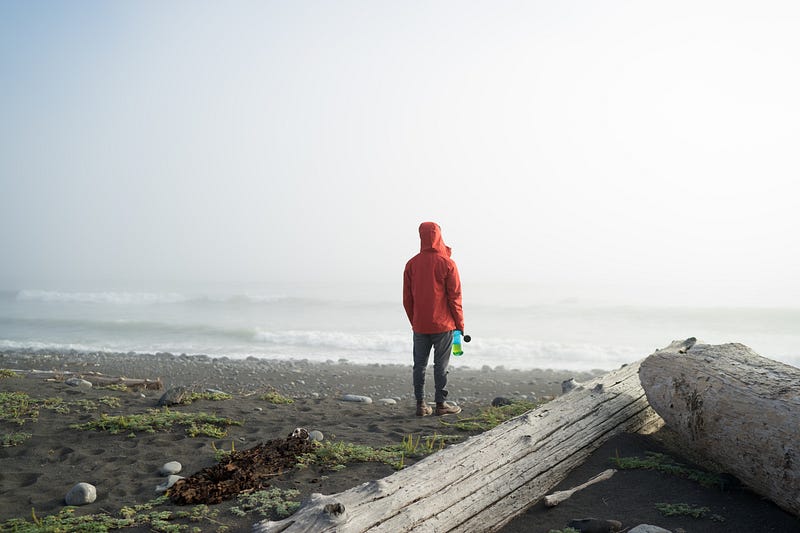
So, taking a walk pulls me away from my desk and forces me to remain present at the moment. However, like most things in life, I had to put my twist on it. So, instead of going for a walk around the block, I actively choose to trod a path I have not trod. Now, that might be a little ally by my street or walking down an unfamiliar road.
But I do not do this to learn more about my area or because I am an adventurous individual. None of those things particularly appeal to me. I do this to get lost. Funny enough, I have not completely succeeded yet in actually getting lost. But my aim is one day to stop someone and ask how I get back home. But why do I do it?
To Feel Uncertain With a Hint of Fear
Why would anyone rational want to ever feel like this, you ask? It seems contrary to what we as humans so desire. We all wish to be comfortable and feel a sense of security. However, I have found that putting our brains into a position that is uncomfortable is a good thing.
I am sure we all have a story where we lost our parents for a split second in the shop when we were younger. Either we wandered off or we spent too long contemplating if we should ask mum or dad for the chocolates we want. Then we look left, right, and spin around and realize they are not in the aisle we are presently on.
Our hearts race, and we look frantically. This happened to me more than once, so I actually developed a method to locate my parents again. I would run to the beginning of the shop and run down the central aisle, moving my head left and right until I saw them.
But that adrenaline rush we get when we realize we are lost is not all bad. Yes, it is driven by fear, and our bodies kick into flight mode as we are scared that someone could take us away. But that fear leads us to the answer we so seek, and it causes us to do things we may have not done otherwise.
For example, you can be the shyest person in the world. But I guarantee, if it came to it, you would ask someone for directions if you had to. A little fear pushes us out of our comfort zones and causes us to take actions we would have not done otherwise.
Of course, the opposite can be true. Too much fear can cause us to shut down and not want to do anything. But getting lost is not too much or too little. So what started as fear turns into the courage to get your desired result. As an introvert, I hate asking people for things, especially directions. And do not even get me started with small talk.
But getting lost will force me to do those things I am comfortable not doing. Being lost will push me out of my comfort zone to develop my interpersonal skills and meet a new friend.
Wake Up and Become More Alert
Did you know that for about 40% of your day, you were on auto-pilot? Science is learning more about how powerful habits are in our lives. A study done shows we are about 40% habit. After reading “The Power of Habit” by Charles Duhigg, I learned how much we do on autopilot.
Our habits work by receiving specific cues to start the habit. Once that cue is received, the brain kicks into auto-pilot for the rest of the habit until the very end.
For example, brushing your teeth is a habit I hope we all have. The minute you pick up your toothbrush, your brain notifies all the nerves that help brush your teeth. Then, for the rest of the time, you do not have to think about it until the very end.
Habits stop us from overthinking tasks that do not need that much brainpower. Imagine thinking about tying your shoelaces every day. We would spend an extra five minutes getting ready! However, habits take away our alertness and ability to think complexly.
I figured that if I take the same walk every day, I would be on autopilot for most of it. However, trying to get lost keeps my brain alert throughout the walk. I can become more aware of my surroundings and hear and see things I would not have otherwise.
A little alertness is good for us. It keeps us on our toes, raises our heart rate, and makes us more aware of the things going on around us. So yes, purposely getting lost helps me wake up out of auto-pilot to ensure that I am still in control.
Problem Solving at its Finest
As a creative, you find problems that are not in front of us to solve. We are not mathematicians or engineers. But within our creative process, we find we create problems for ourselves.
An artist may have to do a bit more shading to portray a perspective to the viewer. The problem was not given to them. But because they wish to make their artwork in a certain way, they have created a problem.
This is one of the best things about being creative. Not only do we have the power to solve problems, but we also have the choice to create our problems. This makes our problems more interesting to solve. Getting lost gives me that same feeling. I am controlling the problem I put myself in and choosing a way out.
This is problem-solving at its finest. Most of our day-to-day jobs are like that. We are always presented with demands, and we have to come up with a solution. However, autonomy is being able to pick the problems you wish to solve. And True autonomy is creating the problems you wish to solve.
This is what creators do. They are truly autonomous. The ability to choose how to get lost and how to get back home gives me a sense of true autonomy I only find when I am writing.
Closing Thoughts
You should have been able to gain some insight into how our uncertain situations can be to our benefit. It can help us practice autonomy, give us a sense of alertness, and finally motivate us to find a solution.
Funny enough, I did not want to go to the counseling session. I felt like I was being seen as someone who has problems when I knew I was fine. I was more than happy not to go to the counseling session. Yet still, I swallowed my pride and did something that made me feel uncomfortable.
And what has happened since then? Well, I now have a regular walking schedule, which helps me feel like a true creative at heart. Since completing these walks, my writing has improved. And I have got recognition for the work I produce.
An uncertain situation I was uncomfortable in has worked out to my benefit. So why not try it? Go for a walk and trod a path which you have never trod. Who knows, you may get lost, and find something or someone you needed.


