
Why History Isn’t Useless
We can learn more from the past than you probably think.
Never think about the past — always look to the future.
People who dwell on their past are sometimes dismissed as being too introspective and stuck in something they cannot change.
Sure, in our personal lives, being too obsessed with the past is a bad thing. But when this transfers to the dismissal of history as a form of knowledge, it can be alarming.
As a wider society and entity, we are obsessed with the future and often ignore the lessons we have learnt from history. In the age of the immediate, the past can feel distant and redundant.
However, if we have learnt anything from the past few months, whilst being in the middle of a pandemic, experiencing the revival of the Black Lives Matter movement, and the looming threat of mass extinction, we should have learnt that history matters.
The time we are living through is unique in the sense that 2020 has never been lived through before. But what we are living through now, has been lived through multiple times.
Although “unprecedented” has become part of the popular, political discourse, it is the wrong word to describe our present moment.
I spent three years at university studying the past, and as a result, I like to think I understand the present world a bit more. I don’t remember the factual intricacies but rather, the skills and mindset the degree gave me.
For me, it was more valuable for that, rather than the knowledge it gave me. That being said, knowing the past is never going to be a bad thing.
So what’s the deal with history? Why is it useful? And what can we learn from it?
“If you know your history, then you know where you’re coming from” — Bob Marley

I spent countless hours at school staring at this quote and looking at the colourful image of Bob Marley that went with it.
At that stage in my life, I didn’t know anything about Bob Marley or the importance of history. But when I was in the middle of completing a task in my history lessons, I would always look up at the wall and stare at that quote.
I don’t know if my teacher at the time thought much of it — or how much of an impact it made upon me and my future decisions, but it was massive.
I tossed and turned between going to university and studying English or History, but in the end, went with the latter. I thought it would be more practical and would keep my options open, and I was afraid that spending three years reading books would kill my love of literature.
This quote stayed with me for a long time after I left the comfort of my classroom walls. I ended up including it on the personal statement I wrote to get into university, and a year after graduating from my degree, I still think about it now.
Why Study the past When All We Have Is the Future?
It is a good point, and one at first-hand value is hard to defend. Being stuck in the past to the point where it obscures the present, is a bad thing. But acknowledging it, learning from it, and using this to inform the present is not.
Studying history gives you an understanding of the wider world beyond your bubble. It exposes you to societies, cultures and thought processes from across the globe and challenges your worldview.
If the only take away from it is this, rather than remembering the factual knowledge — then it has done its job.
Above all, history at university is the study of thought processes. The main job of a historian is to present an argument and display a coherent thought process, backed up with evaluated historical evidence. As students, a history degree is concerned primarily with the study of “historiography,” the years of thought processes and arguments put forward by historians, and how they have changed.
History, despite what it may seem, is never set in stone. The dates and facts largely stay the same, but our views and opinions are constantly in limbo and that’s the beauty of the subject. It teaches us to acknowledge a wealth of opinions, worldviews, and to study the process of reason and thought.
It teaches us to not think in binary opposites or close ourselves off from opinions we may disagree with, but to acknowledge everything in all its forms. That is the evergreen value of history.
When I was applying to study history, family members and peers asked me many times what the point of a history degree was. Then, when I didn’t know, I would tell them that I didn’t know what I wanted to do, and it seemed like the path that would keep my options open. Whilst this is true, I had yet to experience the life skills and worldview it would give me.
History Can Inform the Present
At its core, history is about facts, events and occurrences from the past. The past is as early as yesterday, but it stretches back many thousands of years.
What we have today, is inexorably shaped by the past and this is easily forgotten in day to day life.
It would be easy to say that history repeats itself, due to the regular occurrence of war, famine and disease. Although this is true, as we continue to face some of the same struggles as societies before us, to say that the present is a mere continuum of the past is short-sighted.
Humanity is the element that is repeated, but the problems we face and how we deal with them constantly change.
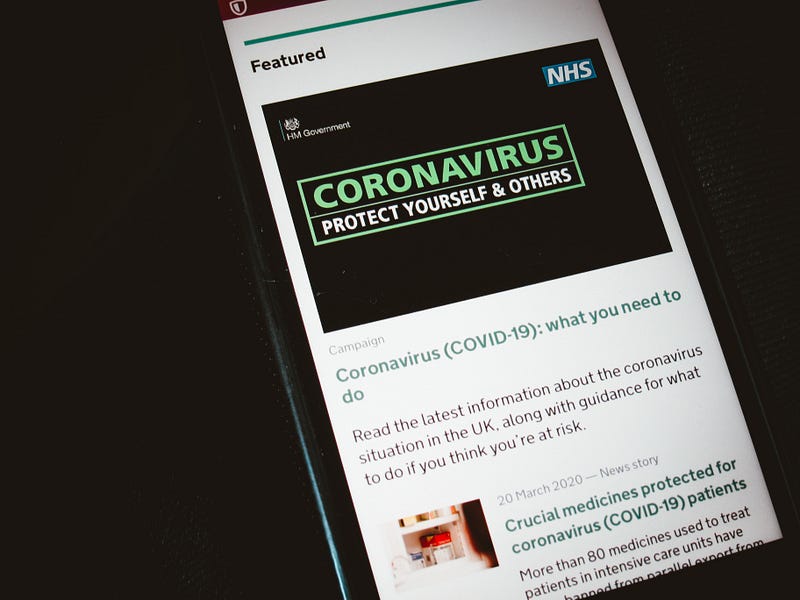
But, pandemics and diseases are not “unprecedented” as they have occurred regularly throughout history, and even today, we are using some of the same coping mechanisms as more primitive societies before us. Self-isolation and quarantine were used during the Black Death, Smallpox, The Plague and the Spanish Flu of 1918.
Politician’s and our own Prime Minister in the UK, keep telling the public that demand for tests is too high and that we are living through “unprecedented” times. Although this situation would be hard to handle for any government — to suggest that pandemics are not predictable is wrong. We have been due another one for quite some time, over a hundred years.
In terms of our present moment, we can learn so much from the past in the knowledge that this struggle has been fought before. We may have more advanced medical care, political systems and overall coping mechanisms, but the mere existence of pandemics are as old as humanity itself.
This isn’t to suggest that history is a mere repetitive cycle, but points to the idea that often our past can inform our future, but manifest itself in different ways.
“Good historians…have the future in their bones” — E.H Carr
History Goes Beyond Knowledge
As stated previously, history is about far more than the knowledge it can teach us. And retaining this knowledge is hard, as there is so much of it. I can only retain a very small selection of the knowledge I learnt over three years — and I’m not too concerned about that.
But above all — reflecting on my degree and the purpose of history itself has made me realise the value of the discipline is in the critical skills it teaches. Studying and appreciating history has taught me how to think independently, to critique and find flaws in other peoples’ arguments, and how to shape my ideas.
All societies across the world need history — but economies do not.
Doing a history degree will not lead you on a direct path to an immediate, successful career, but it will give you lifelong benefits. In the present moment during the post-truth era, a historical mind becomes all the more valuable. We should never just accept information — but constantly question its source and value.
Knowledge is useful and history provides that — but it is in the formation of a mindset and skillset for life, where it becomes the most valuable.
I had a mixed experience at university and have often wished I had opted to study English, as novels are my true passion. I have many regrets about this but never let myself get lost in them as I remember all that history has taught me.
It’s taught me to write better, to think, and to appreciate the world around me and all that people have to say about it — whether I agree with it or not.
The present is indeed, all we have, but we can always learn from the past. Using the language of “unprecedented” times is dangerous and reverts responsibility from those in power.
Think about the past, read about it, and learn from it — as it will always be able to guide us into the future.
History is not useless, but rather, matters now more than ever.
Recommended reading for more on this subject:
E. H Carr, What Is History? (1967)
Richard Evans, In Defence of History (2000)


