
Why Has This Abandoned Pennsylvania Ghost Town Been On Fire Since 1962?
The continuous underground coal fire that never seems to go out
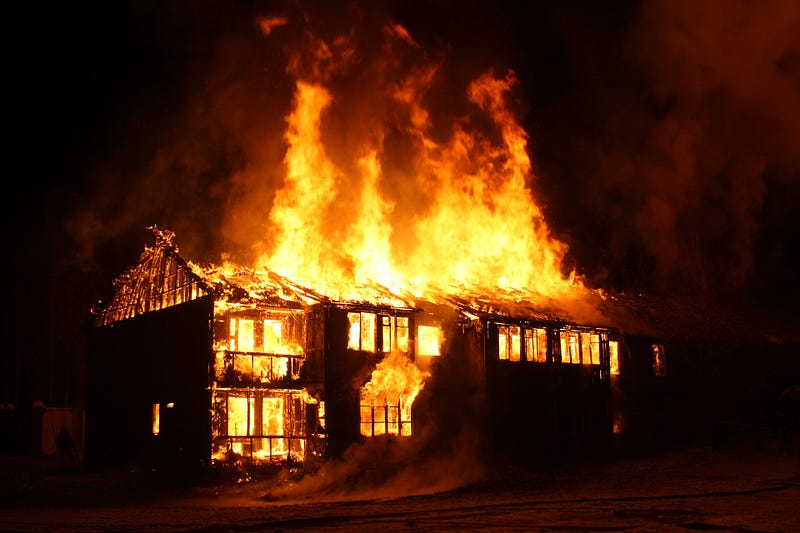
Centralia, Pennsylvania, has been on fire since 1962.
The coal mine beneath it caught fire and never went out. Almost everyone who lived there left. It’s now almost completely empty.
But how did this happen?
Centralia, the mining town
Centralia, Pennsylvania, was for many years a thriving mining town.
The first two mines opened in 1856, followed by three other mines in the years leading up to 1863. It was incorporated as a borough in 1866, and by 1890 it reached its peak population of 2,761.
Then a fire started beneath the town in 1962. After that, people started to leave the town.
I can’t find any good creative commons photos from before the fire, but here are two links to images:
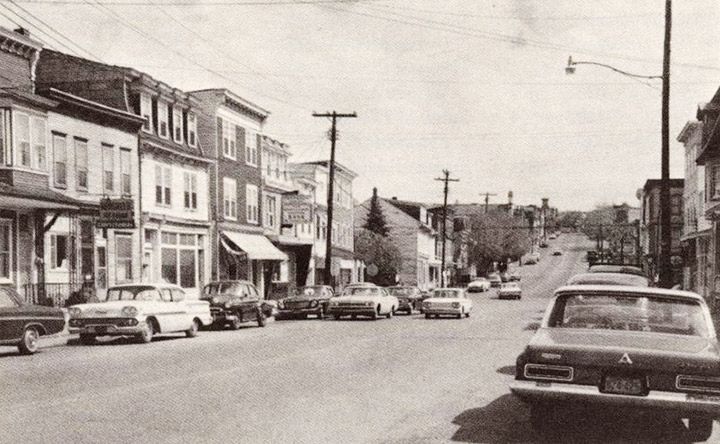
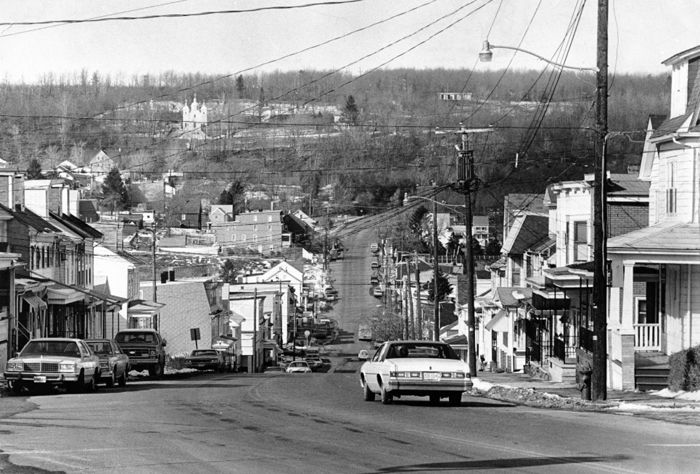
It’s worth noting that in 1980 there were still a fair number of people living there, as you can see in the above photo.
The start of the fire
The fire started in 1962 and has been burning ever since. But what started it?
There is some debate over this. But it seems to have started after a landfill site was set on fire on 27th May to clear it. But flames were still seen at the landfill two days later and attempts to put out the fire failed.
They used a bulldozer to stir up the garbage to allow firefighters access to the burning waste underneath. A few days later, a large hole was then discovered in the base of the north wall of the pit. They hadn’t noticed it before because garbage had covered it up.
So, it seems that this hole may have allowed the fire to travel down into the mine.
Attempts to put out the fire
It seems that they wasted a lot of time after discovering the fire. Rather than jumping straight into trying to put it out, they argued about who was responsible. Was it the Centralia Council? Was it the coal company? Or was it the state?
It turns out that the coal company couldn’t afford to pay to put out the fire, so they expected the state to fit the bill.
It wasn’t until almost three months later in August that a company was finally brought in to deal with the fire. Lots of drilling and bulldozing happened.
But when that project came to an end a few months later, the fire was no closer to being dealt with. In fact, the fire only got worse during that time.
A second company was brought in to deal with it, and more drilling happened. But then cold weather caused water supply lines and a rock-grinding machine to freeze.
By March the following year, funding for this work ran out. By April, they realised that the fire had spread as much as 700 feet (210 meters) eastward.
The state considered other options for tackling the fire, but they were all too expensive.
Health effects and aftermath
By 1980, people were experiencing various health problems. This was due to carbon monoxide, carbon dioxide, and low oxygen levels caused by the fire.
In 1981, a 12-year-old boy almost fell into a sinkhole that appeared in his backyard, but his 14-year-old cousin saved him.
In the years that followed, people abandoned Centralia and went to live far away. Most residents accepted buyout offers. In 1992, all properties within the borough were subject to land acquisition. In 2002, Centralia lost its ZIP code. And in 2009, formal eviction began.
By October 2013, there were only 7 people still living there. The authorities decided to allow them to live out their remaining years there. But once they die, the state will take their properties.
This is what Centralia looks like now:
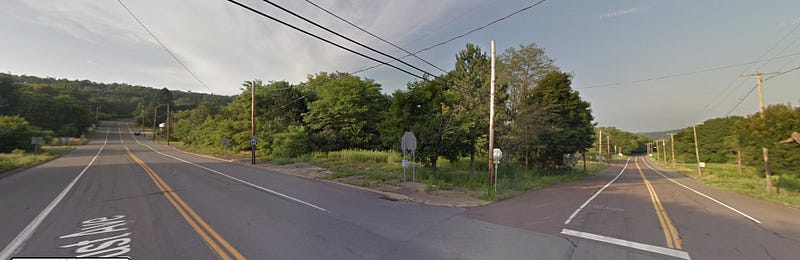
Just think, those streets used to be lined with houses.