
Why Happiness is Hard(-er) to Achieve in America — Part 2
Basic necessities for a happier life, as learned from the happiest people in the world
In one of my latest pieces, I talked about why happiness was harder to achieve in a vacuum.
To sum it up, when society around you is not built with happiness in mind, you have to try that much harder to find your own inner peace.
By deconstructing what I learned by spending a year in Denmark, voted the second happiest place on Earth year after year, I made some conclusions about what contributes to our collective happiness, and why it’s harder to achieve in the U.S.
Here are a few more thoughts I have on the subject.
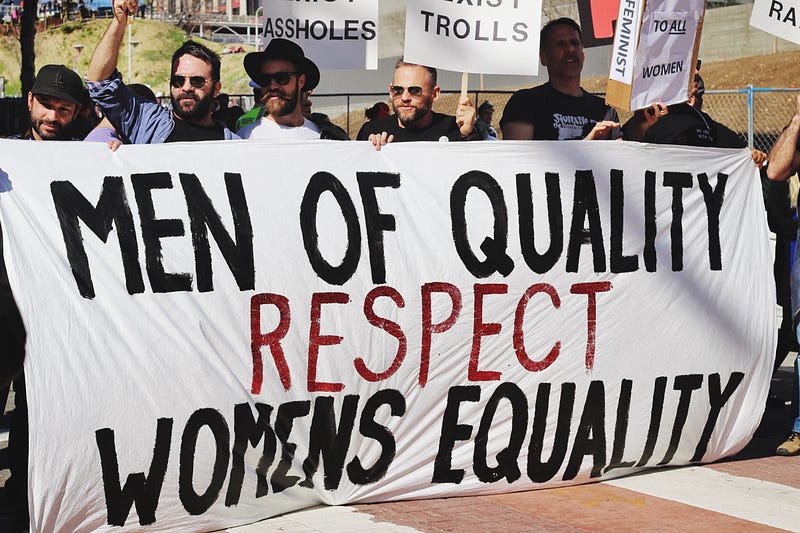
Gender equality should be a reality, not a campaign
In Denmark and all of Scandinavia, gender equality is a reality and not a campaign. It’s been a reality for so long that they don’t even talk about it anymore. Of course, women are equal to men. Duh.
Scandinavian women have equal rights at work and at home. They’re not expected to be primary caregivers any more than men are. Generous maternity and paternity leaves are provided, as well as subsidized daycare, allowing women to recover and return to work whenever they’re ready and without having to spend their entire salaries on childcare.
Household chores are split equally between men and women.
There are no “men’s jobs” or “women’s jobs.” There are just jobs.
Scandinavian women are not pressured to be or look a certain way. They’re often tall, strong-bodied, and healthy-looking, rather than obsessively thin or with make-up.
A society where both sexes are treated equally by default has got to be a happier one.
With less tension and resentment, more time and energy is spent on building better lives for everyone, instead of fighting over who owes each other what, as we often do in America.
Perhaps, one day the U.S. will fully catch up with this notion. We’ve certainly made some progress.
But for now, we’re too busy sorting out the many other messes we have made.
You have to work to live, not live to work
The pursuit of wealth is probably the most American motivation there is. It got mixed up with the pursuit of happiness, though.
How can you be happy by default if it takes you half your lifetime to figure out that money is not the answer?
We’re so conditioned to want to make more and have more that we never stop to think that maybe more doesn’t equal better or happier.
As a result, Americans live to work. And we work overtime. We boast about 60-hour workweeks as if that was an indicator of achievement. Instant fail.
Danes on the other hand boast about the quality of their lives, the time they spend with their children and friends, the few hours less they had to put in at work, the amazing lunch conversations they had with colleagues. Saying you stayed in the office late would be considered weird since a productive worker shouldn’t have to do that.
It’s a norm to leave work early to pick up your children or attend to a family emergency. No one will ask or expect you to work overtime. Fridays mean eating pastries in the office and, sometimes, having a beer. If you’re not happy at work, you’ll be asked why you’re not changing jobs.
Paid vacation is six weeks and you’re expected to take all of it. Pretty much no one works in Denmark during July and August. If you’re not on a family vacation, there’s something wrong with you. And if you get fired? You have two years of generous government support to get back on your feet.
Talking about how much you work is not cool.
Danes truly work to live, not live to work.
And when your work and life are balanced, and the society around you has personal and family well-being as its main priorities, you’re guaranteed a good shot at happiness.
You shouldn’t have to compete (and be considered a loser if you don’t)
In a society built on competition, it’s harder to relax. You can always be looking better, making more, or spending more. When your fellowmen are your competition and not your teammates, it’s harder to be happy.
A competitive mentality builds pressure. Just look at professional athletes breaking down after a game loss.
We in America like to show off. Subtlety is not our virtue. Having bigger and better things is often mixed up with happiness, even though it brings none.
In Denmark, on the other hand, showing off is frowned upon. All because Danes are gathered by an idea that no one is special or should try to be special. This dates back to the Law of Jante, which defines ten rules of socially appropriate behavior, such as: “You’re not to think you are anything special,” or “You’re not to think you are more important than we are.”
This dated but still somewhat relevant set of beliefs in the Scandinavian region explains why Danes are so modest, unassuming, and quiet about their accomplishments. This also explains the lack of flashy cars and flashy attitudes.
While Americans are busy proving themselves to be better than others, Danes are busy fitting in.
And when the need to be more successful than others is taken away, so are the many stressors of a competitive society.
Your health should be a priority, not a profit
The health of its citizens in America is a business, and like any business, it thrives on its customers’ sickness. That’s not a healthy or happy set-up.
In Denmark, as in most European countries, healthcare is free for everyone. That means whenever you’re sick, you can trust your government to provide basic care, or chose to pay a reasonable amount for a private doctor.
That means no one will ever go broke, or acquire debt because they’re sick. And everyone can live their lives without fear for their own life.
Health should first and foremost be a priority of a government and not a source of profit. Without that, how can one feel truly comfortable, let alone happy?
Despite all the steps we in America make towards the ever-elusive happiness, things won’t change dramatically unless our society changes as a whole.
And that might be a tall order until we swallow our pride and learn to learn from other countries. Blind patriotism will only get us so far.


