
Inspiration | Relationships | Healing from Trauma
Why Gratitude for Your Greatest Pain Brings the Most Healing
And how it can change your life.
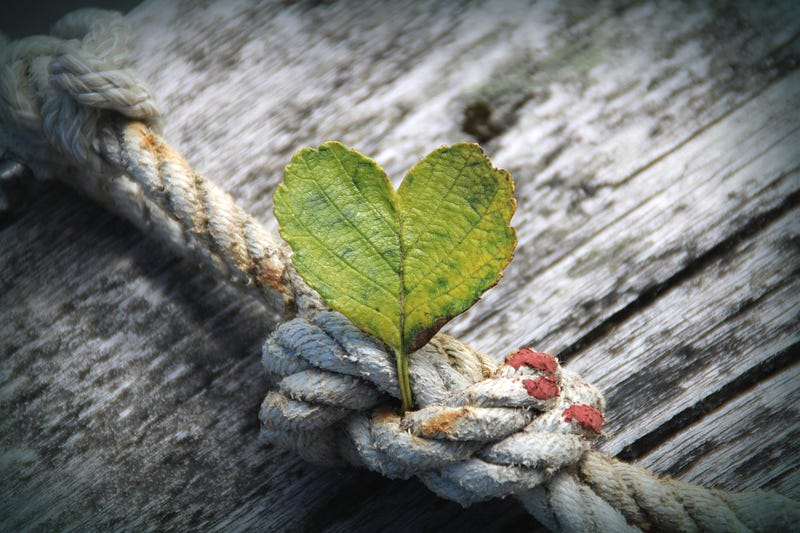
“Gratitude makes sense of our past, brings peace for today, and creates a vision for tomorrow.” — Melody Beattie
A couple of months ago, I began sharing sections from the manuscript for the story of my life. It was a manuscript that — still surprisingly to me — garnered the attention of five literary agencies.
The agency with whom I signed wanted to turn my story into a film after it was published.
My jaw hit my lap.
“But it’s way too much story for a film,” said Peter Knight of Knight Features in London. “It would need to be a TV series.”
“A TV series?” I was incredulous.
“This is a story that needs to be told!”
To say I was stunned would be a massive understatement.
It wasn’t so much my childhood trauma and abuse that were unusual; sadly, far too many children experience the same or much worse than I did. To be honest, I think I was lucky in comparison with numerous others.
No, it was the insanity that became my adult life that they found so intriguing. The chaos and turbulence, the six dysfunctional or abusive marriages, and so much more — all of it was the direct result of my childhood experiences and what I had come to believe about myself and the world.
Most of those toxic beliefs came from my mother, who was a damaged woman herself.
The point of this writing is not to dig into that; I have written about it in other stories, beginning here:
So What Is the Point?
The point is that no matter how hurt you have felt by the people or situations in your life and no matter how much damage they have caused, there is great healing in finding gratitude for all of them. I know…you might feel like throwing rocks at my house for that. I mean, how could I possibly suggest something as ridiculous as being grateful for your most painful experiences?
Because I’ve done it in my own life. Because I’ve experienced deep betrayal, violation, shame and so much more. Because I’ve felt like the sacrificial lamb, the one who was most vulnerable, the one the others hurt and tormented because they needed somewhere to dump their own shame, disappointment and toxic wounds.
And mostly, because I know there was more than the pain. There were so many gifts of experience, insights, and healing that I’ve been able to pass on to others. And there was much more to my mother — and to my relationship with her over the years — than her abusive treatment toward me.
The point is: In spite of the significant wounds my mother inflicted on my soul, I am deeply grateful to her for so many reasons. But it wasn’t always that way.
This Is Not About Forgiveness
That’s a whole other topic — and besides, it doesn’t mean what many people think it does. Here’s a short story on that:
This is about seeing the bigger picture. This is about taking off the blinders that keep you focusing only on the pain, and allowing yourself to see beyond what hurts.
In the interests of brevity, I will say that it took many years and a lot of healing before I could begin to fully appreciate my mother. When I took off the boxing gloves, I saw her own wounds. I saw how hard she had tried to be a good parent. I saw how deeply disappointed she was in many aspects of her life. And I saw how she kept trying to make it better — in her own way.
Prior to that, I had only ever seen her strength, the woman who got up every day and took the bus downtown to a stressful job, often staying late. I saw the woman who arrived home at 6, sometimes later, exhausted. I saw the woman who spent the evening doing chores before falling into bed.
I saw a woman who was always tight-lipped and angry, a woman who was intimidating and controlling. A woman who never liked me from the moment I was adopted, although I did my best to “be a good girl” in hopes of being liked — and maybe someday, loved.
What I didn’t see — until much later — was the woman who dreaded coming home to a drunken husband who only worked sporadically. The woman who was forced to worry about the mortgage and two kids to support and doing it on a woman’s wages in an era where that meant an even bigger difference than today.
I didn’t see her brilliant sense of humour or that she hadn’t had much to laugh about during all those years until I was an adult — in therapy — and could clear the painful clouds and see the woman behind them.
I didn’t see that she had sacrificed a lot for me to have music lessons, or that she recognised my considerable talent in that area.
I didn’t see the little things that made her a great mother, such as allowing me to do the weirdest things in decorating my bedroom (a whole other story…). Or hunting through bargains and sale items on her lunch break, doing her best to find the odd clothing item or other little “something” I might like.
I didn’t see that it was because she was desperate to stretch pennies when my father drank away too much of her hard-earned money.
I didn’t see her own wounds, growing up during the Depression on a farm in rural Saskatchewan where bad weather meant an equally bad crop and no money for another year. I didn’t see her as a young teen in minus 30 winter mornings, milking the cow in a freezing, dark barn before school.
I didn’t see her deep insecurities, or what caused them. I only saw the result of them. And it took decades for me to undo the damage they caused.
The Role of Compassion
When I was finally able to see my mother as a whole person, everything changed. I could put myself in her shoes. And suddenly, I had compassion for her and for all she had endured.
That. Changed. Everything.
I recognised that when I was a kid, no one was talking about self-help or worrying about a child’s self-esteem. There was no Dr. Phil. People were still spanking their kids, telling them they were “bad” and sending them to their rooms without dinner. And if anyone from Social Services heard about it, they would have called it good parenting.
The more I allowed myself to see my mother as a whole, separate person, the more I could see her soft spots, her own pain. Her vulnerability. I saw that she had likely been abused, too.
I saw her strengths and best qualities, not just the parts that had hurt me so deeply.
I recognised all that she had done for me — and for others, too. She did the best she could with the tools she had and in the circumstances that existed at the time. I could see that she had set aside her own pain in the only way she knew how and had tried her best to be a good mother and a good wife.
This was a critical first step in understanding her treatment of me, and in finding some perspective about it. I had always focused on the negatives and hurtful behaviour; I disregarded the good. I had been too wrapped up in my own pain to see anything else in her.
Suddenly, the monster wasn’t really a monster after all. She was like the lion with the thorn in its paw, hurting and taking it out on those closest to her.
She wasn’t likely going to ever remove that thorn (and she didn’t) but I could look beyond the behaviour caused by her pain. And I could love her in spite of it.
Finally, I began to heal in a more meaningful way.
The Blessing of Gratitude
It was during a morning meditation. I had been focusing on my compassion for my mother. Not “thinking” about it; it was a meditation, after all, so thinking was out of the question. I was simply seeing her in my mind’s eye and feeling compassion for her experience of life and the many ways in which it had been painful and unfair.
Suddenly, a profound sense of gratitude washed over me. I saw all that she had done — or tried to do — for me. It was as though a silent film played in my mind. One after another, there they were…images of her various sacrifices or kindnesses, big and small, over the course of my life.
Over the weeks and months after that day, the more I wrote or thought about my gratitude for my mother, the less I thought about the pain. I began to enjoy my mother’s company and made an effort to spend time with her.
Even though she never tried to understand me, she did eventually accept me and that I marched to the beat of a completely different drum than she did. She stopped berating me for my differences while I stopped rebelling against her for pointing them out.
In appreciating who she was — as my mother, and as a woman in her own right — I began to respect her for all she had managed to accomplish and for all she had tried to do.
Most importantly, my ability to feel compassion and gratitude for my mother meant that I had reclaimed my power. I didn’t feel like a victim anymore. I wasn’t dwelling on the fact that she didn’t like me or anything I did. I stopped allowing her negative opinions about me to matter.
I could see that she was a deeply wounded soul who was doing her best — just as I was. And I wasn’t going to let her wounds hurt me anymore.
All of this has been profoundly life-changing.
The Takeaways
Does any of this wipe out the scars she left behind? Does it make any of her hurtful behaviour okay?
Absolutely not. I am still living with Complex PTSD, a condition that came about in my adult life largely as a result of the toxic seeds she planted.
But it does mean that I found several gifts that could help you, too:
- Immersing yourself in painful memories and thoughts will simply perpetuate the pain. You lived it once; there is no point in continuing to relive it for the rest of your life. When those thoughts drift into your mind, change your focus. Bring your attention to something positive in your present or something lovely you are working toward for your future
- I learned to look past her hurtful behaviour and understand that she was acting out her own wounds. None of it had anything to do with me; I just happened to get caught in the crossfire. This has been instrumental in healing many other painful relationships, too.
- My mother was doing her best and yes, she made some pretty huge mistakes and did some terrible things in the past. And so have I.
- It is possible to feel compassion and gratitude for people who have hurt you the most. This is critical if you’re ever going to allow yourself to heal and move forward.
- It is a blessed relief when you can reach number 4, above, and it’s well worth pursuing. I can’t even begin to tell you how great it feels and how much healing it brings.
- Throughout my decades-long journey of pain and healing with this relationship at the heart of much of it, I have learned far more than I could ever have imagined. It has given me plenty to share down the years in helping others overcome their own pain and obstacles. I see my mother as the best teacher I could have had in order for me to experience the (ongoing) growth and learning I’ve needed. She was instrumental in helping me fulfill my soul’s purpose. And for that, I have more gratitude for her than I could ever express.
The more you are willing to feel gratitude for the blessings in your own painful stories, the more you will find healing.
It doesn’t change the past or make hurtful behaviour “okay.” But it does bring peace and happiness.
Thank you to the team at Change Becomes You for publishing this. I appreciate all you are doing to make a positive difference in the world.
Join Medium for unlimited, ad-free access to great content! Your $5/month helps support my work and the other writers, here, too. You can sign up here:


