
Hybrid Medical Care Model
Why Gaming Industry Disruption Inspires Me As A Physician
Digital Gaming Has Successfully Embraced Real-Time Engagement, So Should Healthcare System
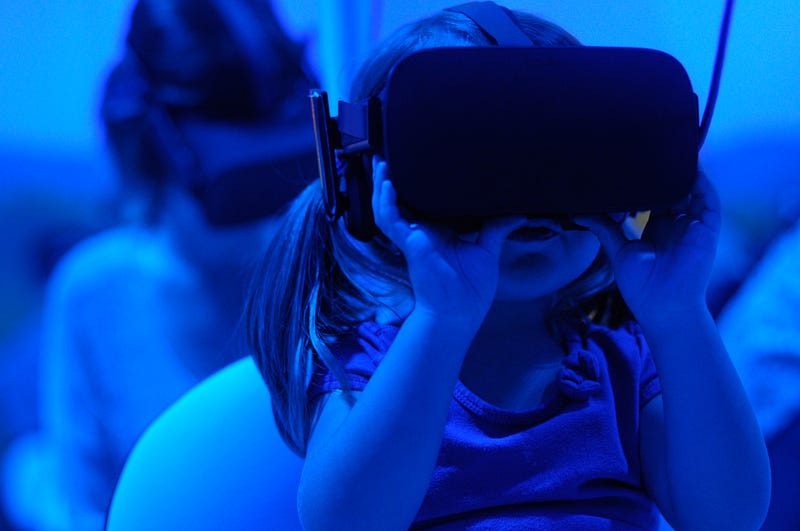
All of us in the world, as social beings, perform tasks and interact with others daily. Some of these actions are conscious of us. Nonetheless, most of us perform many activities without overthinking. Our unconscious mind has been able to retain over the early stages of our lives what we call today easy and intuitive.
Our orientation in time and space plays a significant role in rendering us intuitive. Because through exposure, we can search, find, learn things and carry out tasks efficiently.
Also called real-time engagement, it is an invaluable strategy to get things right. Almost every study I recall conducting on real-time engagement suggests increased satisfaction and process efficiency.
Gaming Industry Has Mastered The Utility Of Real-time Engagement.
As a physician, I am not a gaming industry expert or an enormous digital gaming enthusiast, even though I participate in certain online games like Backgammon in my free time here and there.
I do, however, read fascinating pieces from those who are very knowledgeable in the gaming industry. One most prominent examples of such enthusiasts and writers are Aiden (Illumination Gaming), who produces outstanding insights into the modern digital gaming domain.
As a physician and entrepreneur with diverse interests in publication themes, I was attracted to the astonishing progress gaming technology has made in the past couple of decades. Interestingly, the headway the gaming industry has made so far concerning the utility of technology is way more progressive than the healthcare industry.
The history of video games and digital gaming generally reaches back to the 1950s. For a generation Xer, Atari was a fashionable gaming technology. However, one can exemplify The Brown Box, 1967–68, when Ralph Baer and his colleagues at Sanders Associates developed a prototype for the first multiplayer, multiprogram video game system.
Interestingly while gamers were striving to construct a prototype that could create real-time engagement in digital space, healthcare did not even contemplate storing medical information digitally.
Today, the gaming domain has conquered one of the most practical issues of human life. They are making the remote players' experience immersive and interactive. The real-time gaming industry has mastered meeting consumers' expectations, sparking their fulfillment.
The age of real-time engagement begins with shared context followed by interactivity and everywhereness. Real-time interaction establishes a meaningful connection between the partakers. That is what is present in digital games and utterly lacking in our healthcare system.
Healthcare must learn from the gaming industry that remote patient encounters must be hybrid meetings and processes. Like modern gaming systems, virtual clinical and workflow encounters in healthcare must relish interactive and real-time engagement.
Big digital players like Xbox and Nintendo capture the entire gaming market. That surge reflects the rapid improvement in user experience among their consumers. Yet, I want to say the same about telehealth and electronic health records systems today.
Interactivity revolutionized the gaming industry. Remote interactive gaming has created an environment over cyberspace and digital platforms that streamlines the competition between remote players, just as they would be competing physically in person. In fact, in many cases, players prefer the virtual version of the same games in -person merely because it is a better experience.
Whether collaboratively caring for patients in person or remotely overseeing healthcare, we still need to feel oriented in space and establish real-time engagement.
The immersive real-time engagement is an authentic experience. That makes us value and apprehend what we do remotely, just as we do in person. Hybrid healthcare, just as is digital gaming today about simulating the in-person encounter interactively in real-time.
What worked for gaming sure helps patient care. All it takes is to ensure every "Point Of Care" is engaging for every healthcare stakeholder. That includes patients, medical staff, and medical facilities. Since our orientation in time and space relative to others is intuitive, helping us as patients and clinicians search, find, interact, discover things, and conduct chores efficiently.
References
- Pickavet, Henry. "The History Of Gaming: An Evolving Community." TechCrunch, October 31, 2015. https://techcrunch.com/2015/10/31/the-history-of-gaming-an-evolving-community/
- National Museum of American History. "The Brown Box, 1967–68," June 3, 2022. https://americanhistory.si.edu/collections/search/object/nmah_1301997.
- Showmetech. "Technologies That Revolutionized Gaming + 5 Trends for the Future," December 3, 2021. https://www.showmetech.com.br/en/Technologies-that-revolutionized-gaming/.
- & Tony Wang, Virginia Liu. "The Evolution to Real-Time Engagement." Agora, August 12, 2020. https://www.agora.io/en/blog/the-evolution-to-real-time-engagement/.
- Agora, Team. "Real-Time Engagement and Video Games: The Future of Interactive Gaming Is Here." Agora, September 27, 2021. https://www.agora.io/en/blog/real-time-engagement-and-video-games-the-future-of-interactive-gaming-is-here/.
- ACM Digital Library. "ACM Digital Library." Accessed December 8, 2022. https://dl.acm.org/doi/10.5555/579311.
- Why Digital Games Could Dominate Physical Formats In Just a Few Years — IGN. "Why Digital Games Could Dominate Physical Formats In Just a Few Years — IGN," March 31, 2021. https://www.ign.com/articles/why-digital-sales-could-totally-dominate-physical-formats-in-just-a-few-years.
Related Articles
TABRIZ, Dr. ADAM. "Controversies of Violent Video Games." Medium, June 12, 2022. https://readmedium.com/controversies-of-violent-video-games-86812975ed1e
TABRIZ, Dr. ADAM. "Controversies of Violent Video Games." Medium, June 12, 2022. https://readmedium.com/controversies-of-violent-video-games-86812975ed1e
TABRIZ, Dr. ADAM. "Deep Learning Gamification and Artificial Intelligence as a Modern Learning Tool, or an Agent Of…." Medium, July 25, 2021. https://medium.datadriveninvestor.com/deep-learning-gamification-and-artificial-intelligence-as-a-modern-learning-tool-or-an-agent-of-d853f349c112
TABRIZ, Dr. ADAM. "The Modern Monarchy of Facial Recognition." Medium, September 5, 2021. https://readmedium.com/the-modern-monarchy-of-facial-recognition-607aa8657d63
TABRIZ, Dr. ADAM. "The Next Generation Of Interoperability: From Healthcare Data Silos To A Public Information…." Medium, August 4, 2022. https://readmedium.com/the-next-generation-of-interoperability-from-healthcare-data-silos-to-a-public-information-7614c9d00326


