
Why Freelancing Beats Traditional Work With a Hammer
Five good reasons to try the freelance lifestyle.

For the past twenty-five years or so, I have worked as a freelancer in the publishing industry. More recently, I have expanded my services to freelance writing. I’ve also been fortunate to support myself solely through freelancing.
That might make you ask, “Should I start a freelance business?”
It’s not for everyone, of course, but I believe it’s a better option for more people than one might think — particularly if you work in an industry that requires you to be self-driven.
Here are my top five arguments for why you should think about becoming a freelancer.
You’re Your Own Awesome Boss
We’ve learned a lot about ourselves and the nature of work over the past year or so.
We learned that there are no guarantees when it comes to staying employed. Businesses laid off workers left and right during the pandemic with little in the way of warning.
Even before the pandemic, “at-will” employment meant people could lose their jobs for almost any reason — or no reason at all.
That’s no way to live.
At least when you’re freelancing, you can’t fire yourself.
I’ve lost jobs simply because the owners wanted someone cheaper. Or wanted to give the job to a relative. In all those cases, I had no warning. I came to work on a Friday morning (it’s always a Friday) and found myself filing for unemployment that afternoon.

In a way, my last lay-off was a blessing in disguise. I found some freelance clients almost immediately by scouring online job boards. I was also contacted by a client from my previous job who was livid I was laid off. She hired me for a regular monthly gig.
That’s when I went freelancing full-time. And while clients come and go, I’ve never once been tempted to fire myself.
Going freelance meant becoming my own boss.
And I’m a pretty awesome boss. You could be, too.
Flexibility Means Freedom
Not everyone is designed to work a 9 to 5 job.
People don’t always do their best work under those circumstances. At my previous “conventional” job, I excelled in the mornings but would only be going through the motions by the afternoon. It seemed like a waste, even though I like to think that my incredibly productive mornings made up for my unproductive afternoons.
When I transitioned to full-time freelancing, I would start early in the morning and work nonstop until noon. Then I’d move on to more mundane activities like housework or sleeping — things that didn’t demand my mental or creative best.
I could take advantage of my natural rhythms because I was free to set my own timetable. I produced better work by leveraging my optimum work hours, leading to a more successful freelance career.
No One Cares About Your Educational History
I’ve never had to divulge my educational background to a freelance client. All that’s important to them is whether or not I can do the job. If they’ve browsed my LinkedIn or perused my online portfolio, they can get a good idea if I’m the right fit for a job.

My thesis on Anglo-Saxon poetry has yet to come up. This is a shame, as I’m rather proud of it. Still, I haven’t been in a classroom in more than 30 years, and no one cares about my academic accomplishments.
What mattered was whether I could manage their journal publication, put their book together, or write the copy they required.
If you have the required skills and can demonstrate them, that’s all that matters.
You Have Colleagues You Actually Like
In a traditional job, the only people you really interact with are those in the same office or department as you. It’s unlikely that you will interact much with coworkers in other offices.
Of those three people you’re stuck working near, they may not be the sort of people you’d freely choose to interact with. One is openly racist, and the other two can’t stop talking about cryptocurrency.
Ugh.
A lot of folks think that working as a freelancer entails being by yourself all day. While there is some truth to that, it’s important to keep in mind that freelancers can network and chat with plenty of people.
And those people are spread all over the world.
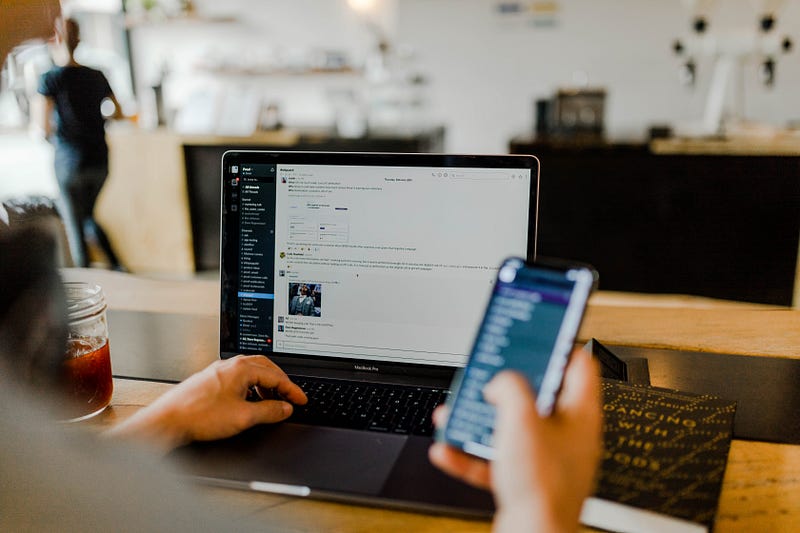
I live and work In Rhode Island. I regularly collaborate on projects with people in Maryland and California. I do a lot of work for an ex-pat publisher residing in Japan. I often work with an editor in Texas. When I chat with fellow freelancers on my Slack group, it’s with folks from all over the US, Canada, Germany, and the UK.
I know a lot of interesting people.
Very few of them want to talk about crypto.
No Commute, Fewer Expenses, Less Politics — It’s All Good
Whether I was driving or using public transportation, the commute was always a pain. It got even worse if I had to deal with snow, rain, or scorching heat. And the time it took to get to the office seemed like a colossal waste of time.
Commute time was time that would have been better spent on myself or on something I enjoyed more.
And speaking of spending, commuting meant buying a car and paying for insurance, gas, maintenance, and repairs. Even buses aren’t as cheap as they used to be. The money spent just on getting to and from work was money I would have rather spent on books and good coffee.
These days, my commute consists of walking through the kitchen to get from my bedroom to my home office. And by not needing to purchase a closet full of business-casual clothing, I save more money. I have a few sets for the occasional conference or real-life meeting, but I often work in jeans and a t-shirt.

But the best part of the freelance lifestyle is the absence of office politics. I never really cared about who liked who and who hated who and why. Inter-office rivalries annoyed the hell out of me. I just wanted to do my job and get out of there.
Some people live for their job and thrive on drama.
Pass.
I don’t miss dealing with other people’s drama.
I bet you won’t, either.
Okay, Maybe There Are Some Downsides
Freelancing is not all tea and scones.
It’d be disingenuous of me not to acknowledge, even briefly, some of the drawbacks:
- Hustling for your clients
- Paying own bills
- Covering own insurance
- Taxes
- Keeping up on billing and paperwork
- Paying for own office equipment, supplies, and utilities
But I’m going to positively state that it is all worth it.
Some of these drawbacks may be tricky to get the hang of when you’re just starting out, but you’d be surprised how quickly you figure things out.
Be patient, be willing to learn, and take action. You’ll do fine.
And you’ll be a lot happier.
Is this a guarantee?
I wish. Results will vary. If you think you will thrive more in a traditional work environment, then go for it.
But if you’ve been hesitating before going freelance because you’re worried it won’t make you happier, let me suggest it will.
It’s worth a try.
I’ve been doing this for around 25 years> I make a decent living at it, and I’ve no regrets.
Cheers!
About John Teehan
John lives in Rhode Island with his wife, son, and dog. He specializes in tech, health, business, parenting, pop culture, and gaming. Visit wordsbyjohn.net for more info and rates. Twitter: @WordsByJohn2.
Interested in the freelance lifestyle? Check out The Freelance Creative by JohnTeehan. John shares advice and tips for a successful freelance career — drawing from over twenty years of personal experience. Available in book form or as a Kindle Unlimited read.