
HISTORY
Why Florida is So Desperate to Hide This Speech From Students
The oppression of Black people and their resistance is taboo
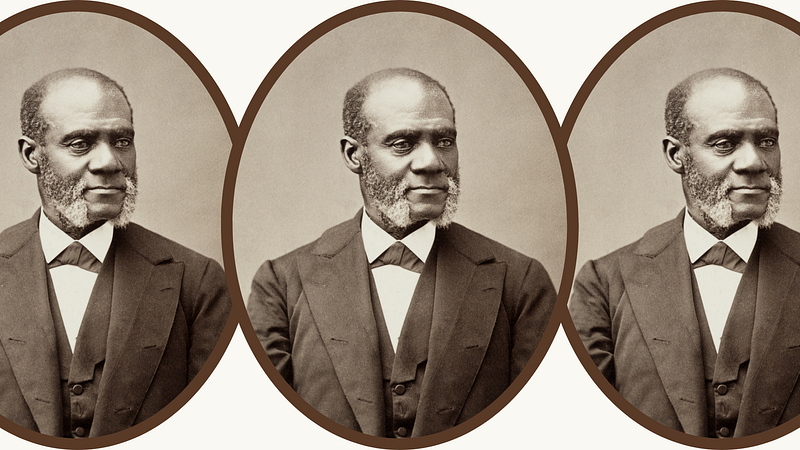

Resistance is not a dirty word, but if you try to teach students about Black Americans' efforts in resisting slavery, they may try to wash your mouth with soap. And that's because Florida's Department of Education has deemed these topics taboo. For instance, censors struck an African American Studies course from the official state curriculum, claiming that the course lacked "educational value and historical accuracy." While they did not identify any specific historical inaccuracies that should be corrected within the course materials, they did provide examples of the information they found problematic. For instance, Florida censors took issue with the inclusion of a political speech delivered by twenty-seven-year-old Henry Highland Garnet, a well-known newspaper editor and pastor of a Presbyterian Church in Troy, New York, called "An Address to the Slaves of The United States."
At the National Negro Convention in 1843 in Buffalo, New York, free Black Americans gathered to promote ideas that, at the time, were considered radical — obtaining equal rights and abolishing slavery. Rising leaders such as Fredrick Douglas, Charles B. Ray, and Charles L. Remond were in attendance, along with seventy delegates from a dozen states. These conventions, which began during the 1830s in Philidelphia, "illustrate the immense struggles and the profound courage of those who made it a point to organize and stand for what was rightly theirs," according to the Colored Conventions Project. This annual meeting of the minds was instrumental for abolitionists, hoping to connect with people throughout the country who shared their goals. It's sad, but in America, few students learn about their efforts.
Why is Florida's Department of Education desperate to hide Garnet's speech from the classroom? Because the themes presented upend whitewashed historical narratives, they prefer students learn. For instance, Garnet described the creation of the Black-American diaspora.
“Two hundred and twenty seven years ago, the first of our injured race were brought to the shores of America. They came not with glad spirits to select their homes in the New World. They came not with their own consent, to find an unmolested enjoyment of the blessings of this fruitful soil. The first dealings they had with men calling themselves Christians, exhibited to them the worst features of corrupt and sordid hearts; and convinced them that no cruelty is too great, no villainy and no robbery too abhorrent for even enlightened men to perform, when influenced by avarice and lust. Neither did they come flying upon the wings of Liberty, to a land of freedom. But they came with broken hearts, from their beloved native land, and were doomed to unrequited toil and deep degradation. Nor did the evil of their bondage end at their emancipation by death. Succeeding generations inherited their chains, and millions have come from eternity into time, and have returned again to the world of spirits, cursed and ruined by American slavery.”
In front of an audience of his peers, a minority of free Black Americans, Garnet focused on the experiences of the majority, the enslaved, those who could not travel freely to attend and speak for themselves. He accurately described Africans' forced migration and the oppressive circumstances imposed upon them by Europeans "calling themselves Christians." Hearing Garnet, a free Black man, describe the demonstrable harm of slavery counters the assertion that Black people benefited from slavery, a perspective Florida's governor Ron DeSantis has embraced. You will not find any falsehoods in Garnet's speech. Yet, Florida's Department of Education opposed its inclusion because the address refers to White people's role in oppressing Black people, a discussion they claim violates a new state law. By that same logic, White conservatives have fought to remove Anne Frank's Diary, a text written by a young Jewish girl describing the Nazi regime's persecution of Jewish people, including her family.
"In the slaveholding parts of the United States, the trade is as brisk as ever. They buy and sell you as though you were brute beasts," Garnet said in his speech, discussing the capitalistic side of the chattel slavery system that dehumanized Black people and labeled them property. White men and women became exceedingly wealthy by selling Black people separating families, a well-oiled machine perpetuated initially by European governments and then by America. In addition to selling their bodies, the sugar cane, cotton, rice, and tobacco they produced provided White people with the wealth they did not rightfully earn. Eric Williams, an author and the first Prime Minister of Trinidad and Tobago, noted that "black slavery was the engine that propelled Europe's rise to global economic dominance." Once again, Garnet was only calling it as he saw it, discussing experiences of Black Americans who were bought and sold like "brute beasts" on the free market.
Perhaps the Florida Board of Education did not want students to learn about the irony of Garnet's words when he asserted that enslaved "citizens are prohibited by law and public opinion.. from reading the Book of Life," that their "intellect has been destroyed as much as possible, and every ray of light they have attempted to shut out from your minds." During the chattel slavery era, White people passed anti-literacy laws that prohibited enslaved Black people from learning to read and write, an injustice Garnet alluded to in his speech. Sadly, students will never taste the sweet irony of Garnet's words protesting anti-literacy laws because the laws conservatives passed in Florida make black history taboo. Perhaps that's their point, to block that aha moment of seeing a connection between racial relations throughout history and now. Anti-literacy laws were real for millions of Black Americans, so the real question is, why does Florida's Board of Education think a speech opposing anti-literacy laws is inappropriate? Shouldn't educators want students to learn and naturally view anti-literacy laws as an abomination?
Solidarity was a central theme of the National Negro Convention as well as Garnet's speech. "While you have been oppressed, we have also been partakers with you; nor can we be free while you are enslaved. We, therefore, write to you as being bound with you," he said. The fact that free Black Americans became abolitionists is no small historical note; it's imperative to understanding the generations-long civil rights movement. It shows that solidarity, empathizing with people in considerably worse social circumstances, was pivotal in fighting against oppressive systems like slavery. As Garnet said, "Nor can we be free while you are enslaved," a sentiment which Maya Angelou's quote, "no one of us can be free until everybody is free," clearly echoes. Free Black Americans became abolitionists, risking their liberty for the advancement of others. Why hide Black heroism from students unless your objective is to minimize their humanity?
Perhaps the most controversial aspect of Garnet's speech is how he openly encourages liberation efforts, resistance, and outright rebellion against White enslavers. For instance, Garnet noted that it was better to "die freemen than live to be slaves." He remarked, "The oppressor's power is fading, and you, every day, are becoming better informed and more numerous." While he suggested they should "appeal to their sense of justice and tell them that they have no more right to oppress you than you have to enslave them," he believed that Black people had every right to liberate themselves from bondage, consequences be damned.
To stay in bondage would condemn enslaved people to further injustices, Garnet argued. "See your sons murdered and your wives, mothers, and sisters doomed to prostitution. In the name of the merciful God, and by all that life is worth, let it no longer be a debatable question whether it is better to choose Liberty or death." The pain and anguish that Black people endured while enslaved were abysmal, and Garnet hoped to inspire them to cast off their shackles in the hopes that the system could be toppled. There was strength in numbers, after all. Historical records demonstrate that laws, such as the Casual Killing Act of 1699, permitted White people to kill Black people without cause, and genetic research shows "the legacy of rape against enslaved women." So, clearly, Garnet was telling the truth that enslaved women became victims of unspeakable acts of horror, sexually exploited to increase the population, and ingratiate White enslavers with generational wealth and power.
In no uncertain terms, Garnet condemned the institution of slavery and encouraged Black people, the racial group experiencing this oppression, to liberate themselves: "Brethren, it is as wrong for your lordly oppressors to keep you in slavery as it was for the man thief to steal our ancestors from the coast of Africa. You should, therefore, now use the same manner of resistance, as would have been just in our ancestors when the bloody foot of the first remorseless soul thief were placed upon the shores of our fatherland." To ensure that Black enslaved people felt inspired, Garnet cited successful liberation efforts, such as Toussaint Louverture's efforts in Haitian Revolution, saying that the "tremendous movement shook the whole empire of slavery." And also, of the smaller wins, such as Madison Washington an enslaved Black man who commandeered "the brig Creole, of Richmond, bound to New Orleans," and along with a small group, successfully sailed to freedom in the Bahamas.
In describing culpability, Garnet called out the church, saying, "Slavery had stretched its dark wings of death over the land, the Church stood silently by the priests prophesied falsely, and the people loved to have it so. Its throne is established, and now it reigns triumphant." During the 1400s, Pope Nicholas V gave the Portuguese permission to enslave non-Christians, a moral pass other European nations took to the bank. White enslavers often used the church to morally justify the slave trade, while White abolitionists, like the Grimké sisters, considered the system an abomination and the nation's greatest sin. As a Presbyterian Church pastor, Garnet believed that abolition was a necessary component, rejecting white supremacist interpretations of the text. The anti-literacy laws that prohibited the majority of Black people from reading the Bible deeply troubled him, which is why he referred to priests prophesizing "falsely." However, Garnet's speech makes it clear the Church was not alone in creating a racial caste system. He spoke of the decision of America's founding fathers to cling to the system of slavery after the American Revolution.
“When the power of Government returned to their hands, did they emancipate the slaves? No; they rather added new links to our chains. Were they ignorant of the principles of Liberty? Certainly they were not. The sentiments of their revolutionary orators fell in burning eloquence upon their hearts, and with one voice they cried, Liberty or Death. Oh what a sentence was that! It ran from soul to soul like electric fire, and nerved the arm of thousands to fight in the holy cause of Freedom.”
Garnet spoke honestly when he suggested Americans, once gaining their freedom from the British empire, knew good and well the value of liberty, but despite crying "liberty or death," when it came to their own liberation, condemned Black people to a system of hereditary slavery. Of course, at the time Garnet gave the speech, black resistance efforts, such as enslaved people running away or overthrowing their plantations where White people forced them to labor, were acts punishable by death. Nevertheless, Garnet encouraged Black Americans to embrace resistance.
"Let your motto be resistance! Resistance! RESISTANCE! No oppressed people have ever secured their liberty without resistance," Garnet told a group of free Black people, hoping they would somehow relay this message to enslaved people. "Labor for the peace of the human race, and remember you are Four Million," Garnet said, ending his speech. He wanted enslaved Black people to understand their power, which rested in their numbers. If Black people were to rebel collectively, Garnet suggested they could have the upper hand. The 1860 census, taken a few years before the Civil War, noted that 3,952,838 people were enslaved, showing that Garnet's estimate was close, indeed.
It's understandable that Garnet's Speech, "An Address to the Slaves of The United States," was controversial at the time he delivered it. After all, abolition was a radical cause, one that sought to bring the chattel slavery system to its knees and liberate Black Americans from tyranny. However, what's harder to wrap my head around is why such a speech would be removed from classrooms in the modern era. After all, President Abraham Lincoln signed the Emancipation Proclamation in 1863, and 1865, Congress passed the 13th Amendment, which abolished slavery. It's no secret who eventually won the moral argument between enslavers and abolitionists, so why should the voices of Black abolitionists be hidden, condemned to obscurity? Garnet's speech is a political speech in the sense that he chose a side and opposed slavery, but it provides an essential historical perspective often omitted from American history courses. What does it say about our nation that over a century after slavery was abolished, Black abolitionists are still being silenced?
🌹Learn more about the author here. 🖊Sign up to read all my stories and thousands more.