
Why Faith is the Good F-Word.
Looking at Faith Through a Microscope

What are we trying to find in our lives as it relates to possible truths? How do we find the connection to where we have been, where we are, and where do we hope to be? Faith is sometimes confused with hope. Hope is important to have around and can persevere through many things but faith is the heavyweight lifter when it comes to completion. Faith gets stuff done.
Faith matters because it helps to quiet down some of our more appalling traits:
blind jealousy unquenchable greed wandering lust deep pain fiery hate bloodthirsty vengeance
All of these feelings make it difficult to focus on tasks and can cripple making progress towards your life goals. They can also hurt physically. Anger is the culprit of most types of pain. Mark Twain said it best:
Anger is an acid that can do more harm to the vessel in which it is stored than to anything on which it is poured.
The universe simply comes at you. We decide to complicate things. Wise or unwise choices are both empowering. Choice is powerful. No one wants to be ordered. If you allow yourself to pay close attention, you can see a repetitive cycle of issues you need to resolve to go to the next step. It’s kind of like passing to the next level while playing your favorite video game.
Looking for answers can be deceptive. Do you ever find a solid, concrete, finished answer to anything? There are many coincidences but there are no mistakes. We should always entertain our possibilities with some measures of reservation and not merely bow to the dogmatic processes of any specific philosophy.
It is important to observe that rigid objects can snap in the wind, while a flexible reed bends with the storms of life.

Survival is not written in our genes but in our will and faith. Our genetic code might make us stronger in some areas:
- Capacity to survive some diseases
- Capability to lift heavy objects
- Better vision
- More skilled ability to hunt or fish
The endless possibility of variables makes us all unique, but it is our internal drive that has always lifted us to rebuild and discover new potentials. How else could we figure out a way to develop vaccines (Come on COVID-19 lab people! You can do it! We have faith!) or rebuild entire continents after the devastation of wars.
Faith is not the opposite, but an element of doubt
We don’t always know why we suffer or what is behind it, but we know that it always seems to be moving us towards balance. Suffering can open the soul or lead to Bira Doleket, Hebrew for on fire and illuminated. What is it to be full of light and in flames? World-renowned motivator, Tony Robbins says:
If you want to take the Island, burn the F&!?% boats!
If you are fully committed, then you have faith. If you have faith, you got a shot! Anything else is just wasting your time! Given the choice of death or finding a way to persevere, people find a way. When you allow yourself too many options, you are growing paths of potential defeat. Allowing yourself to fail and setting yourself up to fail; two different action modes.
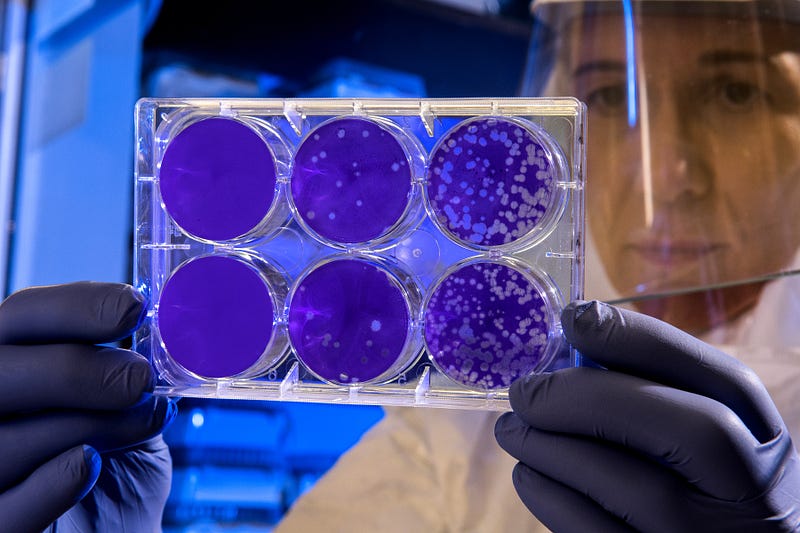
Faith often goes head to head with science
Religion is not science and science is not religion. Evolutionary biologist Ken Miller talks about this:
This is an example of a category mistake. Results that confirm a theory are boring. Science is contentious. People get facts and theory mixed up. A theory is a collection of facts. A theory explains facts.
This shows that trying to compare faith and science is like looking at a microbe with binoculars. Just because you are staring at it closely doesn’t mean you can see clearly. It may take a stronger or different kind of lens. Both science and religion are capable of embracing and encouraging each other to coexist.
What should we do then?
The best theory I can surmise concerning faith, religion, science, and deities, is I DON’T KNOW! What I do know is that when we become quiet in our minds, we return to ourselves, and healing occurs. There are no mistakes.
The point of faith is to allow things to enter our lives and see how it relates to our mission. We came here to win. To heal. To share. To act. We will fall to depths unheard of and we will rise to heights unknown to do amazing things. Good luck and good faith!
Josh Kiev is a Chef, Actor, and asks anyone who will listen-what do you want to be when you grow up?


