
NEWSLETTER 2021–04–08 ArtfullyAutistic Publication
Why Everything You Know About Autism is Wrong
Jac den Houting | TEDxMacquarieUniversity
A warm welcome to Neurotypical family members or to Neurotypical people wanting to unlearn any negative stereotypes about Autism (they were socialised with while growing up in a predominantly NT society) while getting themselves started on their journey to lifelong education on Autism!
If you are wondering about any videos to start educating and teaching yourselves to get started with, then Jac den Houting’s “Why Everything You Know About Autism is Wrong” is a great start for you! This video talks about Autism and Mental Health, but there’s more information to listen from learn from, and to open doors when it comes to the interconnection between Autism and Mental Health!
WHY EVERYTHING YOU KNOW ABOUT AUTISM IS WRONG
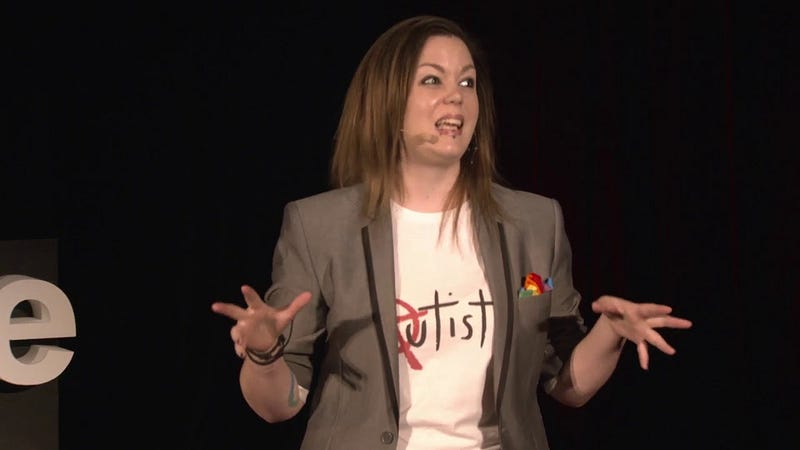
A/N: There is a link that is posted when you see the caption “TEDx Talks” with the link embedded underneath the video thumbnail! Also, you can just click on the image to take you to the video…..
Dear newcomers and those staying with us, I invite all of you to watch this amazing video as we listen, learn, and share with one another to find common ground!
AUTISM ACCEPTANCE MONTH
For ArtfullyAutistic Writers and family members sharing their wondrous (and often amazing) stories and experiences with us here at ArtfullyAutistic, we thank you for those wonderful stories you share with everyone, because we need more stories like yours to share the light inside you and to share all the love you have for everyone on this special month of Autism Acceptance and Resilience.
Instead of Autism Awareness, how about Autism Resilience and Acceptance Month? Autism Resilience and Acceptance Month sounds like the start of a lifelong adventure with many brilliant artists, writers, and storytellers like you!
Happy Writing!
With Kindness, Light, and Love,
Keira Fulton-Lees and BloodyWinter01♾✡️🎧🍓
Unofficial Transcript of Jac den Houting’s TEDx Talk
The following is an unofficial handwritten transcript of the presentation I wrote by pausing and restarting the video again and again. I was careful to ensure that it is as accurate as possible.
Why everything you know about Autism is wrong
Jac den Houting | TEDxMacquarieUniversity
“We know that the Earth is round. Everything we know about this planet is grounded in the fundamental assumption that the Earth is round.
But, there was a time not that long ago when knew that the world was flat.
That’s called a paradigm shift.
Our basic assumptions about the earth changed because we had evidence showing that our previous assumptions were wrong.
Just like the shape of the earth, there are assumptions about Autism too.
Most people understand Autism through medical assumptions. They understand Autism as a medical condition, a disorder, even as a tragedy.
And, the medical paradigm we are taught to believe is that there’s a correct way to develop neurologically. That there’s a right way for our brains to work – The “normal way”, and that any other way of developing is wrong and needs to be treated and fixed.
In 2011, when I was 25 years old, I was diagnosed with Autism, and it wasn’t a tragedy, it was the best thing that’s ever happened to me.
Finding out that I’m Autistic…it brought me a sense of relief. My whole life up to that point finally made sense. My paradigm about myself shifted. I wasn’t a failed Neurotypical person, I was a perfectly good Autistic person.
After my diagnosis, I did what most of us would probably do – I went to Dr. Google and I started researching Autism.
Eventually, I upgraded from Dr. Google. I did my PhD in Autism, became a doctor myself, and today I’m proud to be one of a growing number of openly Autistic people working in Autistic research.
But, in those early days I wasn’t running a complex research project, I was just trying to learn more about myself. I learned about myself indeed.
I was bombarded with information. I was bombarded with information about my deficits. Autism causes deficits in social interaction: Deficits in communication — Restrictive and repetitive behaviors — Sensory processing deficits.
For me, that information just didn’t make sense. Finding out that I’m out Autistic had completely changed my life for the better. How could something that was so positive for me be such a bad thing?
So, I went back to Dr. Google, but this time I dug deeper. I started to find information about Autism that was written not by researchers or other professionals, but by actual Autistic people.
I discovered a thing called the Neurodiversity Paradigm. The Neurodiversity Paradigm is an alternative way of thinking about Autism.
It describes Autism as part of the range of natural variations in human neurological development.
At it’s very simplest; Autism is a different way of thinking.
Just like Biodiversity helps to create our healthy and sustainable physical environment, Neurodiversity can help to create and maintain a healthy and sustainable cognitive environment.
According to the Neurodiversity Paradigm, there are no right or wrong brains. All forms of neurological development are equally valid and equally valuable.
And, regardless of what type of brain you’ve got, all people are entitled to full and equal human rights and to be treated with dignity and respect.
Now, that sounds a bit like a panacea…. I know, treating people with dignity and respect; it just makes sense.
You might be surprised then to learn that a common way to reacting to this idea is, “Um, I don’t know. I mean, it’s all right for you, but it doesn’t apply to everybody. What about this person, they’re Autistic. They’re not just different, they’re disabled.”
Well, maybe you can’t tell just by looking at me, but I’m disabled too.
I’m not disabled by my Autism though. I’m disabled by my environment.
This is another paradigm shift. The way that we’re used to thinking about Disability is based in a model called the Medical Model of Disability.
The Medical Model assumes that a Disability is an individual problem. It places Disability within the disabled person – Within me.
For example, I really struggle with shopping malls. They’re loud, they’re brightly lit, they’re unpredictable, they’re full of people.
The Medical Model would say that I struggle with shopping malls because there’s a problem with the way that my brain processes that input because I’m Autistic.
But, there’s another way to think about Disability. It’s called the Social Model of Disability.
In the Social Model, Disability happens when a person’s environment doesn’t cater for their individual characteristics.
In the Social Model we don’t, we don’t refer to people with a Disability. Disability isn’t something that I carry around like luggage.
Instead, we use the word disabled as a verb. Disability is something that’s being done to me. I’m actively being disabled by the society around me.
When I go to a shopping mall, I don’t struggle because there’s something wrong with me. I struggle because the shopping mall wasn’t designed in a way that caters to my needs.
If we started designing shopping malls that were quiet, dimly lit, predictable, and sparsely populated, well, I’d still be Autistic, but I might not be disabled by shopping malls anymore.
Almost everything we know about Autism stems from research that’s s based in medical assumptions and the Medical Paradigm.
We spend hundreds of millions of dollars globally every year on Autism research, and the vast majority of that research conceptualizes Autism as a problem.
Recently, I conducted a study, examining how Autism research funding has been invested in Australia over the past 10 years.
Here’s what I found:
- More than 40% of funding went to genetic and biological research trying to find out why Autistic people are the way we are, and if there is a way to prevent it
- Another 20% of funding went to research investigating treatments for Autism, most of which are trying to find new ways to make artistic people just act a bit less weird
- Only 7% went to research investigating services to help Autistic people
Why does this matter?
Well,
- Around 1 in 50 people are Autistic
- About 60% of Autistic adults are under or unemployed.
- 87% of us have Mental Illness
- Autistic people are nine times more likely than the general population to die by suicide.
- We have an average life expectancy of just 54 years.
- And we deserve better
In 2012, an Autistic researcher named Dr. Damian Milton proposed a new theory. He called it the Double Empathy Problem.
And what he suggested was this:
- Maybe Autism people don’t actually have social deficits.
- Maybe we just got along better with people who think like us.
- Maybe Autistic people socialize better with other Autistic people, and non-Autistic people socialize better with other non-Autistic people.
- Maybe the difficulties we see when Autistic people and non-Autistic people try to socialize aren’t because the Autistic person has social deficits, but because Autistic people and non-Autistic people are both bad at communicating in ways that make sense to the other.
Now, to the Autistic community this made perfect sense.
But, a lot of Autism researchers weren’t so keen. I guess maybe they didn’t like the idea that the whole history of Autism research could be based on flawed assumptions.
Luckily, in the past couple of years, a handful of Autism researchers have jumped on board with the Double Empathy problem, and they’ve decided to test it scientifically.
In one brand new study by Dr. Catherine Crompton from the University of Edinburgh, they did this by using a task called the Diffusion Chain, which in Australia we know by the slightly politically incorrect name of, Chinese Whispers.
Now, I’m sure you’re all familiar with it. You whisper a piece of information around a group of people one by one and you try to keep it as accurate as possible.
And, if you played before you know the accuracy part is hard.
The first person will whisper a perfectly innocent sentence like, “Today I need to pay my rent and get new tires.”
But by the last person, Donald Trump is president and the worlds on fire.
Well, in Edinburgh, they played that game with three groups of participants:
- The first group was all Autistic people
- The second group was all non-Autistic (Or Neurotypical people)
- And the third group was a combination of Autistic and Neurotypical people.
The researchers found that the all Autistic and all Neurotypical groups were equally accurate in their information sharing.
But, the combined Autistic and Neurotypical group were significantly less accurate and less clear in their information sharing.
That suggests that Autistic people and non-Autistic people communicate equally well.
It’s the mismatch between those communication styles that causes the problem – Exactly as the Double Empathy problem predicts.
We need a paradigm shift in the way that we think about Autism.
We need to recognize that maybe acting less weird is not the best outcome for an Autistic person.
We need services and supports that will help us live long, happy, and fulfilling lives, while respecting our right to be authentically Autistic.
And, we need the kind of work that I do – Research led by Autistic people that answers the questions that Autistic people want answered.
Because the Earth is not flat, and I am not a tragedy.
Thank you” — Jac den Houting