
Why Everyone Should Learn Chess
Five life lessons the game taught me

I have been playing chess for as long as I can remember. When I was younger, my father signed me up for chess lessons in Queens, NY, where I was taught by Grandmaster Susan Polgar. I still own her book, A World Champion’s Guide to Chess, which she was kind enough to autograph for me.
Under her training, along with the lessons and tactics learned from her book, I participated in several tournaments as a kid. While I am by no means a grandmaster, or even considered at the “advanced” level, my many years of playing the game has helped me grow considerably — both in the game and out in real life.
Here are some chess tactics and ideas that I like to apply in my games — that have also helped me succeed in life.
The Sacrifice
Sometimes in chess, you need to sacrifice one of your pieces to gain an advantage elsewhere. Whether this is sacrificing time, money, or effort — you oftentimes need to lose in order to gain more.
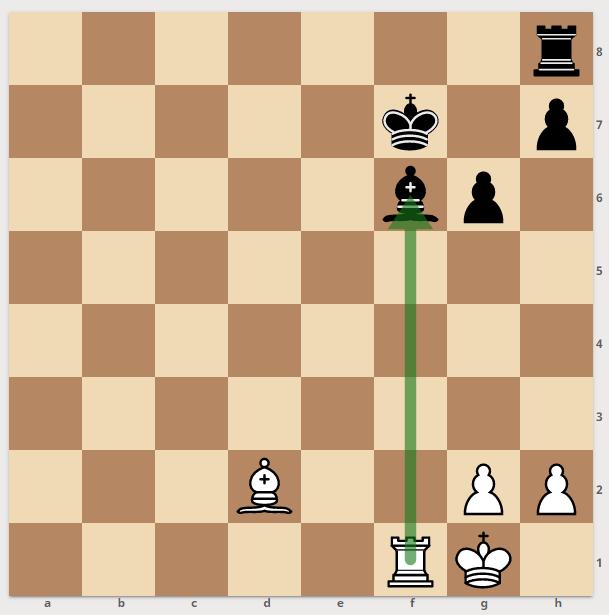
In the example below, white sacrifices his rook when capturing the bishop on f6. Once the king captures the rook, white’s bishop has a perfect opportunity to pin the king against the rook on h8. White’s sacrifice enabled it to perform a very strong move.
When I first began learning about investing, I wanted to be one of those millionaire day traders like Leonardo DiCaprio in The Wolf of Wall Street. I quickly came to realize — after losing a nice chunk of money — that this is simply not my lifestyle. I buckled down and learned about proper investing and risk management through many online courses and books. Using an investing course by Danny Devan, along with The Intelligent Investor by Benjamin Graham and The Essays of Warren Buffet, I was able to recover my account from -60% to +106% in six months.
I am fortunate that I didn’t lose too much money before deciding to learn proper long term investing, but this financial sacrifice pushed me to learn as much as I could about the markets, investing, and risk strategies — and the knowledge I gained has been invaluable. Now, I’m comfortably funding two personal accounts, a 457, and a Roth IRA — and I’m very glad my day trading career was short-lived.
Remove The Defender
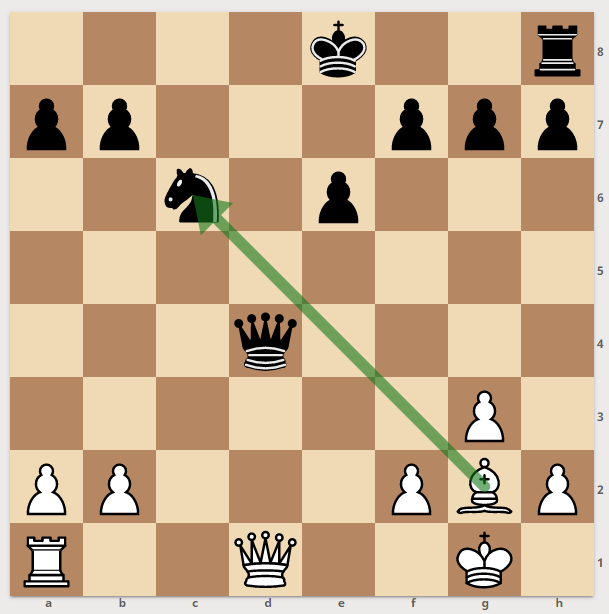
In this example, white wants to take black’s queen on d4 with its queen. However, the black knight on c6 is protecting the queen. White can capture this knight on c6, both removing the defender for the queen, and checking the king. Since black is checked, he has to take the bishop with bxc6. This leaves black’s queen vulnerable, which white will then capture with its queen.
The point of removing the defender is so that you can take on or accomplish something that was previously unable to be completed. If you find yourself stuck on a problem that can’t be completed, ask yourself “why can’t this be completed?” Then, you take on that problem first — once again allowing you to tackle the first issue with no hindrances.
Removing the defender entails first having a goal. What do you want to accomplish? Then, what’s stopping this goal from being accomplished? For me, I wanted to start writing works like these to help others. What was blocking me? My lack of writing experience, a place to write, and the fear and embarrassment that my writing wouldn’t be accepted.
I removed the defender by tackling these issues head-on so that I could focus on my actual goal — to write. If I tried to impulsively write with no sense of an audience, location, or topic, I knew that I was in trouble.
So what did I do?
I thought about what I like doing best and what I know enough about to share through my writing. For me, my strong suits are programming, video gaming, and chess. I then outlined different publications that I could write for. Before starting to write, I was already familiar with Medium and knew publications like Towards Data Science and Better Programming were well known and popular in the tech field. Using Grammarly and old notes from my freshman year writing class, I brushed up on my grammar and basic writing skills. Once I took the time to study and learn, I felt comfortable and confident in my writing abilities.
Now, with these defenders no longer blocking my initial goal, I can write freely with no worries about failure — because I am writing for not only you, but myself as well.
Zwischenzug
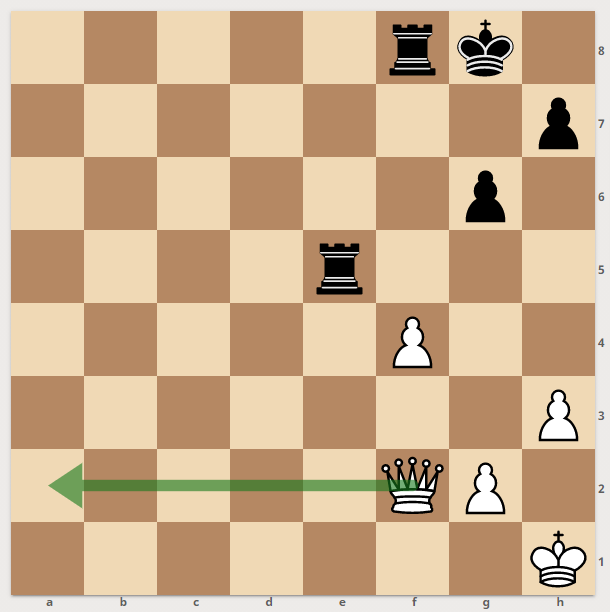
Sometimes rushing directly into the first available solution isn’t always the best idea. The Zwischenzug, also known as the “in-between” move, is when there is an obvious move, but taking it may not be the best action until another move is done first. Below, white’s pawn is threatening the rook on e5. However, taking this piece is ill-advised, because it allows the black rook on f8 to capture white’s queen. White should, however, do an “in-between” move and move the queen before capturing the rook. After white moves the queen to a2 and checks black, white can easily capture the rook on e5 while maintaining the queen.
For this example, I will go back to what I learned about properly investing, and discuss the “Tesla hype train”. Tesla has been a very hot topic in the market, due to its volatility, Elon Musk’s Twitter presence, and the general excitement around the company. Elon Musk started selling shorts on Tesla’s website because an overwhelming number of investors bet against his company and shorted the stock. However, despite the large bets against the company, Tesla’s share price has continued to rally — skyrocketing over 750% in the past year.
Due to Tesla being in the news so often and its insane growth, I naturally wanted to get involved. While this seems like a good move, an “in-between” move first is necessary. I wanted to swing trade short term option spreads to try to quickly maximize my profit. However, Tesla doesn’t go up every single day or week. There are periods where the price dips negative for a couple of days to weeks at a time.
As you can see below in the YTD history of Tesla, The line (while generally trending upward) is not smooth and has plenty of small to medium spikes up and down.
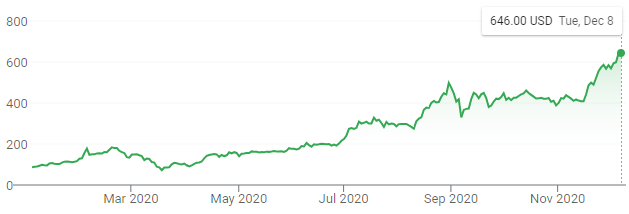
The Zwischenzug here would be doing proper research as the “in-between” before buying into the stock. If you blindly buy Tesla options without research the news, the stock’s history, and the markets as a whole, you are bound to lose your money. Generally, many new investors lose money because of Fear Of Missing Out, or FOMO. When they see a stock starting to quickly rise, they try to buy in while the stock is hot. However, as you can see right before September started, Tesla had a drastic increase, followed by a sharp decrease. This was because many new investors couldn’t resist, and bought it so they wouldn't miss out, and then the smarter investors sold because of this high volume period.
By first doing your research and choosing a proper entry point with proper risk management, you would know that after a high spike in volume and price, there is often a dropoff which you should wait until before investing — intelligently protecting your otherwise vulnerable assets.
Fork
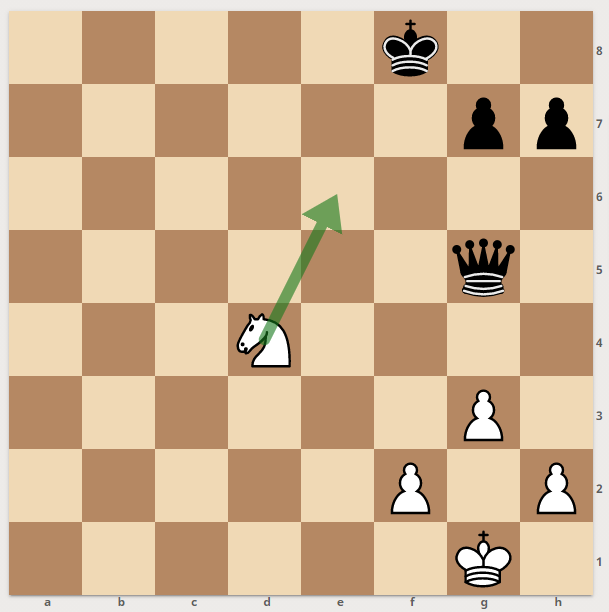
A fork is a very popular chess move that involves a single piece attacking two others at the same time. Here, moving white’s night to e6 attacks both the black king and queen at the same time. The king is forced to move to safety, allowing white to take the queen on g5.
Sometimes, a single move opens up multiple opportunities for success. I studied Computer Engineering at Northeastern University in Boston, but when I was a freshman I didn’t really know what I wanted to do. I decided to join a research group under one of my professors — and this single move led to the opening of numerous opportunities. This research group taught me the foundations of Python, machine learning, and introduced me to many people who helped me accomplish many of my goals. I was able to learn about important machine learning and AI programming concepts that are relevant today, land two internships, and get my master’s — all from tools I had in my arsenal that were given to me from this single action that I took.
The goal of the fork is to make a single but precise move. In life, if you know that multiple opportunities are within your reach, find a way to achieve them all— and why not do them all at the same time?
Simplification
Simplification usually involves a series of trades that result in equal value lost by both sides. The goal is to clear out the board to make seeing another opportunity easier, and also to prevent making a more costly mistake.
In this board, white has the advantage and a clear move, but there are a lot of pieces to worry about. First, white takes the rook on e7, forcing a trade when black’s queen takes white’s rook.
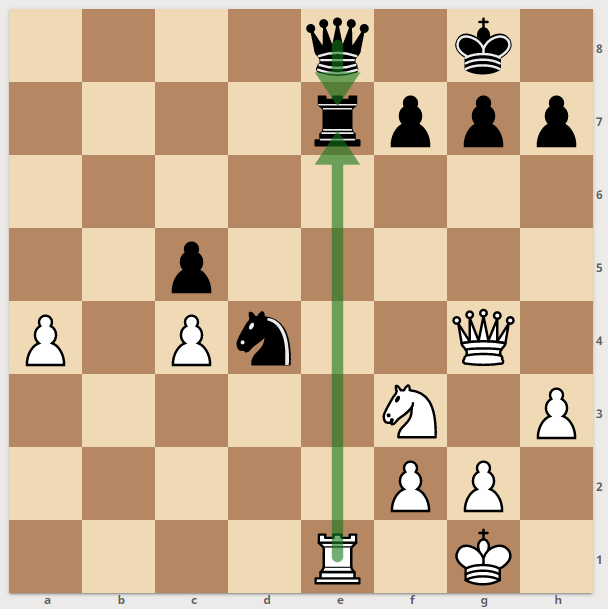
Next, white’s queen moves to c8, which has to be blocked with black’s queen to f8.
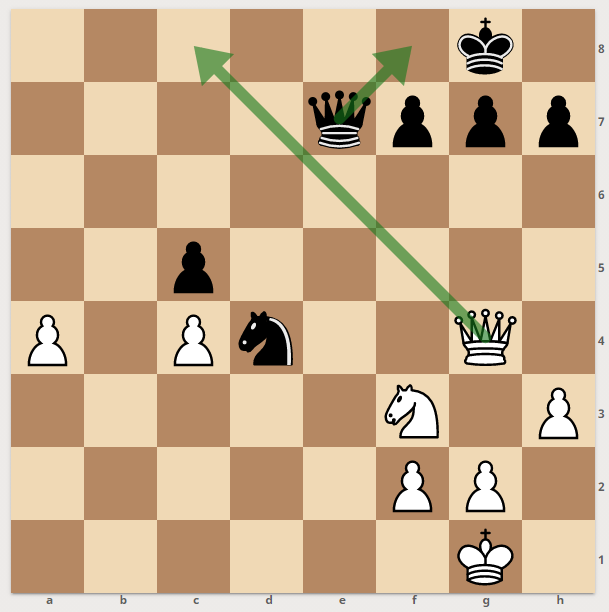
Finally, both sides will trade their queens, followed by their knights, freeing up the board. Can you see the next move now?
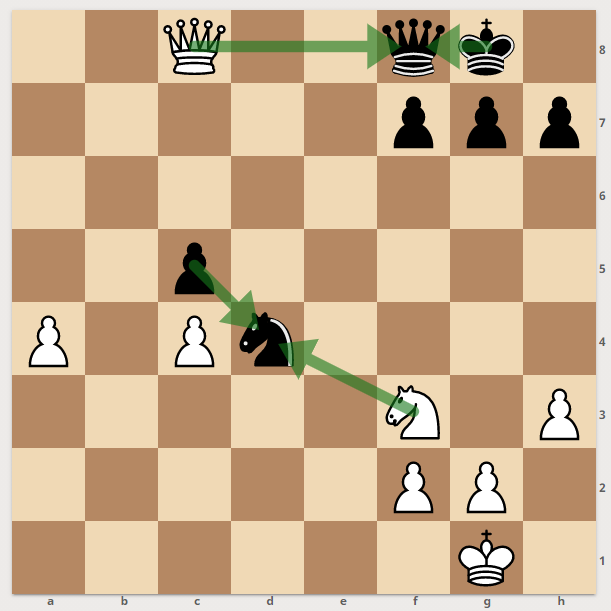
With the board cleared up, it is clear that white is maintaining the advantage — white has an unopposed pawn on a4. (White’s king can still easily move over to defend against black’s pawn on the d-file.)
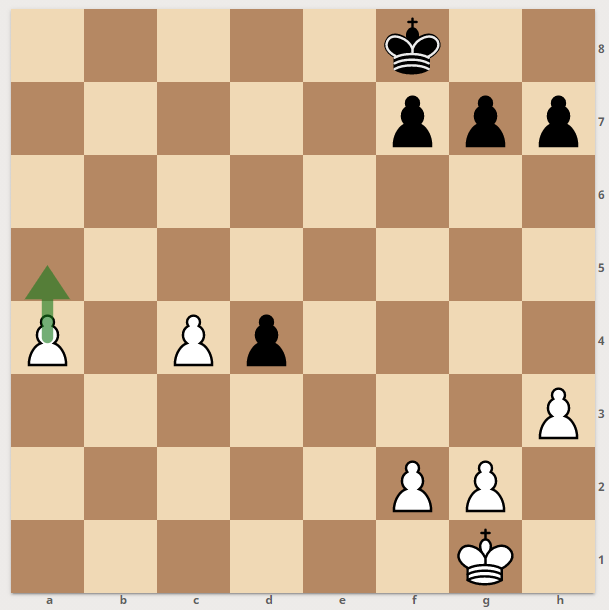
This tactic is concerned with clearing up clutter to prevent a mistake from happening and to gain/maintain an advantage. In life, sometimes the answer is right in front of you, but you don’t see it because there are too many other distractions.
For me, when I am developing software, I always think of features that I want to add and cool concepts I was to try to implement. However, many times I stray too far from the original idea and either never finish the project or change it altogether. A great way to successfully complete a coding project is to remove all of the extra variables — and complete a Minimum Viable Product (MVP). The ultimate goal is to get the code working, doing exactly what it is supposed to do. Extra features and shortcuts help, but they aren’t a necessity.
For example, I recently built a Blackjack web app using React. While I originally had grand ideas for all of the features to implement, I had to narrow it down and simplify the scope of the project. I had to ask myself, “what are the minimum requirements to create a blackjack app?” I couldn’t create a database to store a player’s money without first having a working game in the first place. I couldn't display playing cards until I had logic for the game first. I had to trim the fat.
Narrowing down the scope — simplifying the problem — helps to focus on and succeed at what you should truly be doing.
Summing It Up
Chess is a timeless game that has taught me so much growing up. Even today, I can still learn something new from the game. The skills that I have learned both in the game and in real life are priceless. The puzzles and tactics that I have practiced all my life have been indirectly applied to my endeavors outside of the game, and I hope you now understand how this masterful game can translate to your own success.
And with that, I will leave you with my favorite chess quote:
“A good chess player thinks five moves ahead.”
“Great chess players only think one move ahead, but it’s always the right move.” — Lie To Me, S2E11
So what’s your next move?


