Why Encourage Passionate Dreams in Our Youths?
Re-Creating our Schools for a Better Future

For decades, Singapore has been regarded by expatriates to be the best overseas posting because of the certainty of rules, regulations and order in nearly every aspects of Singaporean society. They still do. One expatriate commented that “Singapore is just not real, but a truly great place for foreigners.”
Singapore is indeed a haven for foreign talents. However, our core global attraction and unique strength is a Damocles’ sword that hangs over our necks like a millstone dragging us into the sandpits of global irrelevance and eventual oblivion.
Our children grow up in this “unreal” and orderly society of rules to the extent that these internalised rules have come to dominate and restrict instead of facilitate their youthful tendencies to explore, discover and learn from mistakes. No one questions the boundaries set by these rules, and few dares even to exercise the initiative to change them even when they have become obsolete. Many rules have become “sacred cows” and destined for a future that is so far removed from the changing geopolitical and socioeconomic realities of the times.
We need urgently to recognise that none of our “sacred cows” is immortal, and that they should be respectfully put to sleep when their useful life has expired.
Our younger generations do not emerge from the education system with a strong mental disposition or a passion for an active life that makes transformational impact. The vast majority of students just do not have what it takes to be “street smart”, or to be willing to explore and discover things on their own. It is however not entirely the fault of our youth.
The focus on a narrow definition of talent and the obsessive reliance on social compliance and examination marks as the sole determinant of excellent achievements both act to reduce and constrain otherwise worthwhile options for the fuller aspirations of youthful desires and dreams.
Schools are important places where children learn valuable lessons for their latter life. School principals and teachers have a sacred duty to assure that their wards learn the right and conducive values and mental attitudes for their latter life.
Sometime ago, Raffles Institution (RI), who is a top elite school, decided to remove soccer entirely from its sports offerings because it did not manage to become regional champion for many years prior. Many could remember clearly when RI was repeatedly the City District soccer champion during my days. As a “former” distinguished repeated Champion and where many Singapore political, business and community leader went to school, the RI decision taught, wrongly, that one should simply give up when you cannot be number one … this is clearly a pathetic excuse coming from a has-been and ex-Champion!
Schools have to stimulate a spirit of competition in the “right” areas, away from the mindless comparison of test and examination grades which do not measure anything of absolute relevance or importance that are critical for “competing with top talents in other countries”. A competitive system remains critical and crucial to ensure Singapore can compete with top talents in other countries.
On several trips during the 90’s to China and Vietnam, I had observed that their youth are absorbed single-mindedly in their dreams of entrepreneurship and further education, preferably overseas, and to eventually start a business in their adult years. They also read prodigiously about what’s going on in the world. Their phenomenal social development and economic growth are now legendary.
As a First World developed nation, Singapore students are only interested in passing exams. Few know what to do after that. Fewer are interested in current world and local affairs because these are not discussed during their curriculum and not asked for during their school exams, except during the General Paper at ‘A’ level.
It is extremely difficult to find many top University or Junior College students having some grounded opinions on any issues of current social, economic and political interests. This is not surprising, since school principals and teachers do not encourage their students to focus on anything else other than the exams syllabus. A telling example will illustrate this.
During the current Covid19 outbreak, many schools had to move to online learning for their students when schools were closed for nearly 2 months. During the school shutdown, there were no lessons relating to the coronavirus pandemic crisis!
It is relatively simple to have used the Covid19 crisis as a context for designing questions for Mathematics, English, Science, Geography and even History. But this was not the case. Perhaps, it was simply considered to be unnecessary and irrelevant. Seriously?
The crux question is: if the “stressful” Singapore education system did not even bother to consider realistic contexts when crafting the learning experience of our children, what then is the purpose of the “stress”?
In the post-Covid19 era, the entire education system should undergo an urgent self-diagnostics and ask itself why an otherwise bubbly child, who is full of enthusiasm, curiosity and a zest for life could emerge from the system 12 years later as a dull, passive and unimaginative person, and who may be equipped with a full head knowledge of subject content but had no clue as to their relevance and applicability.
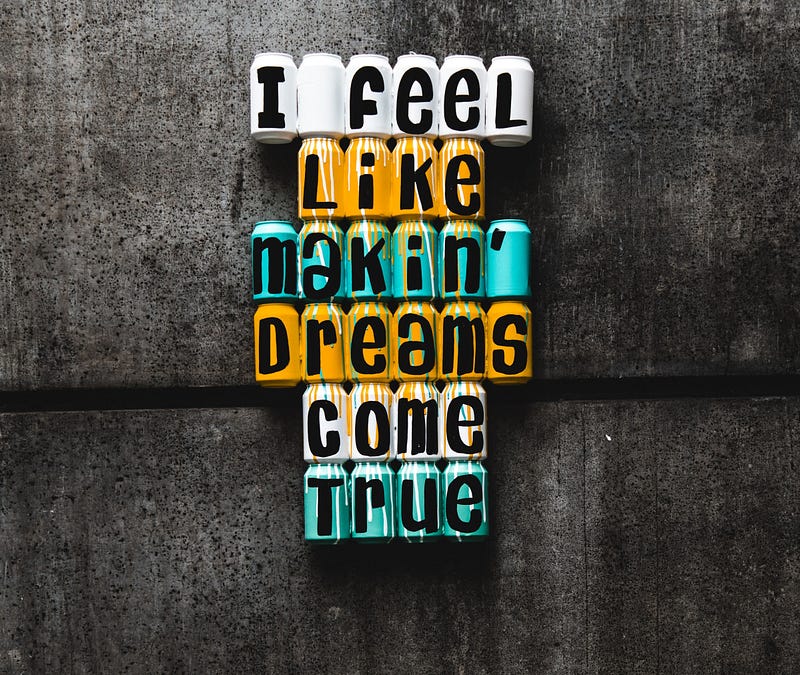
The education system is the formative socializing medium to create and build passions and dreams in our youths, instead of systematically disposing the youthful dreams and curiosity in our children, so as to replace them with nothing passionate, visionary, captivating or motivating for the rest of their life.
Using a golf analogy — we should aim to make Tiger Woods out of our children in whatever field which they have a demonstrable talent in, instead of simply teaching everyone about golf balls, and have practices only at the driving range, because we are afraid to let them play on the golf course for fear that they could get lost or hurt themselves.
Our youth should be prepared for readiness to compete and prevail in real-life, instead of unreal moot, competitions. Only this would make for a nation embedded with a core sustainable survivability capability.