
Why Editing was a Valuable Step in Writing My First Children’s Book
Writing the book was only the beginning
The writing of my story went fast
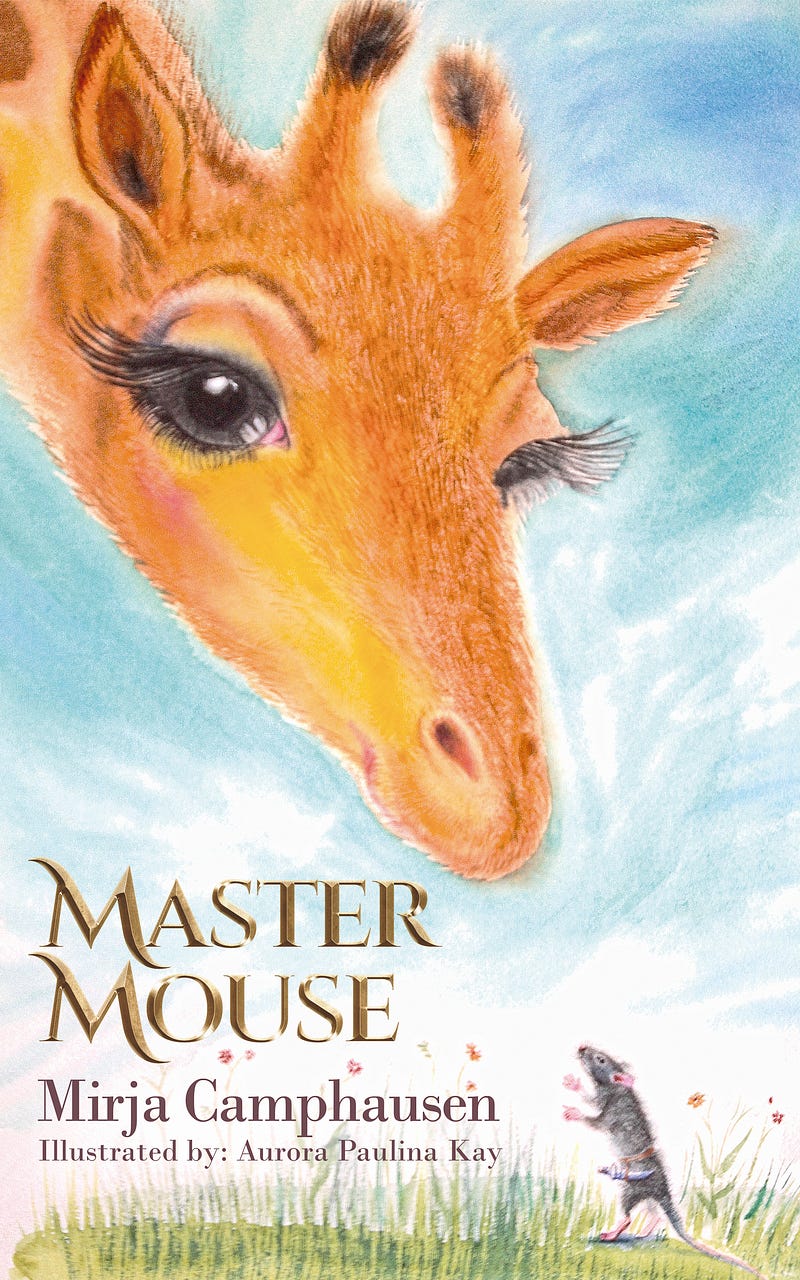
I pinned down my children’s book “Master Mouse” within eight weeks. I was in a state of flow and sat at my computer every Monday to Friday to write. Every day, I re-read the last few paragraphs, asked for inspiration and recorded what I received. The writing felt like a download rather than creating my own content (see link further down). I didn’t object, though. From my writing experience, I knew whatever I received in such a flow state was much higher quality than any carefully planned and mindfully selected plot.
The added benefit of this form of writing was I could be surprised by the story twists myself. I laughed out loud more than once when especially absurd ideas dropped in, like the appearance of a bright red, larger-than-a-mouse slug in possession of a highly technical object to amplify her voice. This object later became the source of other funny twists, like revealing the slug’s favorite music tune was “Marching Band”, a passion no one else seemed to share.
Eight productive weeks later, I felt utterly satisfied. This was a great story. I was going to publish it. That much was clear. But what next?
The editing of my story took much longer
I knew I needed an editor. I guess I mainly opened up to the idea of paying someone to scrutinize my work because I had written in English, my second language, and I felt conscious of potential grammar mistakes. Divinely orchestrated, I bumped into the perfect editor at a Christmas party a few weeks after finishing my book. We connected, she accepted the job, and off we went. I felt this would be quick and easy.
A few days after sending her my manuscript, I received the first review. Besides grammar issues and the overuse of certain expressions (my draft was spiked with “just” and “only”), she pointed out where the plot seemed inaccurate or where my imagination had left a gap. It was a long list. I felt a little disheartened. But only a little bit.
I took a deep breath and set to work to finalize my second draft. She returned it promptly with another list. And so we continued. About fifteen revisions and nine months later, I finally felt “we had nailed it”. I had not expected for this to take as long. Nor to require as much work. We didn’t only work on grammar issues, but also on a coherent style, punctuation, order of the plot, consistency, and giving the characters an edge. I ended up shifting around whole parts of the book. Other parts I deleted entirely.
The value of a great editing process
My book had completely transformed. Definitely for the better. While I am confident the editing process can be sped up, I believe a certain amount of revisions is vital. This can always be done before submitting the work for a professional review — which I believe is essential. However, since this was the first time I had committed to publishing my work, I had no idea what to look out for in the editing process. In my case, I benefited from professional support and inspiration from the start.
Editing is not only about skill, but also persistence
Since I didn’t have a set time frame for publishing my book, I worked on the editing whenever I felt inspired. I have to admit I had weeks when I didn’t feel inspired at all. I suppose I could have pushed myself to move faster but I’m almost certain the work done in that phase wouldn’t have satisfied my standards. Luckily, my editor supported the notion of “going with the flow”.
However, I felt self-conscious and often wondered if I would ever get to the finished stage of the book. I needed stamina and had to jump over my own hurdles by letting go of any expectations of how fast and easy this process should be. I eventually had to admit any pressure I felt was my own doing and not coming from any external source. I also learned this pressure hindered my flow. Scolding myself for not moving fast enough kept my power distracted and prevented me from being my creative best. And who did I owe a perfect draft by a certain time, anyhow? This was all some made-up imaginative force I had to learn to dodge.
Another edit — and the final criterion
Next, I entered what I today call “the hibernation phase”. During this time, I didn’t look at the book for almost a year. I entered it into one or two contests, more half-heartedly, without ever winning anything, and I randomly submitted it to a couple of publishers, only because they had crossed my path somehow. I never received any feedback.
I didn’t know what else to do with my fully edited manuscript, so I let it sit there, and started my blog on Medium on physical, mental, emotional, and spiritual health. Almost a year after entering hibernation, the book seemed to wake up. I could feel it stretch its fingers. Reluctantly, I checked with my editor. She suggested doing another review. I almost fell off my chair. Another one? But what else was there to do?
So, I opened the book again. I almost didn’t remember any of the jokes, the details, the funny twists, or the big life lessons hidden amongst the words. Re-reading my work with fresh eyes made me see the story in a whole new light. Inspiration was back. I revised the book one last time.
Every word, every sentence, every chapter had to pass one single criterion: I read it out loud. Did it flow? Or didn’t it? When it didn’t flow, I worked on a sentence for as long as it took until it did. Now, my story finally felt good. Really good. And I felt good about it. Master Mouse was ready to be released into the wild!
Read the first chapter of Master Mouse here:
Listen to me read Master Mouse here (all twelve chapters will be available in separate videos):
Up next: Sharing my experiences about my self-publishing journey.


