
Why Eating Meat Is Totally Unnecessary*
*For me, a healthy, privileged white man in an affluent society
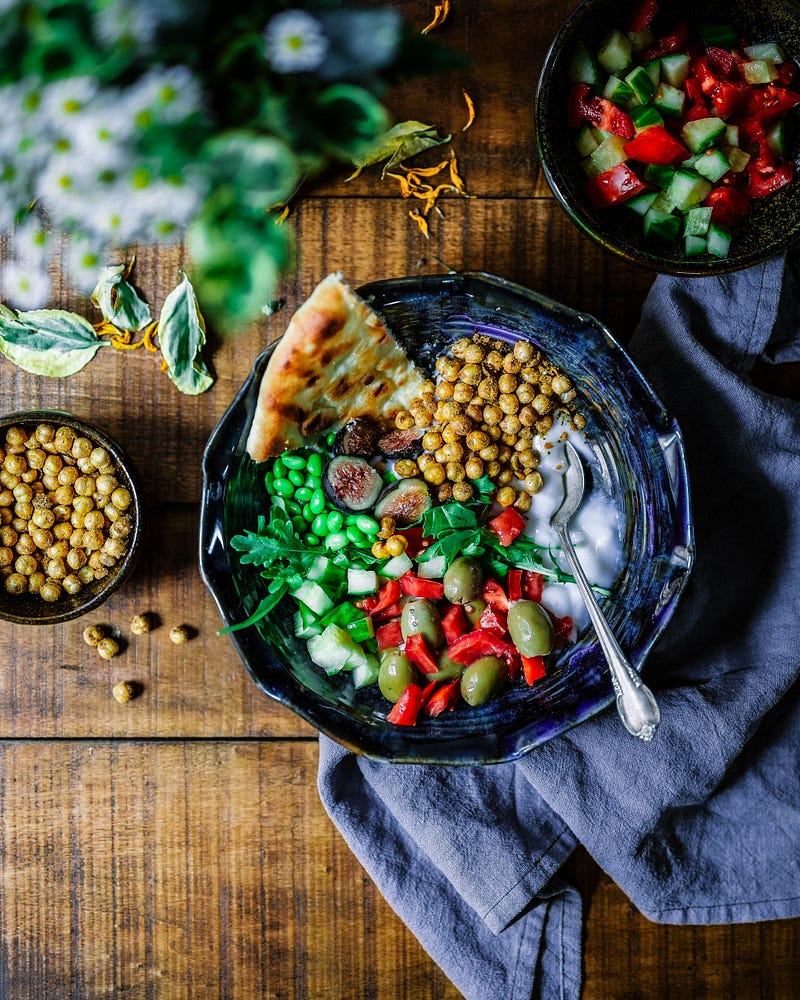
Hi. I’m a healthy, privileged white man in an affluent society, and I’ve been an on again / off again vegetarian throughout my life. Yay, me! My current stretch isn’t even my longest — it will be just two and a half years in January. But I’m positive it’s going to last me for years to come. Probably for the rest of my days. (Which are looking long, since, again, I’m privileged as f*ck.)
In the past, I turned to vegetarianism without really thinking too much about why. It might’ve been to impress a hot female friend, or a vision while hallucinating on mushrooms. It might’ve been because of an intense talk about the planet or animals, or because I just wanted to be a contrary, obstinate asshole. (Yay, again!)
This last time, it was a documentary that did it. In August 2019, I watched The Game Changers. And, well, yes — to be patently obvious (and obnoxious), it changed my game.
Knowing full-well that the film would trail a crop of people quick to “debunk” its claims and defend their meat-eating, The Game Changers was nevertheless enough for me to come to grips with something I already felt in my bones:
I don’t need to eat meat.
I’ve known it for a long time; I’ve just been avoiding it.
The realization was crystal clear: I’d been eating meat out of habit. My “choice” to do so was driven by persuasive advertising and powerful financial interests.
And because I was addicted.
Oh, Give Me A Break…
Wait! Let me clarify: I’d recently quit smoking, too, and had abandoned Facebook and Twitter, so I was on a streak of leaving things behind that I’d become convinced weren’t adding anything positive to my life. I was addicted to nicotine for the obvious reasons, but I was also addicted to getting into pointless debates on social media (while hoping for likes and follows, of course). Nicotine triggers the release of dopamine in the brain, but so does raging on social media.
So when I say I was addicted to eating meat, I mean in part because meat and other animal-based foods contain opiates and drug-like chemicals that can get you hooked, but also because it was easy and ubiquitous. If you live in an affluent society like I do, meat is everywhere. Just like drinking or smoking, there’s a temptation around every corner.
I wasn’t eating meat because I needed it to survive. I was eating it because I’d convinced myself it was okay, it didn’t matter, it was part of life.
But when I watched The Game Changers, I thought back to being a vegetarian in the past. I knew that it was simply a lack of discipline that drew me back to meat each time. Any other reasons were excuses. That, and a lack of good cookbooks. (But we’ll get to those in a bit.)
First, like any good privileged white man, let me tell you why what’s good for me is good for you, too. Not to mention, good for the entire planet, and bad for the massive corporate meat industry.
REASONS: Part One
We’re omnivores. Let’s just get that part out of the way. I’m not making any biological claim that humans are meant to be herbivorous.
Some people make arguments that, due to the flat shape of our teeth, or the length of our intestines, we’re meant to be herbivores, but this claim is misguided at best, false at worst. Humans evolved to be omnivores.
Since Homo sapiens began to overtake other Homo species some 70,000 years ago, we’ve developed from foragers to farmers, and we’ve spread from Africa across the globe. This migration meant adapting to different environments and what they may have offered.
Are you an early human living on a tropical island? Well, in addition to the coconuts, crab and fish are on the menu! Or, living where the Bison roam? Enjoy the burgers!
To this day, some cultures who live outside any reasonable growing season subsist on an almost all-meat diet (meat including seafood). And even those populations who have access to other foodstuffs may need to eat meat for certain reasons, such as the fat content.
For the rest of us — that is, anyone living near a grocery store, and anyone without any underlying condition that makes meat-eating a medical precept — eating meat is completely unnecessary. It’s not survival. And it’s certainly not about nutrition.
It’s consumption.
Conspicuous consumption, even.
REASONS: Part Two
Here’s what we know:
- Consuming meat, even from your friendly local organic farm, has been linked to heart disease, diabetes, strokes, and several types of cancer.
- Processed meats are worse, and linked to colorectal cancer, among others. Studies link dairy consumption to breast and other cancers, too.
- Animal agriculture is an extraordinarily inefficient way of producing food (chickens need to consume 9 calories for every 1 calorie they provide, and that’s the best ratio of all livestock).
- Scientists agree that animal agriculture is likely to cause the next pandemic.
- More than 70% of antibiotics are being fed to farm animals, driving antibiotic resistance that could lead to the end of modern medicine.
- Animal agriculture packs a major climate wallop relative to alternatives.
And yet while many people are aware of these things, per capita meat consumption is up, not down, with 2019 the highest year of meat consumption in recorded history. Not only that, but the UN estimates we’ll need 70%-100% more meat by 2050, globally, in order to satisfy consumption at its present rate.
I don’t want to be a part of that.
I don’t need to be a part of that.
I don’t need to eat meat, at all, in order to be healthy. So why would I do it?
A Reckoning
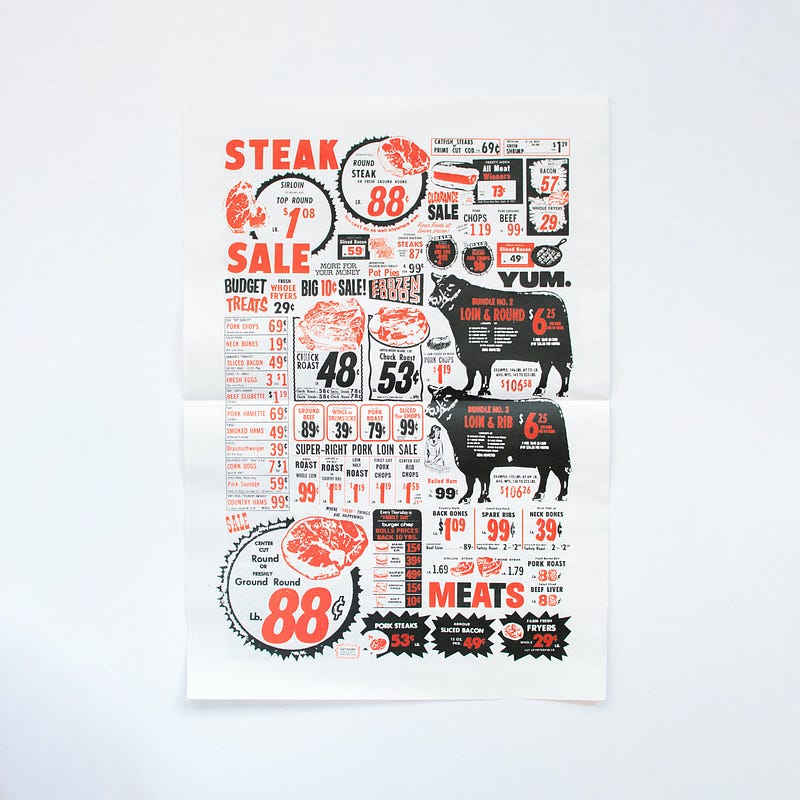
For those of us living in modern industrial societies, particularly those wealthy countries of the west, consuming meat is pretty much like consuming any other lucrative-yet-unhealthy substance: we’re advertised into it. We’re doing it not because we should, but because we can. And because it’s a massive, multi-billion dollar industry that convinces us we ought to, we need to, we should.
We needn’t and shouldn’t. Eating meat is deleterious to your health and nutrition, and it’s a huge driver of climate change. Both on land and at sea, industrialized meat-eating has devastating consequences, from deforestation and reef depletion to global warming and air and water pollution. (Not to mention over a billion miserable cows, nearly a billion chronically depressed pigs, and twenty million squished-together chickens.)
But wait, you might say — almond milk is great, has less fat and calories and is higher in Vitamin D than cow milk, but growing almond trees is water-intensive. Not to mention, we cause climate change by driving gas-powered vehicles, using plastic, living in oil-heated homes, too. Are you going to switch to solar and buy an electric car, Mr. Brearton?
No. I’m too lazy. (And I can’t afford one yet.) But the thing about that: for all the personal chances we might make to mitigate the worst effects of climate change, abstaining from meat is probably the easiest.
Here’s how you do it: Don’t eat meat.
As in, the next time you’re going to eat meat — you don’t. That’s it!
And then the bonus part is, you can virtue-signal to all your friends about how you’re doing your part to save the planet!
Trust me, people love it. Whenever I start talking to some about my plant-based lifestyle, they light right up. They say, “Tell me more. You are so amazing, and single-handedly making the world a better place — how can I be more like you?”
Well, I’ll tell you.
Creative Cooking
When I made my decision to go plant-based, I decided I was going to go all the way — no dairy, either. But I wasn’t going to call it veganism, which sounds like an alien religion (Remember Brandon Routh in Scott Pilgrim Versus The World? *shiver*) Instead of getting hung up on labels or categories, I simply saw it as a path forward. One I was going to walk.
But the impact of a good documentary is known to fade, so I needed something more to sustain me.
I found it in a cookbook.
Thug Kitchen: Eat Like You Give a F*ck was hilarious, and with just enough ideas for some vegan meals without overwhelming me. It also helped me get started to build my “plant-based pantry” — all that hippie shit you need to cook savory vegan meals. Things like raw cashews and nutritional yeast and arrowroot powder.
I was patient with myself. I tried out different recipes and marked which ones tasted best, which ones were too much trouble to be worth it. Eventually, I bought more cookbooks. Here are some of my favorites:
I Can Cook Vegan by Isa Chandra Moskowitz
The No Meat Athlete by Matt Frazier
Frugal Vegan by Katie Koteen
Thug Kitchen 101: Fast as F*ck by Thug Kitchen
And there are dozens — maybe even hundreds — of more great cookbooks out there.
Exceptions? Yes, Please
I was going strong, eating only plant-based meals for six or seven months, and then Covid hit. Like it disrupted a million other things for people, it disrupted my hippie white guy plant-based bullshit. Boo, me!
Well, I adapted my path to include this global pandemic, one in which our local school was sending home the food that would’ve been provided our kids at the cafeteria. That food contained milk and cheese, but I ate it. (In those early days, trips to the grocery store were a bit of an ordeal, so the dropped-off food helped.)
Today, I still occasionally eat dairy, but I cook plant-based meals exclusively, typically making dinner four or five nights a week for my family of five. No, I don’t force any of my children to be exclusively plant-based, but that’s what I cook. And seriously, there’s nothing like the satisfaction of knowing you’re providing your kids this oasis of healthy food in a desert of junk food and industrial meat products.
Do they always like it? You bet they don’t. Try getting a six year old to eat cauliflower steak with lentils and mushroom gravy. She might do it, but she’ll mark the moment for later, when she comes home in her early 20s with her biker boyfriend, bacon on her breath and a back pack full of corn dogs, telling you, “You did this to me, dad.”
Here Are Some Additional Reasons:
Yeah yeah, the kids. (Actually, they do like a lot of the food I make, more so all the time.) But here are even more selfish rewards:
Self-containment. I’m drawn to systems that are self-contained. Every scrap I don’t use in my vegan cooking goes in the compost bin or is used to make vegetable broth. There’s no greasy clean-up of dishes. No chance of something spoiling in the fridge or left out to rot and stink.
Variety and flavor. There’s that stereotype of the vegetarian / vegan having no options at dinner besides salad. And that’s still sadly true at some restaurants, or in some communities. But it turns out that plant-based cooking has a cornucopia of flavors. I’ve learned about spices I never knew existed. And I’m cooking amazing meals with those vegetables I used to side-eye in the produce aisle. But if you’re not into cooking as much? Vegetarian and vegan options are popping up everywhere.
Energy. I used to feel tired and sluggish after a meal, now I feel either the same or even sometimes energized. And while I’m no kind of super-athlete, I follow the science that plant-based meals promote a faster recovery time for my workouts, whether a modest jog or some simple upper body stuff. Meat takes more calories, energy, for the body to break down. With a nutrient-dense plant-based recovery meal, those calories and that nutrition goes straight to repair and rejuvenation.
Being ahead of the game. This may not matter to you as much, but I like feeling as though I’m at the front of change, not following from the back. Consider all the unhealthy behaviors we humans used to have that we now consider crazy. Leeches to cure disease? Prescribing heroin? Doctors smoking cigarettes? You bet; we did it all. Yay, us! It’s my belief that eating meat and dairy, at least, the way we do now, is going to be one of those things we look back on in years to come, like having lit cigars and babies together on airplanes, and go, “What were we thinking?”
As noted, I’m a white guy with a lot of privilege. This isn’t about being “woke.” This is knowing, with science behind me, that there is zero reason for me to eat meat (besides “I like it”) and myriad reasons not to, including the benefit of the planet and others.
Okay, okay, you might be thinking. We get it. Enough already!
Well, we’re almost done.
But … wait — what about those chickens in my backyard???
Backyard Vs Small Farm Vs Industrial
Yes, it’s true. I’ve been eating eggs lately and I will likely continue to do so. In fact, I’ve just invested in eight laying hens and built a predator-proof coop!
So how can I be advocating a plant-based lifestyle while eating the unfertilized embryos that come out of the butts of chickens??
Good question, one I hear a lot, and phrased just the same way. (People are colorful and creative.)
I got the chickens because the manure they produce is considered a great soil amendment, and I keep a garden that gets bigger every year. Since chickens are naturally going to lay eggs, why would I waste them?
That seems like a good answer, but probably the truth is closer to this: like with Covid and the school food, I’m making another exception to suit my circumstances. That’s why there’s no point in being puritanical about eating meat. Our culture is obsessed with moral purity, yet we’re all guilty of some transgression. We should focus on the net positive, not rigid perfection.
Okay, then, Mr. Authoritative White Man (With a Beard, No Less), how are any of us supposed to decide what the heck we’re doing? Are we eating meat or not??
More good questions. (And the beard makes sense — I have to offset my vegetarian lifestyle with some semblance of manliness, don’t I?)
Here’s the deal: I believe eggs are pretty awesome foods. My hens are happy and healthy and eat an organic diet of feed, grass, and bugs.
For that matter, grass is an abundant resource containing nutrients humans can’t acquire directly — but we can eat the animals that eat grass. Similarly, we tend to avoid eating bugs or oyster shells (most of us, if we can help it) but these are good sources of protein and calcium, respectively, for hens producing eggs.
So, if everybody just had a backyard farm like me, then eating meat would be okay?
Yes! If you were just like me, things would be okay. The world would be a better place!
But Seriously,
If you have a pig in your backyard, and the pig is happy and tills your soil and eats your scraps, can’t you eventually enjoy some nice ham steaks? If you have a few meat birds in with your happy flock of chickens, are you in the wrong?
No. It’s not about right or wrong. At least, it shouldn’t be. But I can’t make the argument that small farms are better than industrial farms in the long run, because small farms tend to give their animals much more space, which is great, but doesn’t scale. Not at our current meat-consumption levels.
And obviously, many of us live in cities or in suburbs not zoned for livestock. Each having our own animals for food is not the answer.
So what is??
Look. Not everyone can have a backyard food source. Not everyone can have a closer relationship to their food, whether its veggies or animals. Not everyone has a local farm to patronize. Millions of people are at the mercy of their local supermarket. And, sadly, the fastest-growing retail stores in the U.S. are the dollar-store variety — Dollar General, Dollar Tree— and they sell “food” too. (Steaks for two bucks or less. That can’t be good.)
There isn’t a single answer that will work for everyone, there’s not a perfection solution.
There’s Just This:
Eat less meat. Go for no meat if you can.
That’s it.
It’s healthier and better for the planet, the miserable animals, and bad for those mega food corporations.
The same system that’s ruining meat-eating for everyone by deforestation, overfishing, and pollution is the system that provides an abundance of healthier options at the grocery store, or farmer’s market, or small farm.
Take advantage! You can meet all your nutritional needs (and likely increase your chances for avoiding cancer and many other diseases) by eating plants and plant-based alternatives.
Of course, again: if that’s not possible for you, geographically, socioeconomically, or medically, you’re off the hook. But me? I’m on the hook. Big time. I live in an affluent nation that hogs a disproportionate share of the world’s resources. There’s a grocery store less than a mile from my house and it contains every healthy food a growing boy needs.
At the risk of being repetitive, it’s about using your privilege to do something good for the world that’s not super hard to do.
For someone in my position, eating meat is a vice, not a necessity. For millions, it’s a habit. It’s culturally reinforced, partly because it’s backed by huge financial interests. But despite what they advertise you, this isn’t Pa going hunting or raising pigs on Little House on the Prairie. The days of sustenance living on your isolated farm have been swallowed up by a global economy. We can pretend they haven’t, but it’s an inexorable push in one direction — toward more growth, toward more resource consumption.
In fact: it’s estimated that animal agriculture will need to be intensified in the coming years, not scaled back, in order to serve a growing global population.
There’s a reasonable response to that:
- Leave the meat for the people who might need it, because they can’t get enough food any other way.
- Stop giving giant corporations your money — and therefore your consent — to continue destroying the biosphere for something you absolutely do not need.
- If you just gotta do it, patronize small organic farms, but don’t expect them to be the way for everyone. (It’s still a part of your privilege.)
- Make more plant-based recipes. Don’t see this as suppressing a behavior, but building a new behavior. Learn to see vegetables as a main course. They really can be, and they’re delicious!
- See plant-based meals for what the science is saying: they’re better for athletic recovery, they’re less resource-intensive, and no one ever got cancer or heart disease from eating vegetables.
- Make friends with your produce aisle. Those weird looking vegetables you don’t know the names of? They love you and want you to take them home.
- Get some good cookbooks. Get creative in the kitchen. Don’t have lots of time? Many of the cookbooks, like The No Meat Athlete, factor in a busy lifestyle and teach how to prepare meals to last the week.
It’s a new you! Look at you — breaking out of the old habits of drive-through burgers and sausage (or whatever passes for “sausage” on your frozen pizza). Shunning the myths about you-need-meat-for-protein or to be a proper man or whatever other b.s. the ad companies have sold you all these years. (Did I mention how regular you’ll become in the bathroom if you’re not already? You’ll be as consistent as a German train schedule.)
It’s a no-brainer, really.
And, since you’ve come this far, congratulations: you’re already on your way.
TJB
June 10, 2021
Updated 12/10/21 with length of time as vegetarian (still going strong!) and fixed typo (planet-based.)