
Why Duolingo’s Gamification Update isn’t Enough
It’s not about language learning now, but about maintaining my streak
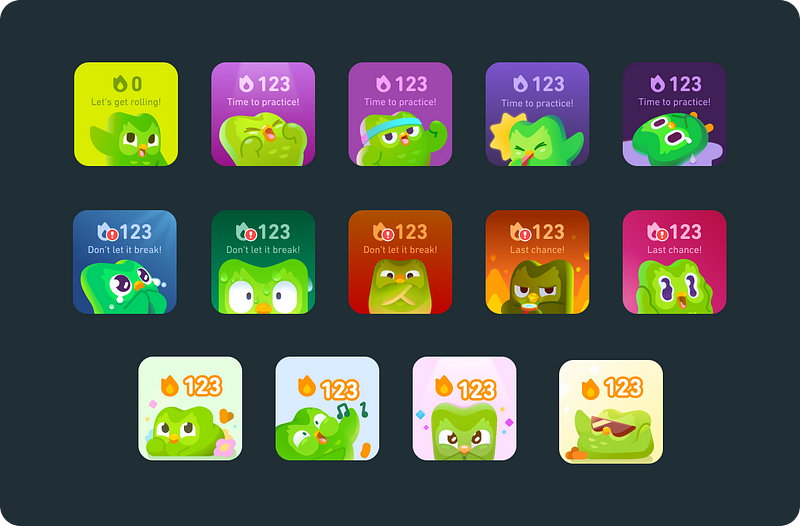
I have recently (and by recently, I mean I’m on a 175-day streak) started learning Spanish on Duolingo again. When I first saw the linear map, I thought this was an interesting change, and I was curious whether it would directly affect my language-learning journey.
In the past, it was easy to break a streak and lose all motivation to restart it, but now, with Duo’s constant reminder on my home screen widget and my long commute, I’ve found myself building up my streak again. All is well.
Until I realised that it was not as simple as it seemed.
I am keeping up my streak, but every day I open the app and drag myself through one single lesson before moving on to other activities in haste. It became a chore, but I did it because I wanted to keep up my streaks in front of my friends. I no longer cared about the global leaderboard, or about progressing on the map.
It became clear soon enough—Duolingo’s new gamification updates weren’t enough.
Removing What Attracts
Any form of learning values one practice — repetition. In language learning, repetition is king. From vocabulary to sentence structure, we see the value in repeating it enough times for it to etch into our long-term memory. And how do we ensure we store it in our long-term memory? We revisit it and repeat it.
One particular feature that existed in the old version, and one that I know was well-received by the public, was the cracked icon. Over time, if you do not revisit or revise old content, the pristine gold icon cracks, and you will need to go back and complete the lesson to restore the icon to its shiny state. It is a perfect motivator for me to go back and relearn what I may have forgotten, it irks my perfectionist tendencies. How could I let my screen be filled with cracked icons?!
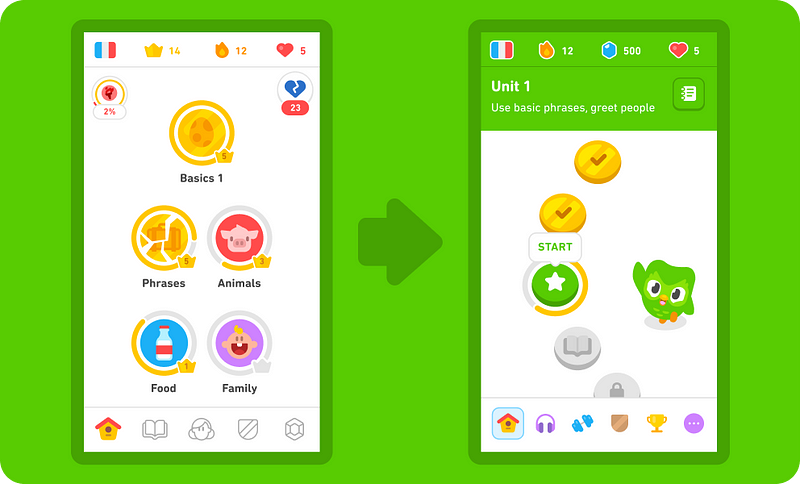
The new design promptly throws the whole idea out the window. While I see past content make its way to my future lessons, it encourages me to simply follow their linear journey, which abandons a major concept in language learning and memory retention.
On top of that, we no longer get the choice to select between two or three topics to switch things up. We must follow their singular, chosen path. The removal of choice in language learning takes away a lot of what makes learning so fun. Sometimes, I don’t need to learn about horseback riding or cycling (I can’t even ride a bicycle), but knowing how to order food pertains more to my journey. I miss having the branching map to customise my own learning path. I miss having agency and taking responsibility for what I learn.
No Mistakes Allowed
Duolingo has always had variations within lessons, but the one I dislike the most is the mix-and-match. Why? Because my hand could slip by forgetting to deselect what I’ve already chosen, and I end up making the wrong match. The moment that happens, I am penalised.
1 out of 5 hearts gone, just like that.
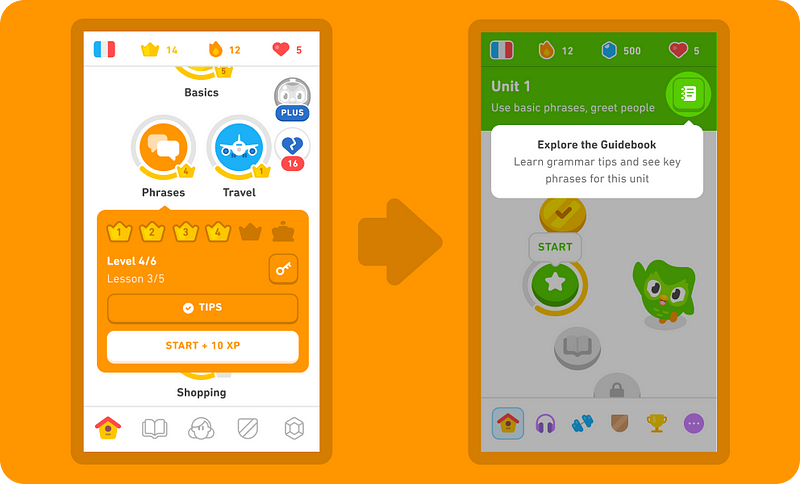
Not only that, but the new update moved tips for individual lessons to the top right corner of the screen, which decreased the chances of me clicking on them before the lesson. I often end up going into the lesson blind (forgetting that I could even consult the guidebook in the first place), and I encounter vocabulary or grammatical structures that I’ve never even seen before.
What ends up happening is that I go through rounds of trial and error, and I end up losing all 5 hearts in the span of a few minutes. It is incredibly discouraging for new learners, and I think it played a major role in my slow progress—I simply couldn’t afford to make that many mistakes, and before I realised, it had been a series of one-lesson days.
Basking in my One Lesson Glory
Another reason for my one-lesson days? The incredibly low standards of Duolingo’s streak system. Yes, it gives me the flexibility to control how many lessons I wish to take per day, but if I can do the minimum to maintain my streak, I will eventually fall into that pattern.
After all, isn’t meeting my streak (on top of boosting my own ego) a way for me to show off to my friends on the notifications page? It hardly became a way for me to get my daily boost of learning anymore, it became my badge of honour, one that says, “Hey, I did my bare minimum of 1 lesson today, aren’t I great?”
It’s All About the Streak, Right?
Of course, I do find myself knowing a lot more Spanish than I did 175 days ago (¿Quieres leer en la biblioteca conmigo? is the first sentence that came to mind, really), but my progress is incredibly slow, and I feel like Duolingo’s new gamification features (albeit, beautiful) did not help me in maintaining a healthy language learning habit.
In the end, it became a need to maintain that stupid number on my home screen and to shut Duo up. Oh, did I mention that Duo is annoying? Because he has me in a death grip, and he won’t let me rest. I am forever his servant.
But before another app performs better than Duolingo, I’m pretty sure I’ll continue going back to Duo’s charming animations and their lessons about “la playa” for the time being. It is not the perfect track, but it’s a track nonetheless. What else can a lazy Spanish amateur complain about?
An article about gamification and language learning! I simply wished to celebrate my 175-day streak with a slightly different article. If it’s your first time reading my article, I usually write about game-related (not just gamification) rants, from reviews to psychology deep dives, so make sure to check my page out!
You can also check me out on my social media here, and don’t forget to tell me about your experience with Duolingo!


