
Why Dora Russell Opposed Marriage
A feminist argument against state-backed marriage
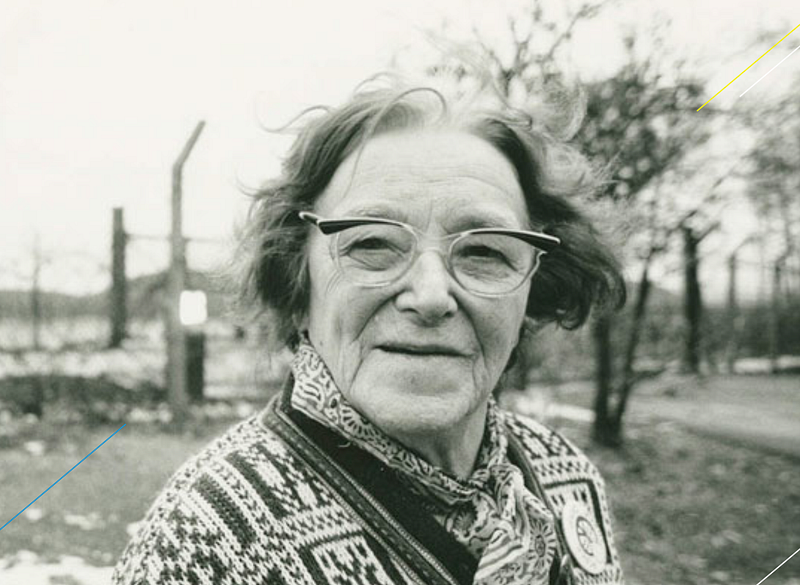
In 1929, a famous philosopher named Bertrand Russell wrote a famous book called Marriage and Morals, in which he argued against the institution of marriage. However, Bertrand Russell’s story is not the one I want to tell here. I am interested in the story of his wife, Dora Russell (1894–1986).
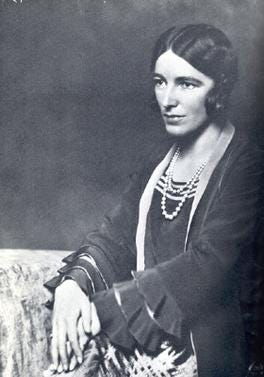

Dora Russell was also a writer. She shared her husband’s convictions about marriage. Yet she could not philosophize as freely as her husband could. She was seven months pregnant with her first son when she got married, in 1921 at the age of twenty-seven. Given the expectations of the time, matrimony was the only option for her if she wanted a good life for her child.
So she married the very man who would author one of the most significant critiques of marriage in the English language. Dora struggled to manage a household and raise two children, but eventually she also became a prolific writer, if not quite as prolific as her husband.
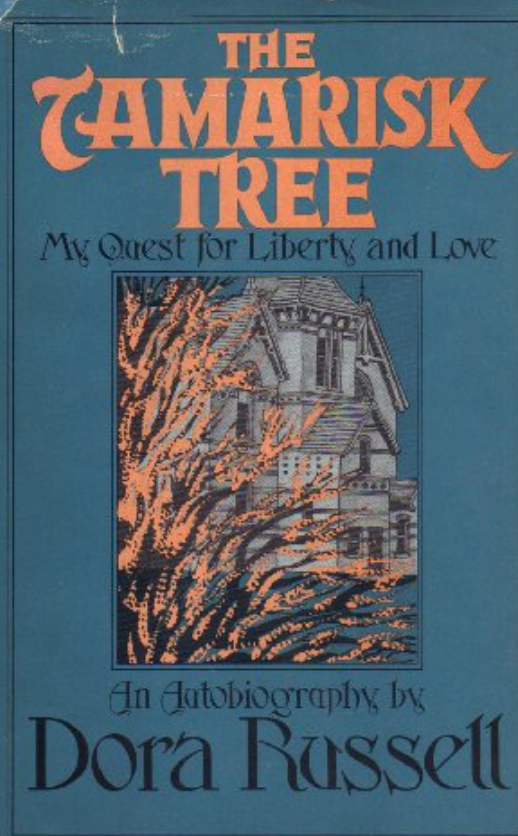
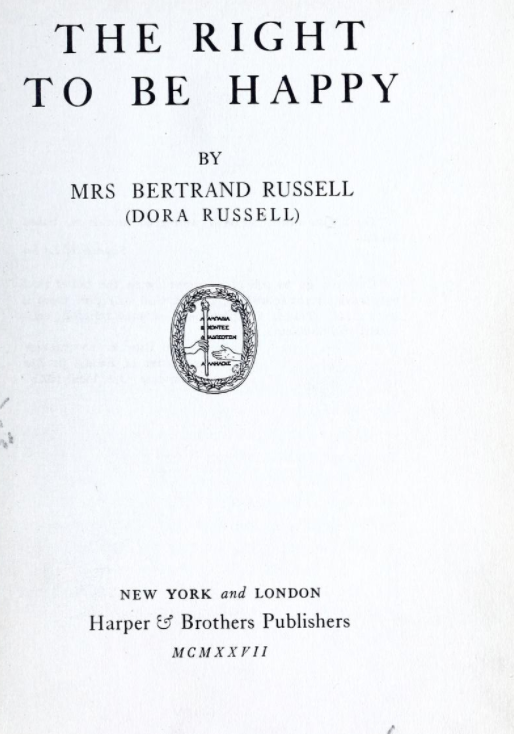
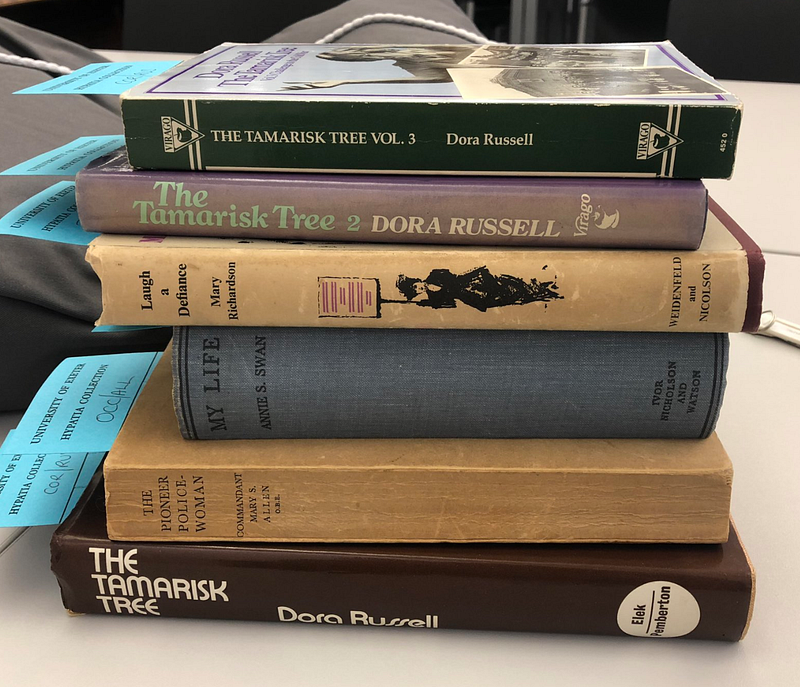
Her first book was Hypatia, or Women and Knowledge (1925), a feminist argument for women’s sexual freedom and a polemic against marriage. Later books include a treatise about happiness called The Right to be Happy (1927), her multivolume autobiography The Tamarisk Tree (1975), and several novels.
As one of the boldest and most dispassionate explorations of marriage in early twentieth-century Europe, Marriage and Morals is a founding text in the critique of modern monogamy. I do not wish to detract from the significance of Russell’s book, which is undervalued and controversial to this day. And yet, like any great book, Russell’s argument is open to many avenues of critique.
Particularly when his arguments are viewed alongside the life he lived, and the people he loved, cracks begin to appear in the seamless surface of Russell’s lucid arguments. Particularly relevant here is the text of a lecture that Russell’s daughter Katherine Tait — his second child, known to the family as Kate — delivered to the Russell society in 1978, seven years after her father’s death, on the subject of his relationship to feminism.
Tait was born in 1923, two years before Dora Russell published Hypatia and six years before Bertrand Russell published Marriage and Morals. One can’t help but wonder how the task of raising Kate shaped her parents’ reflections on the future of the family. In 1978, Tait was given the chance to speak back to her father, beyond the grave. It is unfortunate that he was already dead at that time. We can only imagine how he might have responded.
Tait’s account of Russell’s feminism reads like a fraught dialogue between father and daughter. She dwells on the gap between Russell’s high-minded ideals of gender equality, and how he treated the women in his life, particularly her mother and herself. Tait says point-blank:
he treated women terribly. He was a theoretical feminist, but in practice he was one of your larger-sized male chauvinists.
Tait emphasizes how her mother’s marriage to Bertrand in 1921 was a travesty from the point of view of her ambitions to become a writer. Dora initially rejected Bertrand’s offer, and only agreed in the end because she was already seven months pregnant with their first child, John. Ironically for a man who wrote one of the most significant polemics against marriage in the modern sense, Russell pressured Dora into marrying him for the sake of their future children.
Like many young women of her generation — which participated in the radical and sometimes militant suffragette movement — Dora believed that the institution of marriage contributed to women’s subjugation. Ideologically if not biologically, she was in full concord with her husband. Yet their harmony of views did not result in domestic bliss. As Tait recounts, after their marriage, Dora
was the one who yielded. She gave up her career. She gave up her objections to marriage and she became just his wife and the mother of his children. For her it was a real sacrifice.
Although Dora was beginning to establish herself as a writer at the time of her marriage, she had to give up her dream of writing in order to raise a family.
Meanwhile, Bertrand persisted with his writing career. He polemicized against marriage and monogamy in Marriage and Morals, and wrote extensively about gender equality. He became a famous advocate of feminist values, while relying on his wife to manage their household and raise their children.
Inadvertently or not, Russell’s approach to marriage crushed his wife’s soul, and their love ended in an acrimonious divorce. Tait quotes Dora Russell’s reflections on marriage in her feminist utopia Hypatia, a work that she dedicated to her daughter:
remember the horror of the approach to marriage…. As a Labour Minister is corrupted by court dress, so is a free woman by the marriage-contract. Nothing but our desire for children would make us endure it.
Tait adds that her father “never…had any idea what an agony my mother went through in choosing whether to marry him or not.”
Should ideas be judged by the lives of those who defended them? Even if the answer is no, what do we make of the fact that Dora Russell’s opposition to marriage coincided with that of her husband?
Some might say that Tait went too far in dismissing her father’s arguments on the basis of the life he led. None of us live up to our ideals, after all, and our personal failings do not make these ideals illegitimate.
And yet, the contradictions Tait unearths speak to why we must work towards a future where the Dora Russells of the world will not have to play second fiddle to their husbands or renounce their careers in order to bear children. Women should be able to live according to their ideals, just as their husbands have done for centuries.
Such a world would be more just, not just for women, but also for children whose lives and circumstances do not match the idealized nuclear family structure. It would also be a more just world for sexual minorities of all background, whose lives and potential are held back by the heterosexual foundations of state-backed marriage regimes.
Further Reading
Bertrand Russell, Marriage and Morals (London, 1929).
Dora Russell, Hypatia, or Women and Knowledge (London: Kegan Paul, 1925).
Katharine Tait, “Russell and Feminism,” Russell: The Journal of Bertrand Russell Studies (1978): 12–31.
Thanks for reading! These reflections are taken from my book-in-progress, called Sex and the State: Beyond Marriage and Monogamy. You can find out more about my writing and projects at the link below.