
Why Don’t We Talk Much About this Physics Prodigy
10 facts about theoretical physicist and Nobel laureate, Julian Schwinger
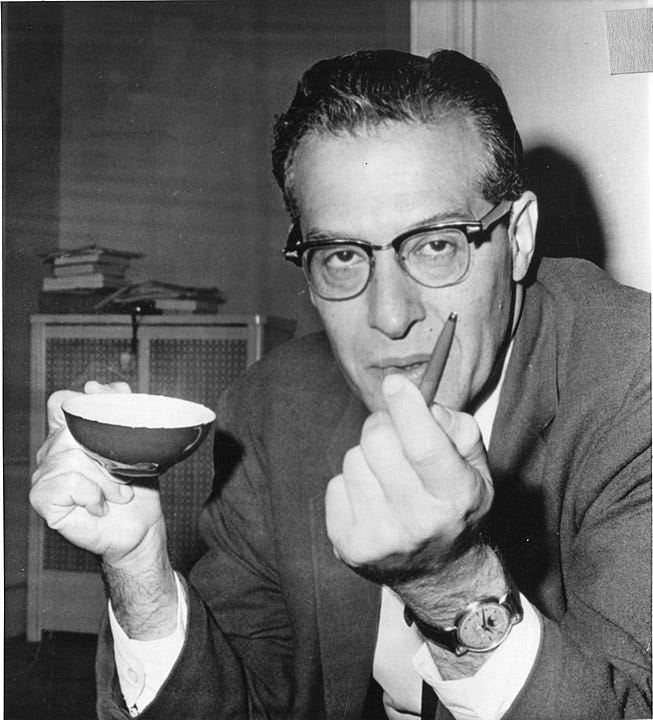
1. He was a Physics enthusiast from a very young age
He had a clear direction for the career he was to pursue from a very young age. He had a great interest and awareness in physics; thus, learning about the world of physics was all he had done since his early childhood. He showed his excellence in public schools and later through some generous help from I.I. Rabi he was admitted to Columbia University. He had already written his thesis around three years prior but he received his Ph.D. degree in 1939, at the tender age of just 21.
2. He was comfortable with being a solitary worker
During the war, most of the work had to be done at the Massachusetts Institute of Technology in Cambridge. He was working in the Radiation laboratory there. He was comfortable in his skin. He mostly liked to work alone and felt relief when he was on his own. Also being the night owl that he was, he chose to become a part of the night research staff. Here, he was able to give significant contributions to the field of Quantum electrodynamics.
3. He had to struggle to get his Ph.D
His thesis for his Ph.D. was on the Magnetic Scattering of Neutrons. However he had not written this thesis in 1939, but two or three years before. Thus he had to struggle to get his Ph.D. because it was a compulsion to attend the lectures of Mathematicians to get enough credits, but he didn’t do so.
4. He was an assistant to J. Robert Oppenheimer
Schwinger worked at the University of California after receiving his doctorate. When he was there, he became a fellow at National Research Council. Later, he became an assistant to J. Robert Oppenheimer. However, he had strong disagreements with the workings of the Atomic Bomb when he was asked to participate. So he went to Boston and started working in the field of Radar instead.
5. His friends held him in high regard
When working in Radiation Laboratory, he had the utmost praise and respect of his colleagues because of his genius and work ethic. Uhlenbeck, one of his colleagues working at the lab once said,
“And that he liked; he was in my group and he did all these mathematical problems on wave guides which were very good, of course. … He was a real computer, really remarkable. He was mathematically and technically really remarkably good.”
6. He worked in several fields of physics
His works in several fields preceded his reputation though later they all converged toward the general theoretical questions he had been working on. Speculation and hypothesis have their danger in the field of experimental physics, but once proven, they bear the greatest reward there is. In 1957, he speculated that there are two neutrinos, associated with electrons and muon, which was later proved experimentally in recent years.
7. His awards and honors speak for his excellence in physics
He had had tremendous contributions to the field of Physics and the appreciation he received in the form of awards and honors speaks for itself.
Einstein Prize (1951)
Honorary D.Sc. degree from Harvard University (1962)
Honorary D.Sc. degree from Purdue University (1961)
The U.S. National Medal of Science (1964)
Nature of Light Award of the U.S. National Academy of Sciences (1949)
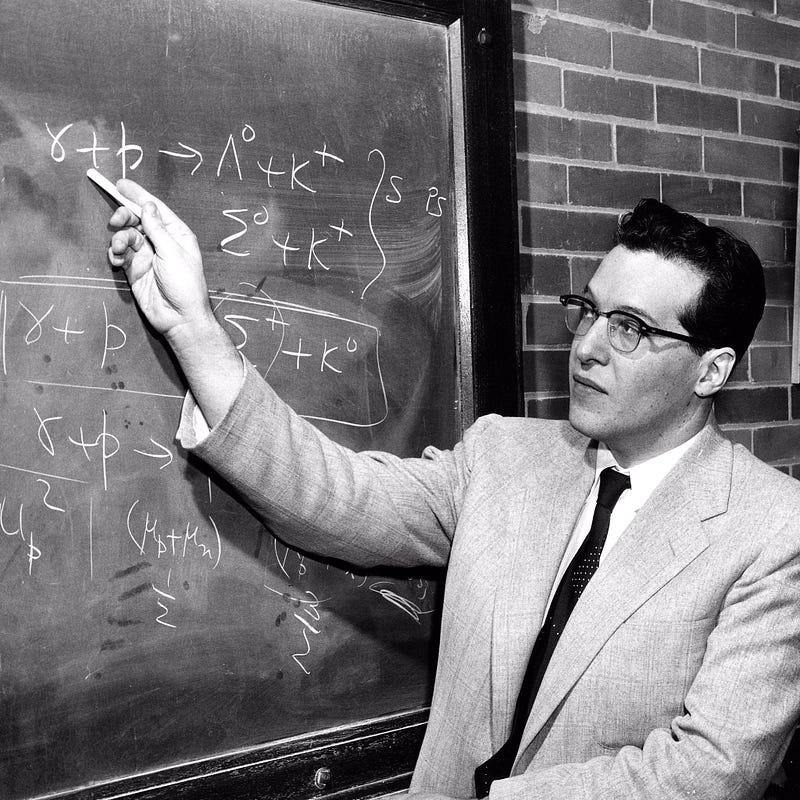
8. Some of his proposals are yet to be proven
Schwinger is considered one of the initiators of the Theory of renormalization. This theory proposes the concept of looking at the virtual particles from a distant viewpoint considering the influence of surrounding rather than observing them individually. In 1951, he proposed what we know as the Schwinger effect in quantum electrodynamics, where electron-positron pairs are sucked out of the vacuum by the electric field hasn’t been to this day confirmed experimentally.
9. He never stopped working in his later years, Although introvertedly
During his later years, he felt more and more comfortable being on his own, procrastinating alone. So there might not be many counts of his contribution to the field of physics, but that doesn’t mean he didn’t have any. He worked on the practical importance of a phenomenological theory of particles. He also developed the source theory that deals with strong interactive particles like photons and gravitons.
10. He received the Nobel Prize in Physics in 1965
He was jointly awarded the Nobel prize in physics in 1965 for his work on Quantum electrodynamics along with Richard Feynman and Shin’ichirō Tomonaga. While Feynman’s contributions to the development of quantum electrodynamics were majorly due to his diagrammatic representation of particle interactions (also known as the Feynman diagrams) along with the mathematical works, Schwinger’s works were purely mathematical that involved severely complicated mathematical equations.
Contributed by Rishab Karki and curated by the author.
Thank you so much for reading. If you liked this story don’t forget to press that clap icon. If you like my works and want to support me then you can become a medium member by using this link or buy me a coffee ☕️. Keep following for more such stories.