
“Why don’t they just put their hands on the dashboard and follow instructions?”
I didn’t know I was going to a party in which wealthy white women discuss “The Blacks” because I didn’t think that was real.
In the wake of the George Floyd murder, I found myself invited to a lovely afternoon engagement, on the porch of a beautiful home, in McLean VA.
McLean is the twenty-fifth wealthiest town in the U.S. My company for afternoon wine included: the gorgeous former wife of a hot shot record executive; a very savvy State Department bigwig; and a petite, blonde, blue-eyed, perfect, model-type, who lived with an unknown but well-paid fellow in the NBA. (I do not know his race.)
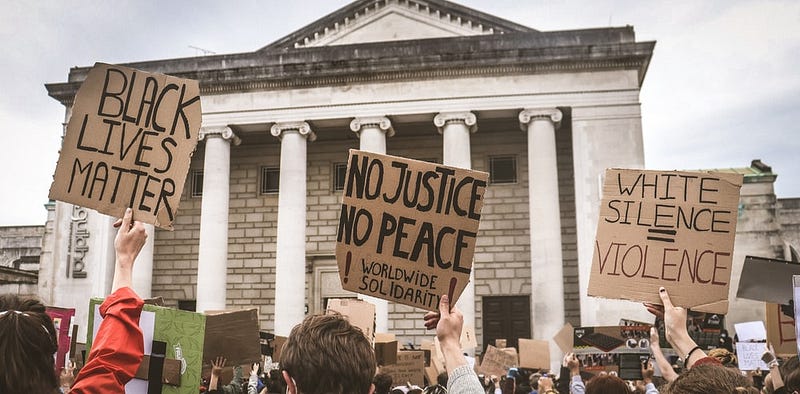
McLean had been looted during the BLM protests in the summer of 2020, maybe a week earlier. Storefronts in Georgetown were boarded shut.
On one level, I was white, in white company. On another level, I was the interesting visitor from another social class — the one that has to work, but gets a salary and privileges. An oddity because of my educational level, I was at once an expert to be respected, and also someone who didn’t exist on their socioeconomic perch. I was the only socialist present.
We couldn’t not talk about it. We had to talk about it. That meant I was going to be the one who they might accuse of being pro-looting.

We opened with light chat.
“If I say ‘All lives matter’ that includes ‘Black lives’ so I don’t see what the problem is. Of course they matter. We all matter. Are they saying we don’t matter?”
Another chimed “That one guy grabbed the officer’s taser. Of course he got shot.”
“There has been an even playing field since 1967. The Blacks are not handling their responsibilities and freedoms well.”
“Why don’t they just put their hands on the dashboard and follow instructions?” said Barbie.
{deep breath}
How do I answer this question well? What do I say, to someone who asks that question, such that it will create understanding in that person?
God, they all know each other, and I’m new to the group.
Don’t take too long in thinking about this or it will become awkward.
“Why are they protesting? What do they want?” the conversation continued.
I managed “You could go to the BLM website. They want to answer your questions.” But I was stalling.
OH GOD. How can I explain the liberal/left wing/democratic understanding of race and police violence? What might work? I had to choose. I couldn’t just tell them they were a bunch of racists. (I mean, I could, but that wouldn’t help anyone.) I didn’t go for years of slavery and oppression; I didn’t go for repeated run-ins with the same racist officer(s). I went for “haven’t you ever just been frazzled?” because once upon a time I got pulled over and it was embarrassing. (I know, I didn’t defend by calling up systemic racism and murderous fuckers. I didn’t burst into a verse of Strange Fruit. I didn’t whip out The Case for Reparations. Gang, I fail all the time. I’m NOT socially or intellectually quick. But also, more direct approaches might have produced very hot conflict not appropriate to the situation. I didn’t want to be exiled because then I wouldn’t have another chance to persuade. I chose a soft path.)
I started. “Ladies, hasn’t there ever been a day when you were a little off? When you were tired, or rushed? I remember one time when I got pulled over. It was so stupid. I was having a bad day. . .
{this is maybe not the direction I want to go in but it’s too late now . . .}
“I was pissed off about my haircut. I didn’t like it, and now, well, it just had to grow. I was having people for dinner, and I’d gotten out of my last meeting late because someone had wanted something and wouldn’t it be better if we just print it right now? After rushed shopping, I had thrown my wallet into a grocery bag, and the groceries were in the back. I don’t know why. It was raining. My wallet was ridiculously full and it didn’t fit in my pants and I was frustrated and in a hurry. And suddenly there I was telling the officer that I had gotten out of the car because my wallet was in with the groceries. (Great use of my MENSA card, surely.). And this was me. Affluent. Childless. Professor.
“Ladies, instead of behaving with perfect respect for the law, I got out of my car to get my driver’s license out of the back. Because I was thinking Oh he needs my license. I was not thinking Don’t get out of the car. That’s going to freak out the officer. Sit tight and explain to him that you threw your wallet in the grocery bag. Or you’ll get shot. . .
. . .If I’d been black, I’d be dead.”

{I know, people, there are a million things wrong with my words. I know that because I can think of several wrong things all by myself. I know it sounds like I was saying that Black victims of police violence are just frazzled, and that is so, so, so far from what I think about our fundamentally unjust society. I screwed that up. But I’m kind of glad that my response went the way it did, because I learned a lot about social class. Read on!}
I took another deep breath. I was pretty sure I’d made a case that was relatable and non-threatening to present company.
But no. Apparently, no one else at the table had ever acted like that.
Instead, I had revealed exactly why I was not wealthy like them. There it was. My character flaw that relegated me to the middle class; a for-hire university docent for children of the wealthy.
They collectively gazed back at me with a stare that said:
Why would anyone ever be in that position? Don’t you plan?
Their affluence meant that they didn’t have a lot of frazzled moments. They couldn’t relate.
I think my audience had followed me through the first few points. Everyone has had a disappointing haircut; everyone has had people for dinner. Everyone had gotten out of work late, or knew someone who had.
But, why on Earth hadn’t I just made a call and had those groceries delivered? Why was my wallet so full? Don’t I regularly organize and straighten it? Why didn’t it fit in my pants pocket? Why didn’t I just get better pants? Why didn’t I carry a handbag for my wallet? Why didn’t I just put my wallet in the passenger seat?
And therein was the vision. At a certain level of affluence, one always has the time to re-think and re-group. To pull old cards and receipts out of one’s wallet. To think about the wallet-pants relationship and make clothing purchases accordingly. Stressors don’t pile up because, well, why would anyone let them?
Everyone there had encountered stress.
They just knew how to handle it.
I mean, if you have a few bad nights, nip it in the bud! Call your doctor and have him prescribe some Ambien so you get a good night’s sleep. If you forgot to buy sparkling water, have it delivered! Why would anyone ever let themselves get to the point at which they would be so tired and frazzled as to get out of the car after being stopped by police?
It seems so reasonable from a very velvet-covered viewpoint.
No one there had encountered the compound effects of chronic stress that develop from several busy, difficult weeks/years in a row. (Or was willing to admit it.)Because that kind of fatigue isn’t part of their experience, they overturn causality. They think my frazzled disorganization is a native feature of mine that then caused my social class. They don’t think that being placed in a position of too few resources could actually cause someone to become disorganized and frazzled. Clearly, people who are that disorganized don’t save their resources carefully so that they can get ahead.
Sitting in their gaze, I could see that I’m a troubling human example, a disruptor of their beliefs in just desserts and an even playing field in the land of opportunity. I’m clearly smart enough to take steps against becoming frazzled, but I didn’t. I’m educated. I’m productive. But, not wealthy. I must have a character flaw. A character flaw that they don’t have, because they plan. Even without my education, they know to plan. I. Mean. Duh.
They plan and their plans work out because they encounter few obstacles, and fewer that money can’t overcome. So, they don’t get stressed. Or, not that stressed, anyway.
Like the stress of having someone you know killed because he jaywalked, or having one of your friends killed because he went running, or the stress of knowing that you may be killed in your own home for no reason. In addition to being informed on an almost daily basis that racism doesn’t exist and your failure to capture generational wealth is because you and your parents and grandparents are lazy or stupid or both. In addition to fearing for your life because you have a mask on (or just because), in addition to making 87 cents for every dollar a white person makes, in addition to getting pulled over for DWB. Driving While Black.
Because, that kind of thing could get to you after a while.
If the white professor doesn’t have it together enough to keep her wallet out of the grocery bag, how could anyone ever expect anyone to overcome a childhood in Cabrini Green? (Or a parent who lived Tuskegee? Or The Tulsa Race Massacre) My wealthy white ladies are confronted with a choice.
If we allow real stress from real life situations to be a legitimate reason for failing to act in perfect respect for the law, then their disdain is unfair. It’s time to say “Black Lives Matter” and get that we are not talking about all lives because not all lives are equally in danger of being snuffed for no reason. (By cops. Or ‘respected’ institutions. Etc.)
Or, it could just be a character flaw. She has all the advantages, but she can’t keep it together. Like the folks who just don’t put their hands on the dashboard when asked. There must be something intrinsically wrong with them. Maybe genetically. Genetically. Whew. That was close!
The reality lived by the McLean ladies makes sense to them. They behave well and are good (as measured by their world), and they have been rewarded. They think that their choices and behaviors are an ingredient that is significant to these experiences. They think: If I’m nice and the officer is nice in return, then, if anyone is nice, the officer will be nice. Their world is nice and fair and just and affluent because they are smart and rational and good and follow the clear rules society dictates. They think you too can learn to follow these rules and live in a world in which hard work pays off and everyone is judged by the content of their character.
They don’t see color, so certainly police professionals don’t either. Surely everyone is treated equally under the law. (Because it’s The Law. Right?)
In a way, they aren’t racist at all. Not if you take into consideration the poverty of factual information they have. (They are not looking for information. But they also don’t know they are lacking in that department.)
They see that the rules work for them. But they don’t see that the rules were made to work for them and to work against others. Surely their lives are good because they are good people, not because of bias or injustice.
So, they believe the world IS just, and that if you experience injustice, it’s because you don’t behave correctly.
And then they ask YOU to take the risk, because they just can’t imagine that there is a risk. There shouldn’t be one.
Just put your hands on the dashboard, and you’ll see. The world is a fair, just, safe and wonderful place.

Mmmmmmm-hmmmmmmm.