Why Does Unsplash Promote Rigid Gender Expectations?
A queer Medium writer’s struggle to illustrate his story
I was drafting a story about an actor friend and a play he did in England in the 1950s. I typed “dressing room” into Unsplash — a photo site associated with Medium. I was hoping to find an image of a man putting on makeup backstage at a theatre…but this is what I got:
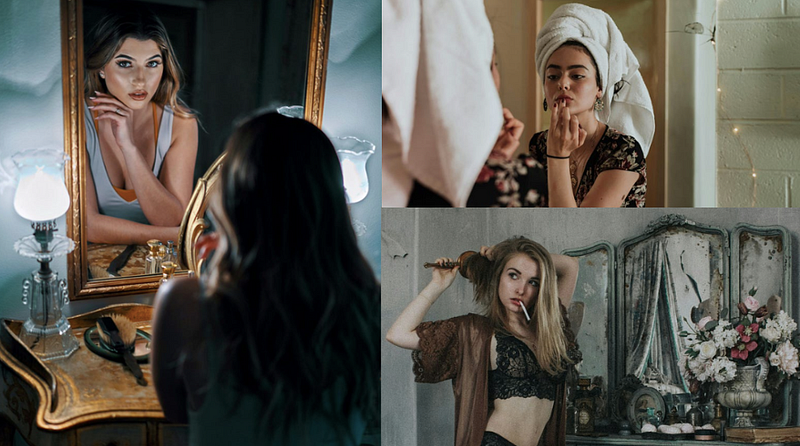
Most of the images were very high-femme. And fair enough. I know there are a lot of industries in the world that promote makeup and fashion as a predominantly “feminine” preoccupation. But when I altered my search to “dressing room man”…I got these at the top of the grid:
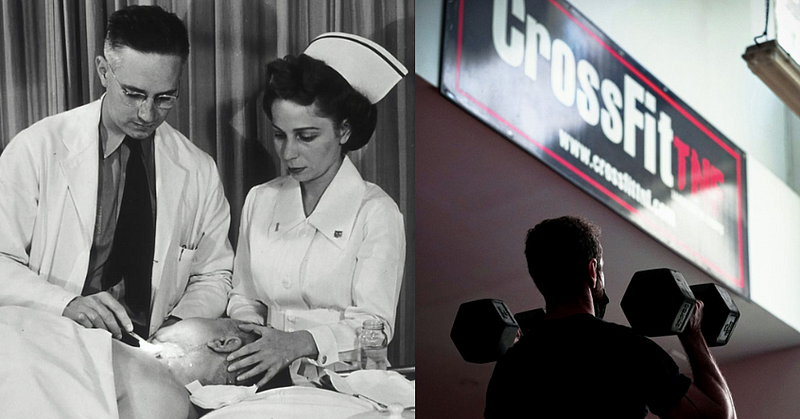
… a photo from the National Cancer Institute, and a CrossFit ad!
Why is the idea of a man in a dressing room so “unusual” that these are the top hits? I clicked next for a while, and eventually I found a few shots of musicians in their dressing rooms or athletes in a locker room, but still — CrossFit was right at the top!
I’ve been noticing this for a while. It’s less worrisome with a search phrase we know is stereotypically (regrettably) gendered to one degree or another. But what really gives me pause is when I see it with emotional words.
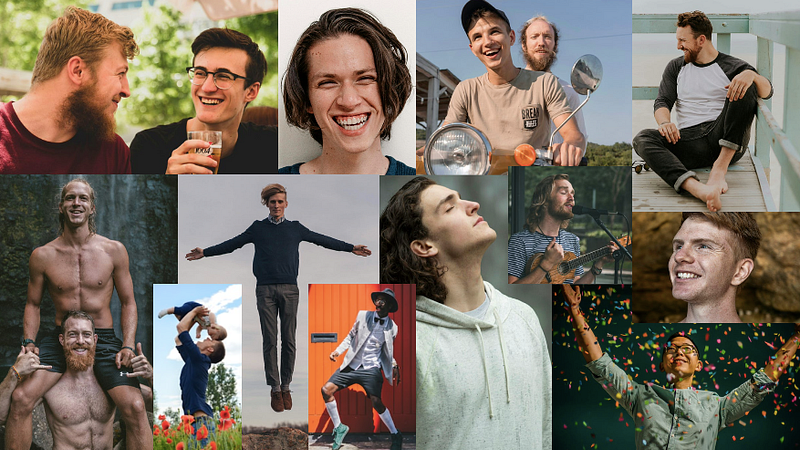
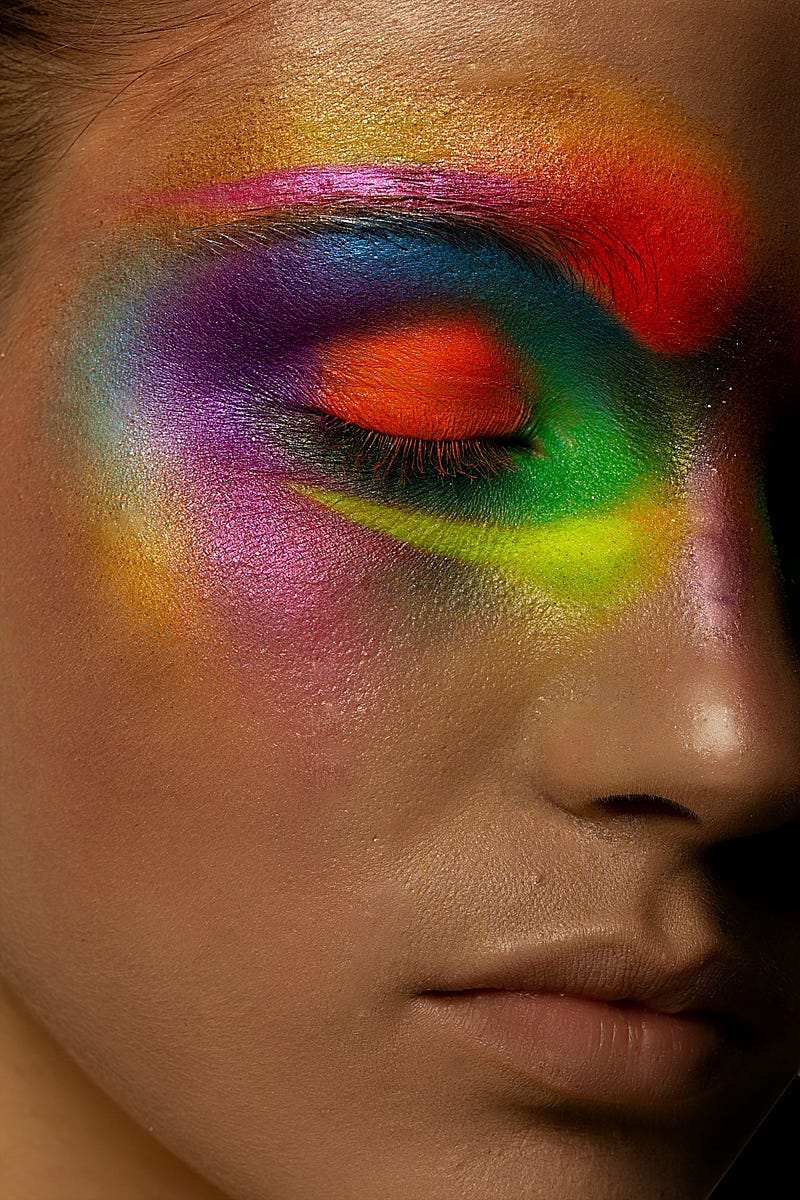
When I type in the word “joy,” I get a lot of beautiful images like these:
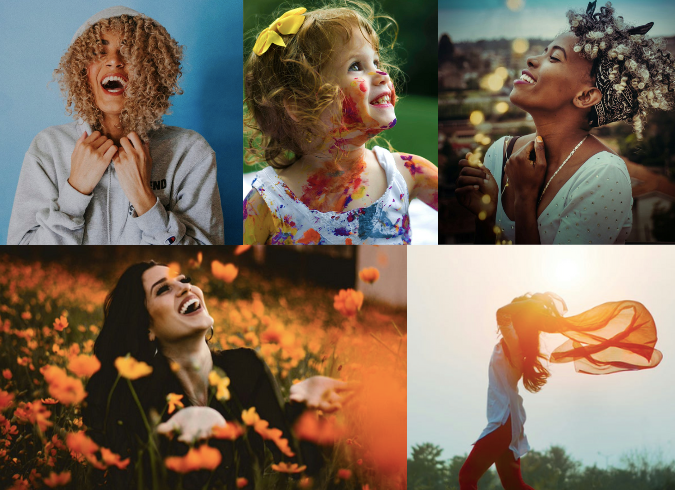
I had to click next five times to find a close-up of a person who appeared to be male-presenting, and many more times before I found one again.
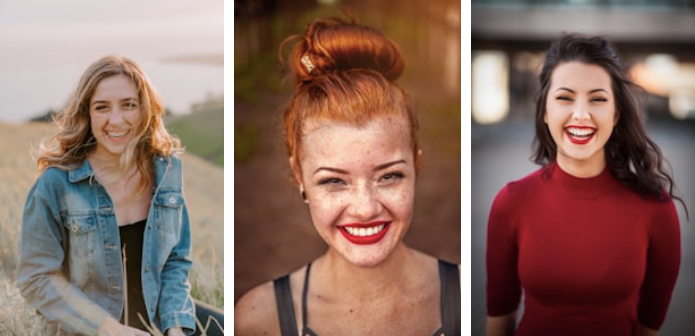
Is there something inherently “unmanly” about being joyful? When I modified the search to “joy man” the top hits were still women:
And while this may sadly come as no surprise, the same discrepancy shows up when looking for images about sensuality and the human body.
I was briefly revising an old essay about straight men and their prostates, and predictably enough, typed in the word “butt”. This is what I got:
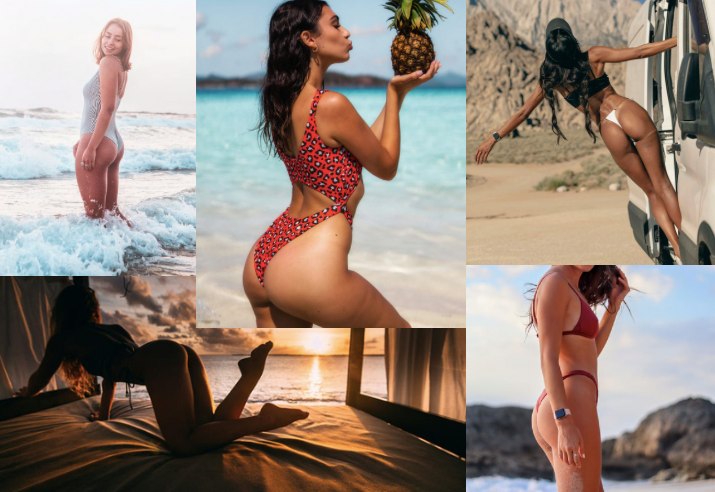
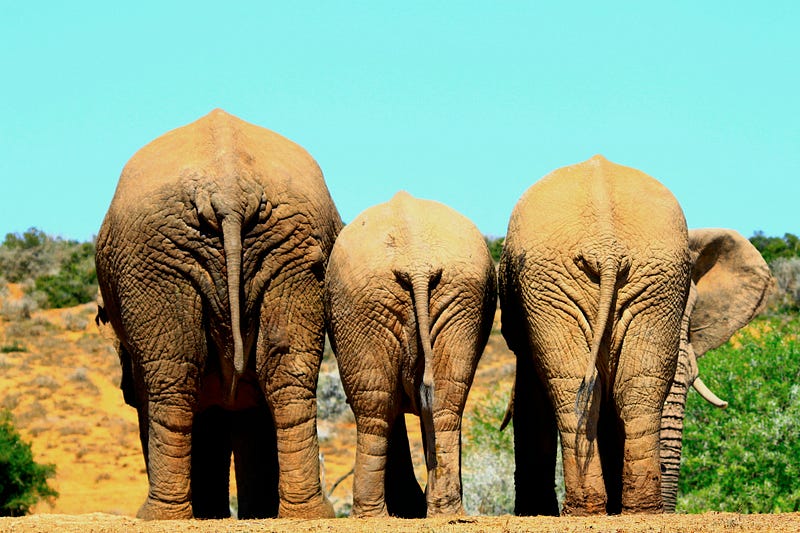
Copious images of femme-presenting models in revealing swimsuits, with their faces mostly obscured…interspersed with occasional cigarettes and peaches. I clicked next at least a dozen times, and never saw a similar butt shot with a male model. I literally got elephant and zebra butts first!
Revising the search to “male butt” or “man butt” got me pictures of dudes smoking cigarettes, and eventually just pictures of dudes…fully clothed, showing the camera their faces…Why do we still have such a stark imbalance in the sexualization of one gender over another?
This is not meant to indict Unsplash — they’re an immeasurably valuable resource for their photographers, and for writers on this platform. But I can’t help wondering why certain thoughts, feelings, and experiences are still so commonly gendered — across a variety of platforms.
Now, is my preoccupation with finding emotional, sensual, artistic images of men inherently bound up in my queerness? I certainly hope not. I’d like to think all men would want to see reflections of their capacity for joy, and a more expansive portrait of who they are and who they could be.
But knowing how thoroughly misogyny and homophobia are intertwined, this pattern of predictably gendered photo-search results makes me recall another occasion when I was looking for distinctly queer imagery.
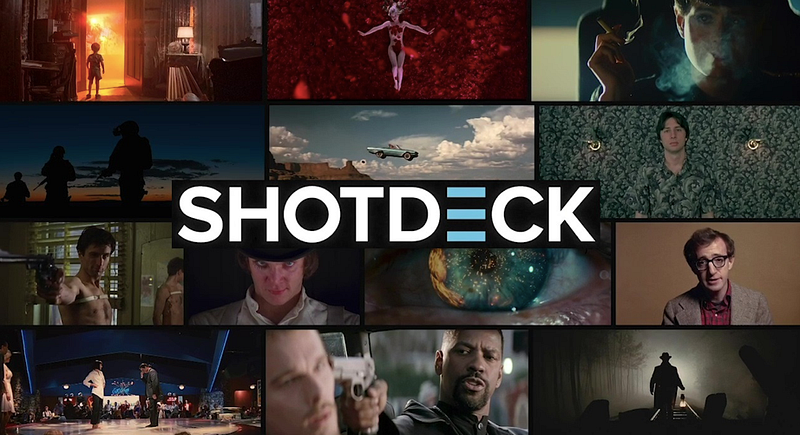
ShotDeck is a remarkable platform full of high-res stills from films and TV shows, to be used in a filmmaker’s lookbook or pitch deck. It’s incredibly detailed, with dozens of filters to help you narrow down your search.
You can specify if you want an interior or exterior, a daytime or nighttime shot, a close-up or a master. You can pick the age of the actor in the shot, the era, literally even the aspect ratio or the kind of camera lens…
But type the word “gay” in the search engine, and almost all the top hits are photos of Linda Blair puking in The Exorcist…because apparently one of the assistant cameramen’s last name was Gay.

This stark lack of queer imagery seems frustratingly pervasive across most photo-search platforms. There are images of Pride parades, protests, artful riffs on a rainbow, etc., but beyond that, I’ve often had to scour the internet for images of LGBTQ+ people simply existing with each other.
Thankfully, that’s not always the case with Unsplash. Just now I typed in the word “kiss” with no additional qualifiers, and one of the first three images that popped up was a lesbian kiss. And I only had to click next twice before I found two gay men…So I guess there’s some hope?
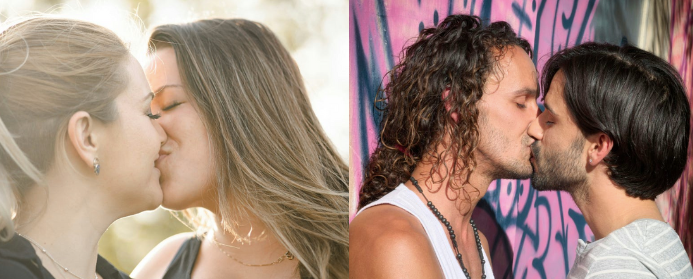
Now, in an article about excessive gendering, I don’t want to inadvertently perpetuate what I’m critiquing. So it’s important to say, I do not presume to know the gender identity of these models. Any one of them could be non-binary or trans, regardless of what they’re wearing or how they present.
As a cis man, I know a lot of people are way more profoundly and routinely affected than I am by our culture’s habitual gendering of products, events, colors, feelings, films, everything! A lot of people have probably thought about this on a much more regular basis than I have.
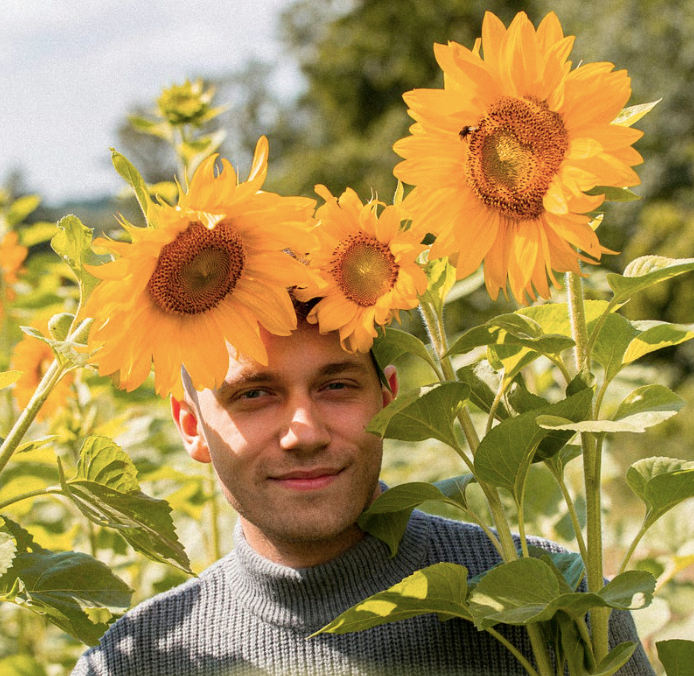
But as a sensitive, artistic, gay man who’s never related to the most hyper-stereotypically “male” things in this world, I still can’t help but be struck by how rarely I see people who look like me (and love like me) in photos that are otherwise related to emotions and environments that define me.
And because I’m blessed to have a lot of sensitive, affectionate straight men in my life, it’s always jarring when I see a man get defensive about anything that’s “too” colorful, “too” expressive, “too” happy-go-lucky…
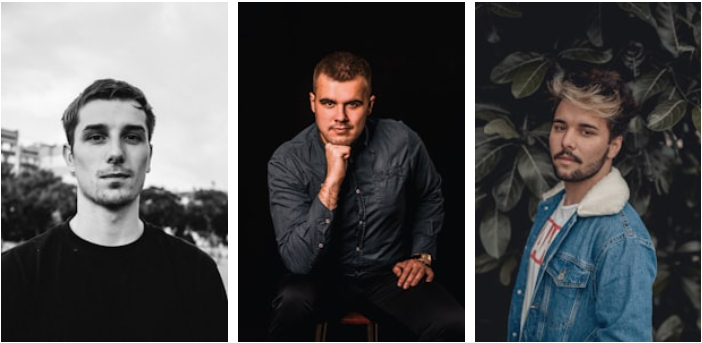
Why did it take me so long to find that sunflower shot above?! Why did the collage of men smiling and singing below require me to scroll through so many shots of men scowling or brooding? Why do the images in our society so routinely reinforce a limited, tribal idea of what it means to be a man?

Granted, a lot of what I’m observing may just be a fallibility in how images are tagged. Searching for an image to represented a stereotypically male aesthetic, I typed in the phrase “super bowl”…and after a few applicable football shots, most of the photos were of lovely colorful bowls of fruit!
Now mind you, there’s obviously nothing wrong with women or non-binary folks loving the Super Bowl…or trucks, or beer, or CrossFit. Let’s shake off our notions of any experience or interest being reserved for one gender.
And in that vein, let’s keep building a world…by taking pictures and telling stories and making films…that affirms the idea that a man — no matter his sexuality — can be loving, vulnerable, artistic, sensitive, and joyful.