
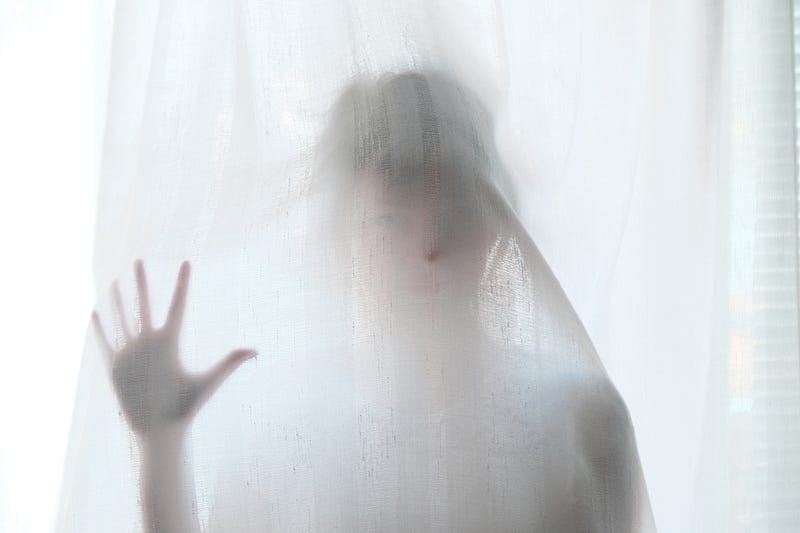
Why Does A Little Old Lady Write About Ghosts and Demons
If you think I should spend my time playing bingo and watching cat videos in my old age, then you don’t know enough little old ladies.
To understand the title of this article, you have to have a clear picture of who I am, at least to the outside world.
I look like the least likely person to write about, well, probably anything. To strangers, it appears I’m lucky if I can cross the street without mishap. I hobble along on my cane and squint to read the name of the bus route on my way to my doctor’s appointment. And those strangers would be right in their narrow assessment of me, at least about my mobility and failing eyesight. And probably memory. If I’m squinting at buses, it means I forgot my glasses again.
Typical little old lady, right? Eighty years old and counting.
Yes, I’m a typical little old lady, but not for the reasons mentioned above. When I get home from my doctor appointments, I write novels about ghosts and demons. Or, I sit at my computer to edit the latest book by a client who specializes in explicit sex scenes describing BDSM, threesomes, and orgies.
My services are in demand. At my age, nothing shocks me, and I’m a damn good editor.
I’ve written in many genres, but two years ago, I was searching for a money-maker, something I could dash off mindlessly and make a quick buck.
Imagine my surprise when I found myself pulled, as if by a supernatural force, to the stories in the occult genre. The characters came to me fully fleshed as if I’d ordered them from Amazon.
The first plot had been percolating in my subconscious for over thirty years. I’d dredged it up from an old notebook from a long disbanded writing group that used to do 15-minute exercises at the beginning of each meeting. I’d always thought this sketch about a haunted house would make a good story, but it sat in the back of my closet. And there it was, calling to me after all this time as the perfect opening to my series.

The book spilled out of my computer during the NaNo thing two years ago, and when I reached the end, I knew I’d found my genre.
Fifty years of writing, and I finally knew what I wanted to do with my life. Write about a family of witches, demon slayers, and ghostbusters, all of which I knew nothing about.
The story of my discovering the supernatural suspense genre has a message for young writers, at least those who struggle with form and confidence. So, maybe that’s all writers. You decide.
I didn’t begin writing until my thirties. I won’t go into that story, except to say that I had no roadmap for finding my path to my real purpose. I had a job and a child, and I crossed my fingers each week I might snag a date on the weekend. Who had time for a purpose?
My early training programmed me for a traditional role as a wife and mother. At the point I’d discovered writing, I’d failed at the first and struggled with the second.
My first writing project came to me as a lark. In hindsight, it opened a door to my true calling. The day I wrote my first sentence, a health cookbook that, to my astonishment, got published, I knew what purpose meant.
Yet, it seemed too lofty a goal for me. I was a secretary who had lucked into a writing contract by way of an interest in cooking. Writers lived up on pedestals in some universe I didn’t inhabit.
Yet, I’d had that aha moment, that revelation when I sat down to compose the opening to the cookbook. Sure, I could write a recipe, but that wasn’t real writing, was it?
Me, a writer? I could barely type the letters and reports I was paid to bang out every day, much less write a book. I spent years afterward listing the reasons why that was the joke of the century. Sound familiar?
While half of me believed those doubts that laughed at this new dream I had for myself, the other half doggedly pursued learning the craft, preparing myself for a career, or possibly an art, that I didn’t believe I was entitled to embrace. And yet I persisted. Elizabeth Warren didn’t invent the phrase she only made it popular.
Fast forward fifty years. I had plowed through all the doubt I had about my right to write. I’d produced a body of work, established myself as a writing teacher, an editor, and had created a life for myself that revolved around books. Writing them, reading them, and editing them.
Of course, I also had a life apart from writing, as we all do. I had family, friends, work, relationships, both satisfying and heartbreaking. I’d lost family and friends, become intimate with grief and loss and made grievous errors in judgment and had made my way through those wastelands.

I had baggage to unpack, travel to undertake, problems to solve, and growing to do, some of which remains undone.
In other words, I wasn’t just a writer as I reached my dotage, I was a human being with the typical experiences you expect of someone my age.
I also had from a very early age a drive to understand myself and the life I came here to live. And to figure out who put me here, and if there wasn’t a who, how did I and everything else get here, and where would I go when this gig was up? That led to a lot of reading, thinking and talking to people, endeavors that enriched my life.
There’s really nothing special about all this. It’s what we all do in one way or another. Fill up our days with activities, thoughts, worries, regrets, trivia, and occasional triumphs.
So why am I telling you this? Because many of you are writers also, or creators in one way or another. Or, struggling to do something with your lives that seems bigger than you are, more than you can manage.
Should you find yourself in that dilemma, perhaps the audacity of a little old lady creating worlds in the cosmos out of whole cloth that might even violate the taboos of certain religions or cultures has a message for you.

By the time I found myself attracted to writing supernatural suspense stories, I’d written cookbooks, children’s fiction, cozy mysteries, historical literary fiction, sexy romances and clean romances. They paid the bills more or less, but I wanted the big payout, and so I ran the numbers. Paranormal seemed to fit the bill. Once again, like writing itself, I chose it as a lark.
But I should have known better. Writing isn’t a lark, though it may be fun at times. At its heart, it is a serious business. It opens doors; it takes us to places we wouldn’t visit if it were not for the words that paint images that draw us in. It helps us recreate emotions and moments that bring understanding, release, and sometimes peace, for both the reader and the writer. It also introduces tumult and confusion when the stories uproot long-held beliefs or stir up old traumas.
As a writer, I sometimes think I have temporary amnesia, at least when I start a new work. I think I know where I’m going, but then a story takes me places that always surprise me or opens up grief or remorse I’d rather leave buried. But I have to follow the lead of my story, so whither thou goest I always say. I trust I’ll come out on the other side of a bang-up tale.
However, I didn’t know this when I first began writing. I thought there were rules about creativity. I believed that if I took enough courses and read the right books, I’d learn the secret to unleashing wonderful stories. I didn’t know that you had to claim ownership of your writing for the magic to happen. You had to declare to yourself, say boldly, I am a writer. And believe it.
That’s when you were free enough to say, yes, this is what I am, what I do. You have freed your imagination to take off or go deep. To surprise you and unlock all your stories and gifts. Perhaps not in one leap, but by acknowledging yourself as a writer, however tentatively, you begin the process.
As I look back on my process of becoming a writer, I see how easy it was. Learning the craft was a bitch, make no bones about it. I’ve put in my 10,000 hours and then some. But for years, I drove myself up the wall, worrying about whether I even had the right to consider writing. You had to be good, smart, talented, entitled, rich, or something other than what I believed I was.
Nobody told me that all it took was to put a pencil in your hand and write some words on a piece of paper. When you’re finished, you could call yourself a writer. I made that simple act the stuff of agonizing hours where I would cry myself to sleep, tearing up pages of stories because I was sure I was doing it all wrong.
And then one day I just decided to call myself a writer. That was it. I just did it. The next time I met someone new, and he or she asked, and what do you do? Instead of saying I’m a temp or a secretary, I said, “I’m a writer.”
The earth didn’t blow up, and I moved forward from there. Most people didn’t care; they were hoping I’d return the favor so they could talk about themselves. But for me, the act helped me do other things, namely write with more abandon. Which is what every writer must do.
As I began to write my supernatural stories, I found coming out of the mouths of my characters, the lessons I’d learned throughout my life. I saw the philosophies and beliefs I’d come to live by coming alive on the page. My characters were speaking truths for me that I’d learned living my life.
And I wrote them with abandon. I didn’t question, as I would have early in my writing career, whether I was allowed to write something about which I had no experience. I didn’t know the occult world; I just made it up as I went along.
I didn’t question it because I was loving it. My characters became real to me, the story flowed, and my readers became engrossed and asked for more. My stories became a vehicle for me to write about what I knew. Not ghosts and witches, which were easy to research, but the lives of the characters. Their conflicts and yearnings, their struggles and frustrations. I was putting into these stories the moments of my own life. Not because these stories are autobiographical. I’ve never seen a ghost in my life.
But Jake struggles with his purpose in life. His mother tries to cope with loss and grief. His brother lives with the frustration of following, as the baby of the family, in the footsteps of his celebrated sibling.
Nothing supernatural there. All lived experience, though. I was presented with the opportunity to write about the occult because it made financial sense at the time. But if westerns or medical romance or police procedural had the numbers I was looking for, I know I would have made those characters come alive. I would have infused them with the same flesh and blood verite because that’s what writers do.
They learn their craft. How to write dialogue that’s tight and dramatic, description that makes scenery come alive on the page without being wordy. They practice narration that infuses wisdom without preaching and tackle structure like an architect. You’ll need to learn to write characters that breathe and bleed on the page, and villains that contain some of all of us, the dark part that keeps the reader turning pages.
That’s the easy part.
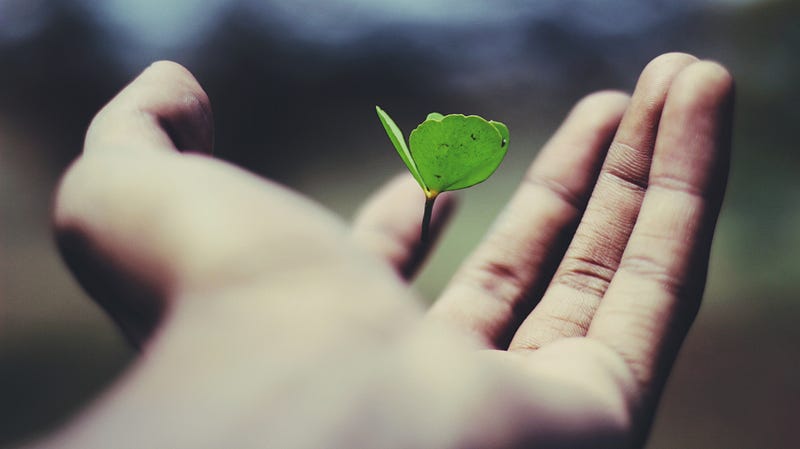
Then you have also to live your life and observe it at the same time, have your relationships that make or break you. Be the parent your kids need. Support those that depend on you and have fun while doing all of this. Because that’s what must go into your stories. Without the heart and soul, the craft means nothing. You’ll have a dry, cold, perfect example of the elements of story but nothing the reader can learn to live by.
When you can do this, and write it all with abandon, you can write anything. Even when you’re 80 years old, and the numbers say supernatural suspense is the key to riches this year. Turns out it wasn’t, but it opened up my heart and soul on the page.
And that’s why this little old lady writes about ghosts and witches.
I’m an editor and writer on Medium with Top Writer status. I’m also an editor for the publication, Rogues Gallery. I’ve published 55 titles on Amazon and edit for private clients. If you’d like to hire me as your editor for fiction, non-fiction, or business writing, please contact me here. If you’d like to read more of my work on Medium, click here to sign up for my newsletter. I’ll make sure you don’t miss a word. Thank you for reading.


