
Why Do You Lie About Having Learned to Read When You Were 3 Years Old?
Over 75% of people claim they read before first grade, but according to teachers, that’s exceedingly rare.
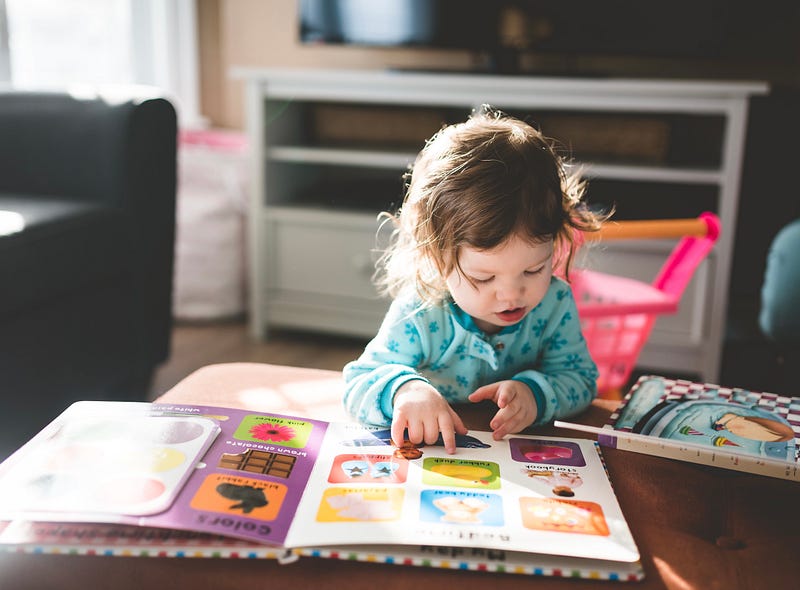
I’ve been a professional babysitter since 2013, and during that time, I’ve looked after at least 500 children between age 2 and 6.
Do you know how many of them could read?
One. And she was 5 when she learned.
I’ve babysat kids primarily in California — especially the San Francisco Bay Area. The parents of the kids I’ve cared for have overwhelmingly been highly educated, well-off, and had access to all available educational resources.
Even so, their kids learn to read when they’re 6 or 7, in first grade.
Yet, I encounter adults claiming they learned to read when they were 3 all the freaking time.
Either they’re lying, or their parents lied to them.
Look, many kids show signs of being extremely bright early on. I’ve seen 16-month-olds almost recite the alphabet. I had a brilliant 3-year-old boy who could rattle off every single line of The Grinch Who Stole Christmas, in order. He had the whole thing down pat (except, as this video exposes, that he strongly believed the book said “keep Christmas from coming” though it’s actually “stop Christmas from coming”).
But he wasn’t reading. He had the book memorized regardless of whether or not he was looking at it. He learned to read when he was 7, in first grade, like most kids do.
And then he read The Hobbit out loud to me before bedtime over the course of many nights. Super bright kid, like I said.
There’s No Shame in It
There’s nothing wrong with learning to read when you’re in first grade. It takes plenty of kids far longer than that.
I learned to read in first grade. I’d been dying to learn and took to it quickly. Then I’ve spent the rest of my life so far buried in books.
Could I have learned younger? Maybe, if my parents had devoted their time to teaching me instead of working, caring for my siblings, and letting me play.
But not when I was 3. Maybe I could have learned flash card sight words at 4. And I would have perhaps been able to learn to sound out moderately complex words like “next” and “further” by myself at 5. I didn’t, but I could have — had it been a priority for the adults in my life.
Age 3, though? I’ve never seen a 3-year-old sounding out words.
Kids these days are far more likely to learn reading skills before first grade than we were. There is a different attitude toward early childhood education in our increasingly dog-eat-dog world.
But it’s not today’s children going around claiming they learned to read at 3. It’s grown-ass adults who feel the need to flex about something they supposedly did when they were 3 years old.
Not Only Do People Lie About This, But the MAJORITY of People Lie About It
To prove my point, I created a poll in a huge Facebook group, asking “How old were you when you learned to read?” I made an option for ages 1 through 10.
I expected it to skew younger, since my whole hypothesis is that people lie about this like crazy, but I was honestly shocked when I saw just how bad it was.
The vast majority of people claimed they did something that’s exceedingly rare, read before first grade. In fact, more people said they read at age 3 than all the 1st grade ages (6, 7, and 8) put together.
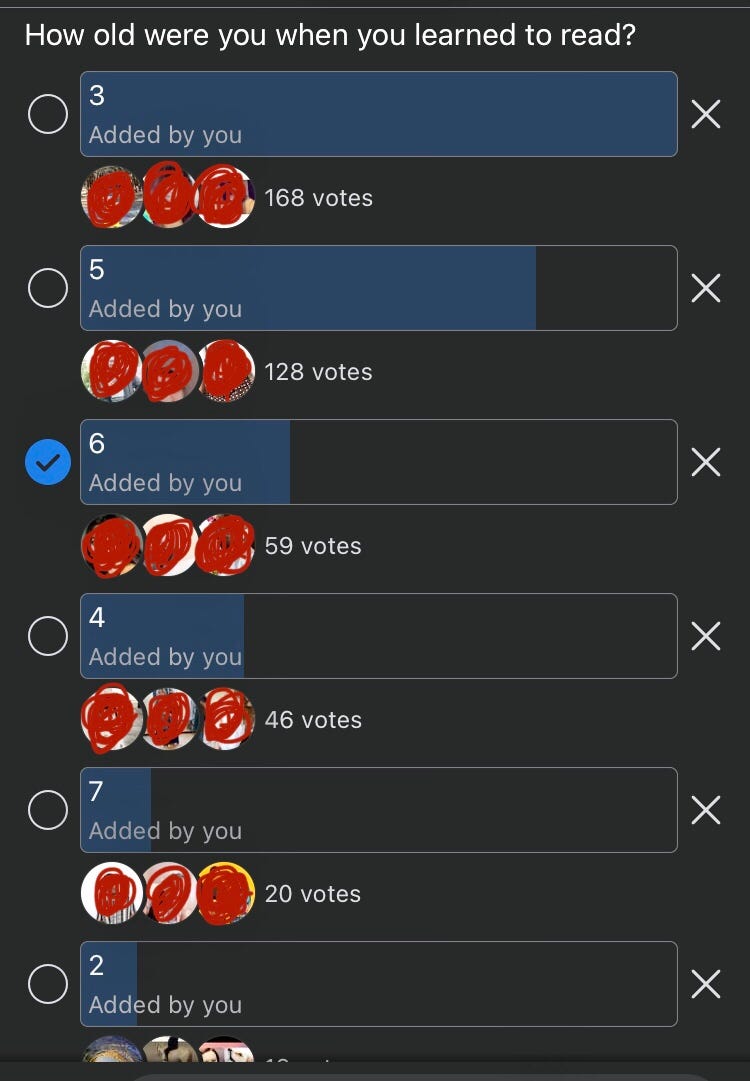
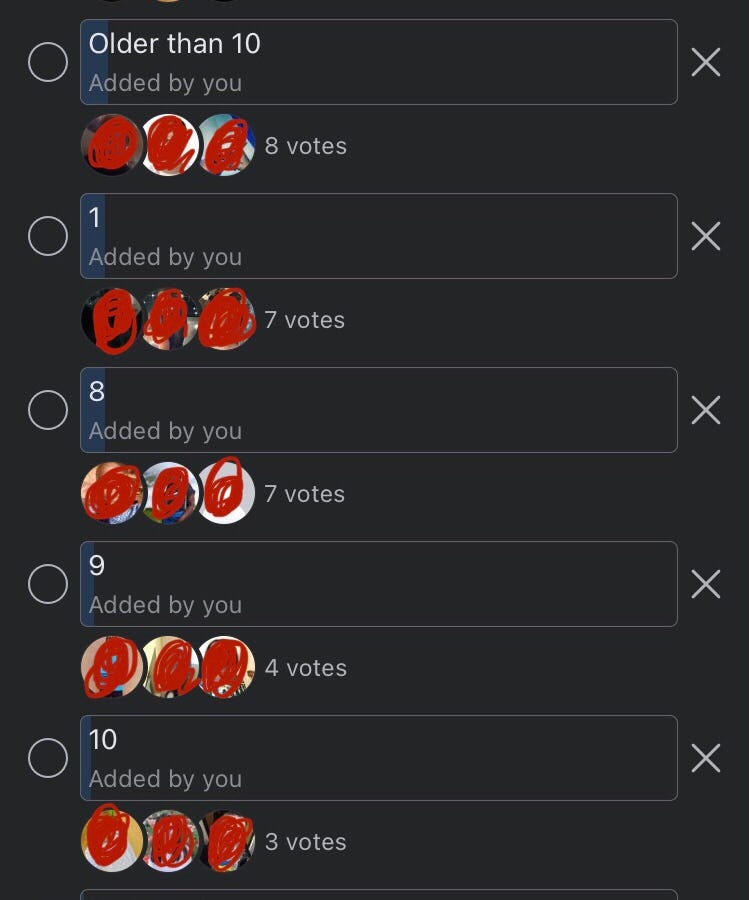
If this was true, it would mean that it’s rare to enter first grade — where they teach you how to read — without already knowing how to read.
There were even 7 people who claimed they learned to read when they were ONE, and 15 who said 2! I really hope that, although they surely know how to read now, they never learned to read carefully, and they thought I’d asked when they learned how to speak.
In any case, 78% of people said they knew how to read before they reached 1st grade age. I’ll give the people who said 6 the benefit of the doubt and assume they, like me, graduated high school when they were 17 and not the usual age of 18 — although that’s doubtful, since 59 people said age 6, whereas only 20 people said 7, which is actually the commonest age to go to first grade.
Then I Started to Think My Question Was Flawed
I really wanted to see if I could get people to be more honest. My original poll question had issues. For instance:
- People might define “reading” differently. They might think that if they could spell their name, they could read, for instance.
- People might not recall that they were 7 when they started first grade.
- People might think I was trying to gauge their intelligence, and therefore pick a younger age. That’s still being dishonest, but if they were encouraged to tell the truth, they might have been less dishonest.
So I reformulated my poll and asked again elsewhere.
This time, my poll question was “How old were you when you first learned how to sound out words on your own (how to read)? There is no shame in any answer and it doesn’t speak to your intelligence, so please be honest.”
And then, in the answer options, I again listed every age 1 through 10, except that this time, after 7, I added in parentheses, “This is the age most kids start first grade in the US, unless they were young or old for their year.”
I had high hopes for increasing people’s honesty, but my hopes were soundly dashed.
The number one answer again? Three years old. Freaking liars.
In the interest of full transparency, this second poll didn’t get nearly as many responses as the first one did. But once again, the people who claimed they learned to read at age 3 outnumbered 6, 7, and 8 combined.
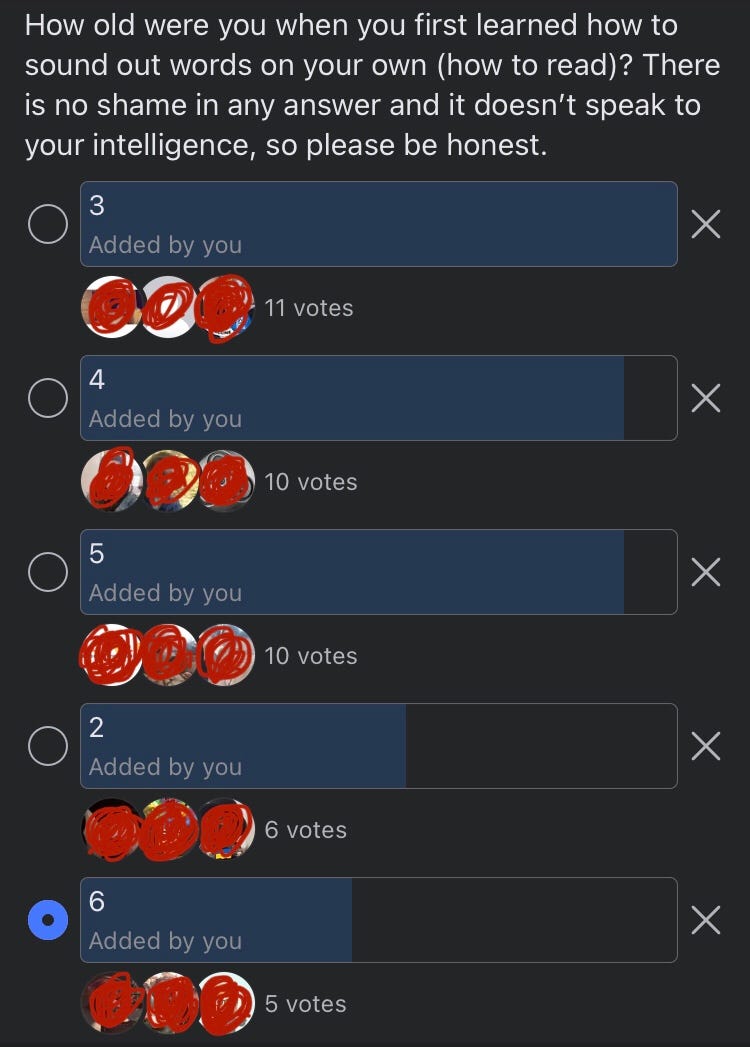
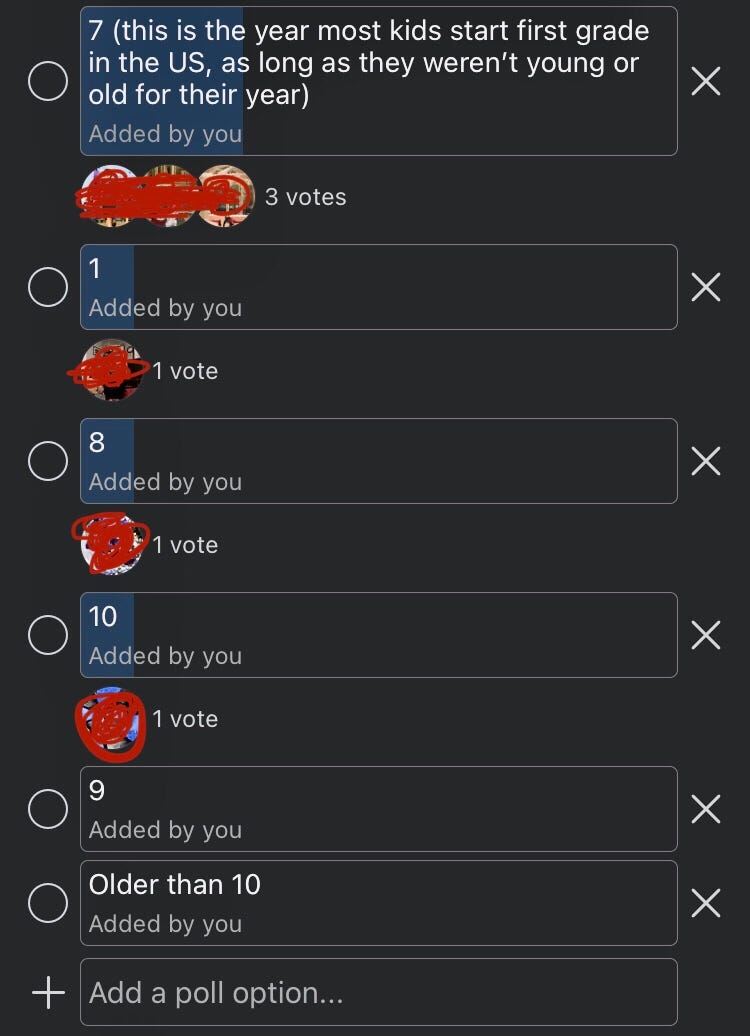
Tied for the #2 position with age 4 was age 5 — which, unlike 3, is at least plausible, but I’m sorry, I still call bullshit. There’s no way that the same number of people learned to read at age 5 as learned at school.
In fact, when I gave everyone the full opportunity to tell the truth, the percent claiming to have read before they went to first grade stayed about the same, at 79%.
I recognize that there are still flaws in this informal poll. In particular, that those who would say they read young are more likely to choose to answer such a poll. But even with self-selection bias, these numbers are out of control, and I’m pretty sure they reflect a real phenomenon.
After all, I first started noticing it when, at a party, I heard someone claim she learned to read when she was 3, and the two people around her both said, “So did I.”
What Do Teachers Say?
I sought out people who teach or have taught first grade and corresponded with 4 of them.
The first only taught first grade for one year, and it was very recently. She estimated that 5 out of her 25 students came to first grade already knowing how to read. That would mean 20%. Hers was the highest estimate and it’s nowhere close to 78%.
The second said she gets one kid every other year who can already sound out complex words and they have been mostly on the autism spectrum with hyperlexia, as well as a sprinkling of “gifted” children whose parents taught them because they were so eager.
Another current, long-time first grade teacher told me she gets maybe one or two kids per year out of 17 already reading, with the definition of “reading” being “able to sound out words without context by themselves.” She explained that this is called “decoding” words, and it is a heavy focus in first grade.
So, between 5.8% to 11.7% of kids come to first grade already reading, according to a current, long-time first grade teacher.
Another teacher with whom I corresponded taught first grade starting 40 years ago until 20 years ago. She was particularly valuable, since that would have been when many of my poll-respondents went to first grade. She had exactly one student that whole time who already knew how to read when she came to school, and she remembered it like it was yesterday, because it had been so remarkable. She remembered the girl’s name and exactly what she’d seen her reading. She seemed to still be marveling over it.
Certainly, these answers vary, but they’re all a far cry from what people claim.
I Don’t Know Why You Do This, But Stop
Since I’ve already established that the majority of people make this claim, chances are that you, dear reader, are among them.
It’s time to stop. You don’t sound smart. You sound like a liar.
I know, I know, your parents told you that you were reading at 3 and you believed them. A couple things about that:
- Your parents are also among the majority of people who lie about this.
- They were exaggerating to make you and themselves feel good.
- There’s a part of you that always knew you didn’t actually learn to read until you were in first grade.
My parents told ME that I learned to read when I was 3. But… I knew I didn’t. I was just reciting books. I desperately wanted to know how to read, but you actually don’t learn this skill by osmosis. It requires being taught. I knew that I really learned to sound out words on my own in first grade.
I tested into a “gifted” first grade, but not even one of my “gifted” classmates started first grade already reading. In fact, I was the best reader in the class by far (but I had a terrible time learning to tell time, so I’m not claiming to actually be “gifted,” whatever the hell that absurd distinction means).
At some point, you too knew that you learned to read in first grade — and you chose to pretend otherwise. Maybe it eventually replaced the truth in your mind and you forgot.
Now you know — there’s pretty much no way you learned to read when you were 3. Maybe 5, if someone went out of their way to teach you.
Spend time around kids and you’ll see. Brains don’t actually develop like that. A 3-year-old mostly wants to play, not study. I babysat a 6-year-old last night who is super smart and in kindergarten. She’s rightfully very proud of starting to figure out how to decipher consonant-vowel-consonant words.
“So you know how to read?” I asked her.
“Not really,” she said. “I’m still learning.”
What a great kid. So help me God, I better not hear her claiming she learned to read when she was 3 in another 20 years.
You can find all my work organized by topic here:


