
Why Do White People Hate Black People So Much?
‘White People Have a Very, Very Serious Problem’
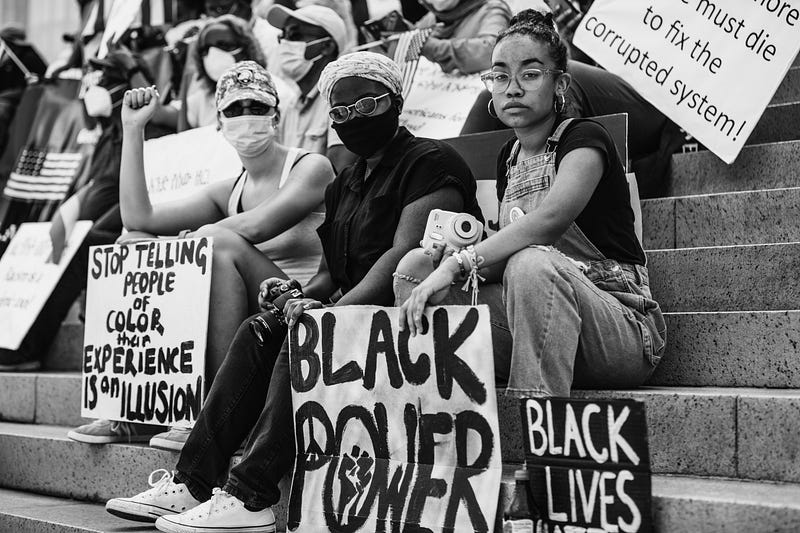
It’s not the Negro problem; it’s the white problem. I’m only black because you think that you are white.
— James Baldwin, during a Q & A session following a speech at Harvard.
Not long before her death, in an appearance on the now-defunct PBS “Charlie Rose” gabfest, the late, brilliant author, Pulitzer Prize winner, Nobel Prize Laureate and social critic, Toni Morrison, answered my above question this way: “White people have a very, very serious problem.”
She put the matter in psychological and moral terms: White folks’ hatred of black people is really a manifestation of their own self-hatred, she argued; their outward animus against not just black people, but all and anyone who does not “look like” them was more of a projection than anything else — a refusal to recognize, indeed a denial, of their own inner moral weakness. Rose asked Sistah Morrison if she meant, then, that black people were “morally superior to white people?”
“Yes!!”, she answered. Unlike white racists, she does not need “race,” she continued, to feel whole, to be human. Her moral superiority, taught to her by her father, serves her well as a defense mechanism, for white supremacy and white racism, could not exist without creating an “Other,” an Other who, of psychic necessity, must needs be morally, intellectually, and emotionally inferior, and therefore deserving of treatment as such.
Put another way, anti-blackness is first an immoral, or at best, an amoral construct. It was constructed and is maintained down through at least forty-five generations now by so-called “white” people in the same sense that the whole idea, their whole notion, and certainly their whole opaque belief system has been built upon misapprehension and fear from the first moments they encountered “strange”-looking, i.e., dark to brown to black or yellow peoples; that point and time when those original “explorers,” “discoverers” and “conquerors” began rampaging out from the edges of that backwater subcontinent called Europe and then across the seas.
They could not help but notice that it was they, the now self-described “white” Englishman, “white” Frenchman, “white” Spaniard, “white” Dutchman, and off- “white”Italian, who constituted the earth’s true and only “minority,” in that no matter how far they travelled, everybody else on the face of this planet had at least some degree of color in their skins — everybody except them.
Toni Morrison On Trump and Trumpism
Toni Morrison died in August of 2019. In one of her last published essays entitled “Mourning for Whiteness,” written just days after Donald Trump’s election to the presidency in 2016, she explained how Trump was elected…and why.
On Election Day, how eagerly so many white voters — both the poorly educated and the well educated — embraced the shame and fear sowed by Donald Trump. The candidate whose company has been sued by the Justice Department for not renting apartments to black people. The candidate who questioned whether Barack Obama was born in the United States, and who seemed to condone the beating of a Black Lives Matter protester at a campaign rally. The candidate who kept black workers off the floors of his casinos. The candidate who is beloved by David Duke and endorsed by the Ku Klux Klan.
Sistah Toni’s fierce words resonate even louder, stronger — now that many millions more white people flocked to the polls like a single whole-sky-covering mass of predatory birds blocking out the sun, and voted for Trump this time around. This time, an apparent and transparent strong majority of these voters flatly refuse to accept Trump’s loss at the hands of those whom they deem as inferior, alien…Other. Indeed, to make their point loud and clear, it’s as though they are striking hard upon some iron anvil. These folk are determined to stamp their unyielding will on and against black people and their supporters by “contributing” one-quarter billion dollars in just thirty days to this awful and odious white man in a desperate attempt to reverse his — and their — loss.
And, if the money fails to produce the desired results, as have the courts, and as has the political system, then stochastic violence, already afoot and well underway, is rapidly ramping up into a quotidian frenzy.
This never-ending hatred reflects not just a psychological or emotional hatred of black people, but is by now a visceral, perhaps even an evolutionary-based, genetic — or genocidal — predisposition.
In any event, as Sistah Toni Morrison says it better than anybody since the late great Master Himself, Brother James Baldwin: “White people have a very, very serious problem.” A problem that only they can or should solve. It (white supremacy/white racism) , as both he and she say, is not our “problem”: “Leave me out of it.”
Why Do White People Hate Black People So Much?
Finally, in 1997, I took my first trip to Africa. I was a member of a tour group led by another late, great black matriarch, author, teacher, artist, painter, sculptor, and founder of Chicago’s famed DuSable Museum of African American History, Dr. Margaret Burroughs (1917–2011).
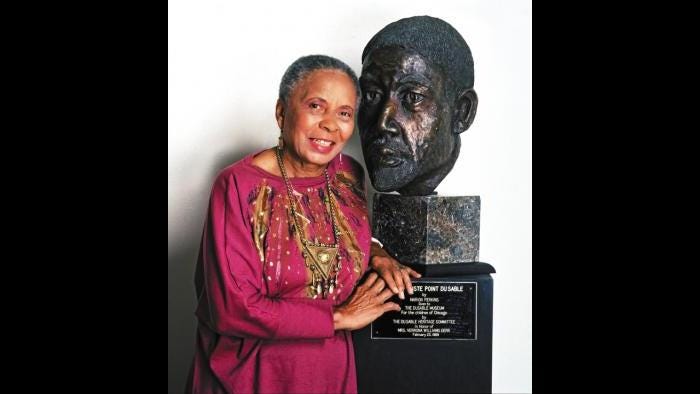
“Doc” was sitting in the middle seat and I had the window directly above the starboard wing. We were probably at 30,000 feet. Throughout the crossing, I stared for long moments out and over and down upon the great expanse of that unimaginably deep and brilliantly blue ocean.
“Whatcha’ lookin’ at so hard down there, Herb?” she asked.
I turned to her and said something stupid like, “All that water. It’s so beautiful. It’s fantastic.”
Dr. Burroughs then looked me straight in the eye: “While you’re looking at that water, think about how many millions of our people’s bones are at the bottom of that sea as a result of The Middle Passage.”
“Hmmm,” I thought. I slowly turned back to the window, and looked down again. The ocean had somehow lost its brilliant bluish sheen in favor of a bloody and dirty redness save for the thousands of white-caps punctuating its surface. “Ah ha…” I thought… and then quickly turned back again to Doc.
“Dr. Burroughs,” I began, not quite pleading. “Why do they hate us so much?”
She looked at me with a wry smile…and waited a few seconds. She dropped the smile, and her eyes seemed to see right through me. I sensed a deep hurt, an unspoken, excruciating pain in her gaze.
Her answer to my question was not as academic as Sistah Morrison’s but just as true and piercing:
“Herb, it’s simple,” she said. She paused again, took a breath. Then: “There’s no deep, dark secret about it. They don’t think we’re human.”


