
Why Do We Want to Extend Our Life?

Have you ever desired to live longer than what human beings usually do? Is it really that we want to stay here for so long or are we afraid of what’s coming next?
In the last couple of decades, the possible extension of human lifespan has been widely discussed, including in psychology circles. After asking the question to a group of people to determine whether they want to live longer if possible they showed particular interest in the possibility of living to be 100, which is almost a quarter of a century longer than the current average life expectancy in the United States. According to the New England Centenarian Study, only one in five Americans are currently centenarians (85% of whom are women), so the prospect of any of us living to be a hundred seems unlikely.
Judging by the attention paid specifically to the longevity phenomenon in scientific journals and the popular media, people may not realize that this possibility is real, the idea is that advances in medicine and healthcare will extend life expectancy so much that children born today will likely celebrate their 100th birthday in 2124. We are also told that centenarians are currently the fastest growing age group, which gives us hope that those of us alive today will join that club.
What is often overlooked in this discussion is that genetics play a huge role in how long each of us will live. In other words, even if our DNA could somehow be manipulated, future medical advances and healthy lifestyles can only do so much.
Another fact that is often ignored about this is that life expectancy in some countries is falling, not rising.
National life expectancy at birth fell to 76.4 years in 2021, down 2.4 years from 78.8 years in 2019 and 0.6 years down from 2020, according to the Centers for Disease Control and Prevention.
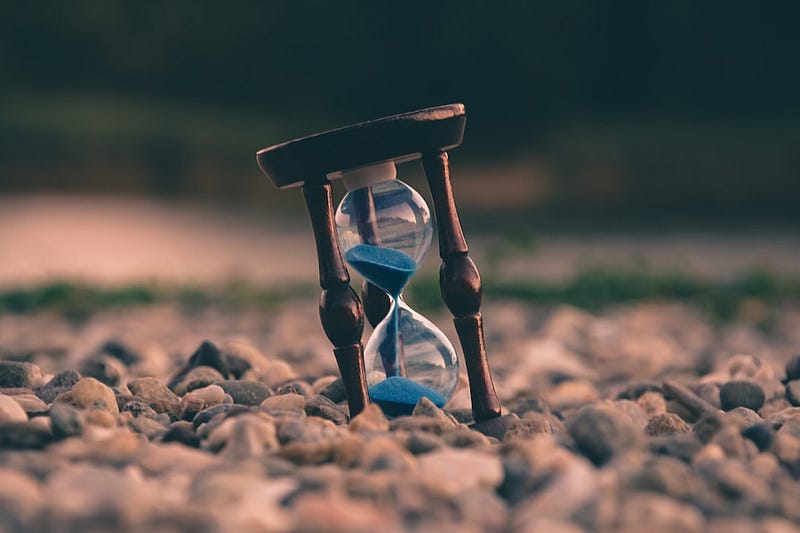
Why Do We Want To Delay Our Death?
What is behind this belief that life expectancy will increase exponentially?
The dream of living longer, even forever, is certainly a very old dream. The realization of real scientific and technological miracles only accelerates this hope and makes us believe that anything is possible. Today, we continue to challenge the basic human problem — that we are born to die — in the hope that we can escape this most inconvenient fact.
The truth is that the desire for dramatic life extension is really a desire to postpone death because many of us are not emotionally equipped to deal with the concept of death.
Indeed, Americans have had an uneasy relationship with death over the past century, as modernity has made death appear unnatural and abnormal; death is considered a form of failure.
In recent times, inspired by our constant faith in science and technology, death has become a problem to be solved, which is strange because until now, death and growth have been shown to be the only certainty in life.
It can be seen that the pursuit of longevity goes hand in hand with the aging of society.
Since the baby boomers, people have actively sought ways to halt or reverse the physical signs or processes of aging. Although decades of antiaging research have yet to produce an effective way to stop us from aging beyond cutting calories excessively, many experts are convinced that, if life expectancy is to be extended to 20th century levels (around 30 years), it is only possible to achieve in this century. For baby boomers in their 60s and 70s, the surprising improvements in life expectancy are a logical extension of their (failed) efforts to “slow down aging.”
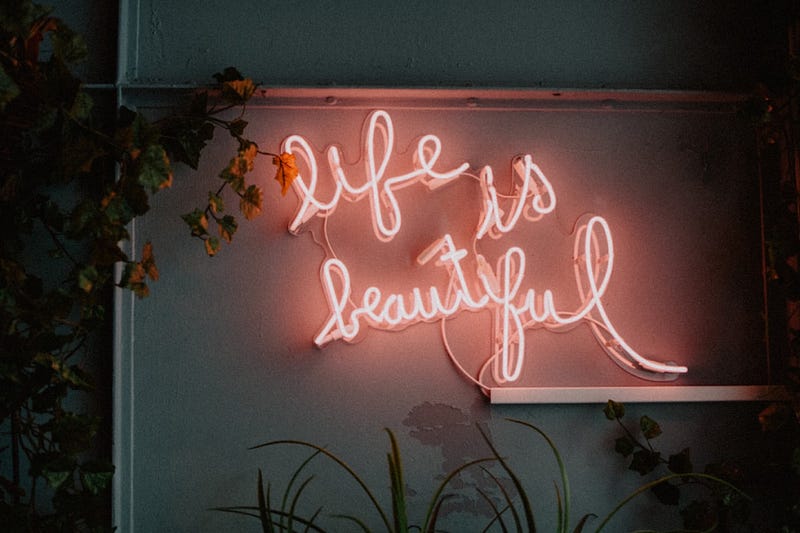
Instead of imagining a society of millions of centenarians, let’s better focus on the here and now!
After all, quality of life is important, not quantity. Every life is a complete life, regardless of age, everyone has a beginning, middle and end. Let’s stop dreaming of living to be 100 and instead commit to enjoy the most of the time we have and making the world a better place in whatever way we can.
Thanks for reading!
Source:
Laurence R.S. (2024). Do you want to live to 100. Psychology Today. https://www.psychologytoday.com/us/blog/psychology-yesterday/202401/do-you-want-to-live-to-100


