
Why Do We Try to Fix the Inside by Changing Our Outside?
As if a box of hair dye can cure depression
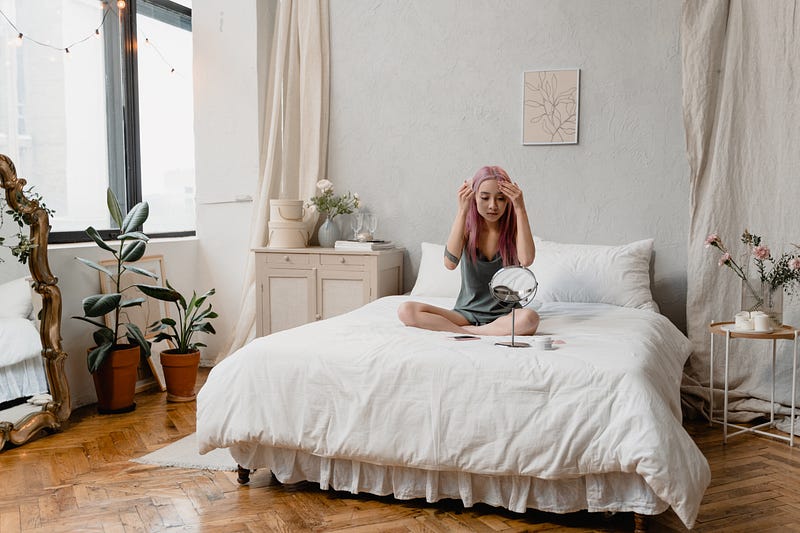
You leave your breakup chat and immediately call the hairdresser on the walk home. You feel lonely and it’s stirring up that fear of abandonment, so you pull out your laptop to do some online shopping. Your depression is getting worse, so you decide to get another piercing, as that will make everything better.
Time and time again, we try to fix how we feel inside by changing our outside. We opt for those quick fixes, like fake tans and boxed hair dye, over tackling what’s actually going on inside. I don’t think any of us actually believe it’ll work, at least not longer than an hour or until the piercing stops throbbing, and yet we continue to throw ourselves into this tried and tested method.
But why do we do this? Why do we try to use our appearance as a cure for deeper issues inside?
1. It feels easier
I can’t fix my depression. I could do everything right, like going for daily walks, practising mindfulness, taking antidepressants and whatever else the doctor orders, but my depression will still exist to some extent. And all of those things require effort and motivation, something I lack in the midst of my depression slumps.
But I could dye my hair a bright colour or buy some clothes that make me feel good, even for moments. I can do these small changes to my outside because they feel easier than dealing with the inside. I could chase brief moments of happiness, those rare releases of serotonin, to have something rather than nothing.
When I’m struggling, it feels easier to fix what’s on the outside than to deal with the root of it all. It feels easy, but not better.
2. A sense of control
Changing how you look or dress provides this false sense of security as if you’re truly the one in control. A lot of eating disorders are rooted in that sense of control. When I was at my most depressed and struggling in my personal life, restricting my food intake and purging felt like I was in control. I could choose what entered my body even when I could choose nothing else in my life. It’s something I always miss about my eating disorder.
Being able to change your weight, your tan, or your hair, allows you to pretend for a little longer than you’re in the driver’s seat. You get to act like you’re calling the shots because you have proof of that when you look in the mirror.
But usually, this highlights a time when you’re lacking control the most. If you’re fixated on your weight and food, you’re not really in control, your disordered eating is. If you’re focusing on superficial changes to your appearance rather than dealing with your issues, then your issues are controlling you.
3. Fake it until you make it
Last year, my relationship of four years ended, and it was a really difficult time. It felt easier to change how I looked than to approach how closely my self-worth had been tied to my partner and that I now had to learn to love myself enough for the both of us. But why work on that when you could just get another piercing and dye your hair pink? Why focus on the betrayal you’re feeling when you could get a tattoo and claim it’s a symbol of the new you?
I faked getting over my relationship by focusing on my appearance. I told myself I’d run every day to lose weight so that I looked like I was doing well after the relationship. I pretended that all these markers would carry me until my inside caught up.
Sometimes, it’s easier to fake it until you make it. We change our appearance almost as a prompt to our emotions and feelings, like ‘Hey, hurry up and catch up, we’re out here with pink hair and a tan.”
It isn’t the healthiest way to deal with things, but it can also act as a distraction when one is needed. It can take a while to be ready to deal with things, and this provides that space.
4. It’s too hard to ask for help
The only thing harder than asking for help is admitting we need it. Requiring help from the people you care about is an awful feeling as if you’re a burden or you’ve failed. So instead of saying something, we shove it down and focus on the outside. We use our exterior as a chance to show that something isn’t right, through dramatic changes to our appearance. It’s like we’re waving a neon sign saying ‘Please notice! I am not okay!’
But you can’t do it alone, and it truly gets easier the moment you’ve said it. So instead of waiting for people to notice or planting these clues, love yourself enough to admit you’re struggling.
Often, using our appearance as an attempt to fix what’s inside is harmless. Getting a haircut after a breakup doesn’t hurt anyone. Getting another piercing only hurts for a few minutes and can be a temporary distraction. So there’s no harm in allowing your appearance to act as a temporary bandaid.
But when you’re using it as the only cure, or as a way to ask for help, it becomes a reason for concern. Make sure it’s never the only thing you’re doing, and that you’re aware of your actions. And if it’s permanent, spend longer than an evening thinking about it…
Would you like to receive my top monthly articles right to your inbox?
Originally published at https://symptomsofliving.com.


